Coloring tips: How to color Mouse In Garden coloring page well?
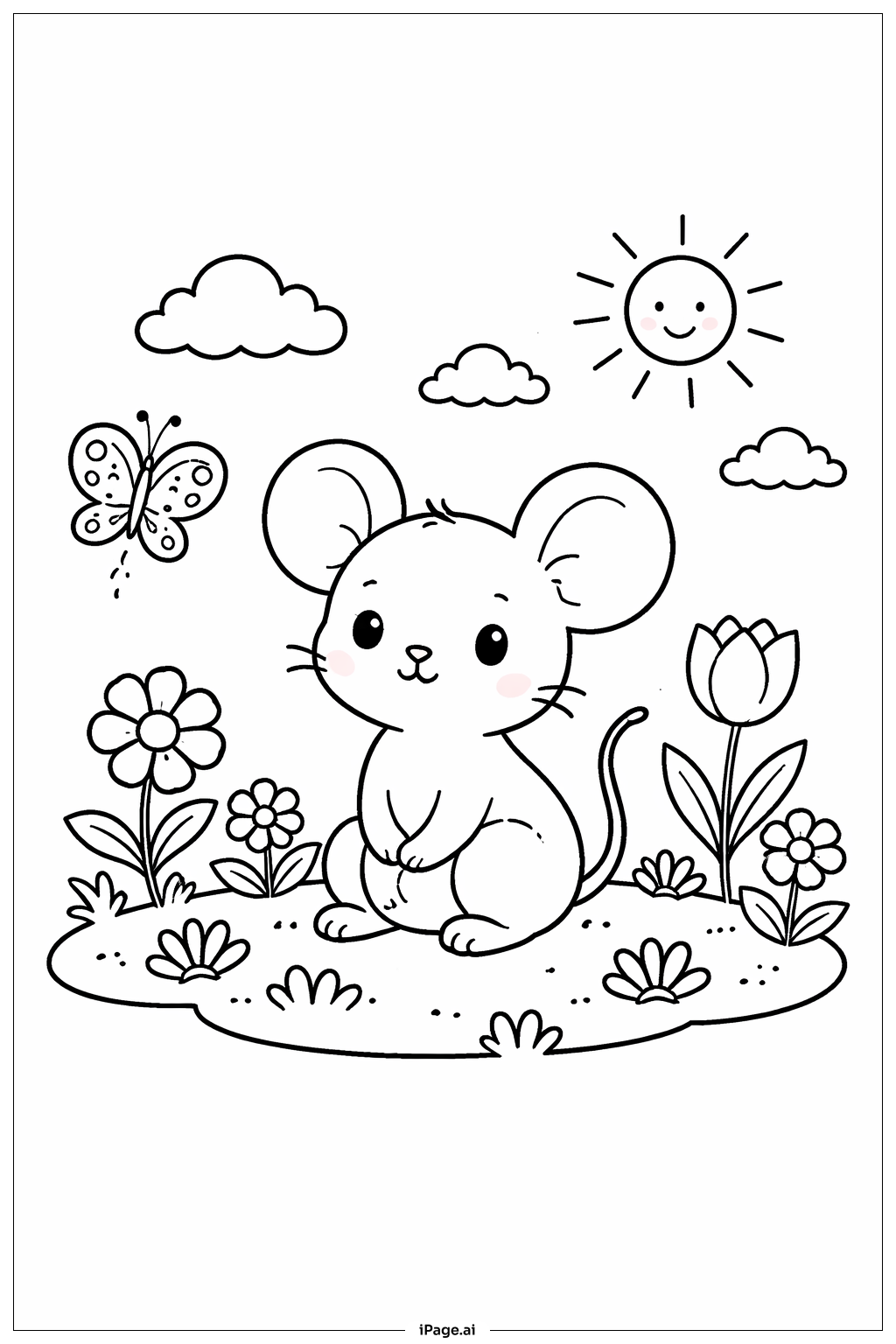
For the mouse, consider using soft grays or browns for a realistic look, or get creative with fun colors like pink, purple, or even blue. The inner ears and paws could be a lighter shade of pink or peach. The nose can be a darker tone to make it stand out. For the garden setting, use a variety of greens for the leaves and stems, mixing light and dark shades to add depth. The flowers offer a wonderful opportunity for bright, cheerful colors like red, yellow, orange, pink, and purple. You could make each flower a different color to create a vibrant rainbow effect. The garden background elements can be colored in earth tones or additional green shades. Don't forget to add color to the ground area with browns or greens to complete the outdoor scene.
Coloring challenges: Which parts are difficult to color and need attention for Mouse In Garden coloring page?
• Small Details on the Mouse: The mouse features intricate elements like tiny paws, delicate whiskers, and detailed facial features including eyes and nose that require careful coloring with fine-tipped markers or colored pencils. Young children may find it challenging to stay within these small areas without going over the lines. Using sharp, well-maintained coloring tools will help achieve the best results in these confined spaces.
• Multiple Overlapping Elements: The composition includes numerous flowers, leaves, and plants that overlap with each other and with the mouse character. Distinguishing where one element ends and another begins can be tricky, especially in areas where the mouse stands among dense foliage. Careful attention is needed to ensure each separate component maintains its own color identity without accidentally blending into adjacent areas.
• Varied Flower Shapes: The garden contains flowers with different petal arrangements and sizes, from simple round blooms to more complex multi-petaled designs. Each flower type presents unique challenges in creating smooth color transitions and maintaining consistent shading across petals. Deciding on color schemes that make each flower distinct while keeping the overall composition harmonious requires thoughtful planning.
• Texture and Depth Creation: To make the garden scene come alive, colorists need to think about creating depth by using different shades of the same color family. The leaves in the foreground might need darker or brighter colors compared to those in the background, while the mouse should stand out from its surroundings through strategic color choices and shading techniques.
Benefits of coloring books: Advantages of drawing Mouse In Garden coloring page
Coloring this delightful mouse in garden scene offers numerous developmental benefits for children. It enhances fine motor skills and hand-eye coordination as they carefully navigate the various shapes and sizes of elements. The detailed nature of the illustration encourages focus and concentration, helping children develop patience and attention span. The combination of a cute animal character and natural garden elements provides opportunities to learn about colors found in nature and discuss topics like gardens, mice, flowers, and outdoor environments. This scene also stimulates creativity as children decide on color combinations and experiment with different shading techniques. The cheerful, friendly nature of the illustration promotes positive emotions and can have a calming, therapeutic effect. Completing this coloring page gives children a sense of accomplishment and boosts their confidence in their artistic abilities.