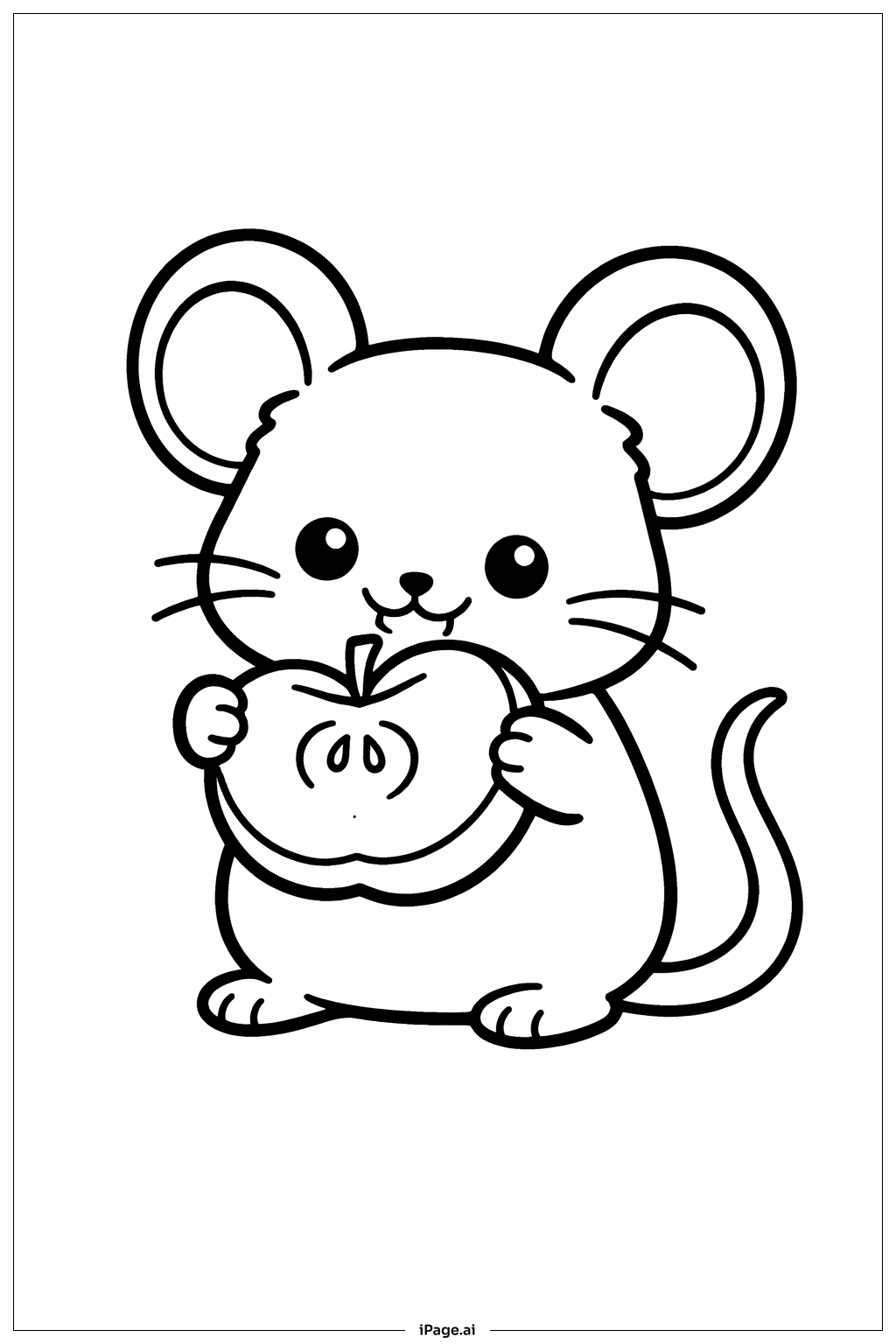
Coloring tips: How to color Mouse Eating Fruit coloring page well?
Start by choosing warm, natural colors for the mouse's body. Light gray or soft brown works great for the fur. Use a slightly darker shade on the ears, paws, and tail to add depth. The inner ears can be a pale pink. For the fruit, go bold and bright — red and green for a watermelon slice, or deep purple and red for berries. Add a yellow or cream color to the flesh of the fruit for a realistic look. Use light green for any leaves in the background. Keep the mouse's eyes dark brown or black with a tiny white dot to make them sparkle. If you want to make the scene feel warm and lively, use a soft yellow or peach tone for the background. Don't be afraid to blend colors together gently to give the fur a soft, fluffy look.
Coloring challenges: Which parts are difficult to color and need attention for Mouse Eating Fruit coloring page?
• Mouse Fur Texture: The mouse's body has a soft, rounded shape that can be tricky to shade. To make the fur look fluffy and real, you need to layer light and dark shades carefully. Using short, gentle strokes in the direction of the fur will help create a natural texture without making it look flat.
• Tiny Facial Details: The mouse has very small facial features — tiny eyes, a little nose, and a small mouth. These details are packed closely together, making it easy to color outside the lines. Using a sharp pencil or a fine-tipped marker is important here. Take your time and work slowly around the face area.
• Fruit Colors and Shading: Coloring the fruit realistically requires using more than one color. A watermelon slice, for example, needs red, pink, and white blended together, plus dark seeds. Getting the colors to look smooth and layered takes patience and practice, especially for younger colorists.
• Thin Tail and Small Paws: The mouse's tail is long and very thin, and its tiny paws are small and delicate. These narrow areas are hard to fill in neatly without going over the lines. A fine-tip coloring tool works best here to stay inside those tight spaces cleanly.
• Background and Foreground Balance: If the image includes leaves or background elements, it can be challenging to keep those colors from competing with the mouse and fruit. Choosing softer, less saturated colors for the background helps the main character stand out clearly and keeps the whole image looking balanced and appealing.
Benefits of coloring books: Advantages of drawing Mouse Eating Fruit coloring page
Coloring this image of a mouse eating fruit offers many wonderful benefits for kids and beginners alike. First, it helps build fine motor skills. Carefully filling in the small details of the mouse's fur, paws, and face trains little hands to control their coloring tools with precision. This skill carries over into writing and other everyday tasks. Second, it encourages creativity. Choosing colors for the mouse and the fruit lets children make their own artistic decisions, which builds confidence and self-expression. There is no wrong way to color, and that freedom is exciting. Third, it teaches color awareness. Kids learn how different colors work together — warm fruit tones next to cool gray fur — which develops a natural sense of color harmony. Fourth, coloring is a calming activity. Sitting quietly and focusing on filling in a fun scene helps reduce stress and anxiety, making it a healthy and enjoyable way to unwind. Finally, completing the page gives a real sense of accomplishment. Seeing a finished, colorful image that you created yourself is a proud and satisfying moment for any young artist.