Coloring tips: How to color Mouse Eating Cookie coloring page well?
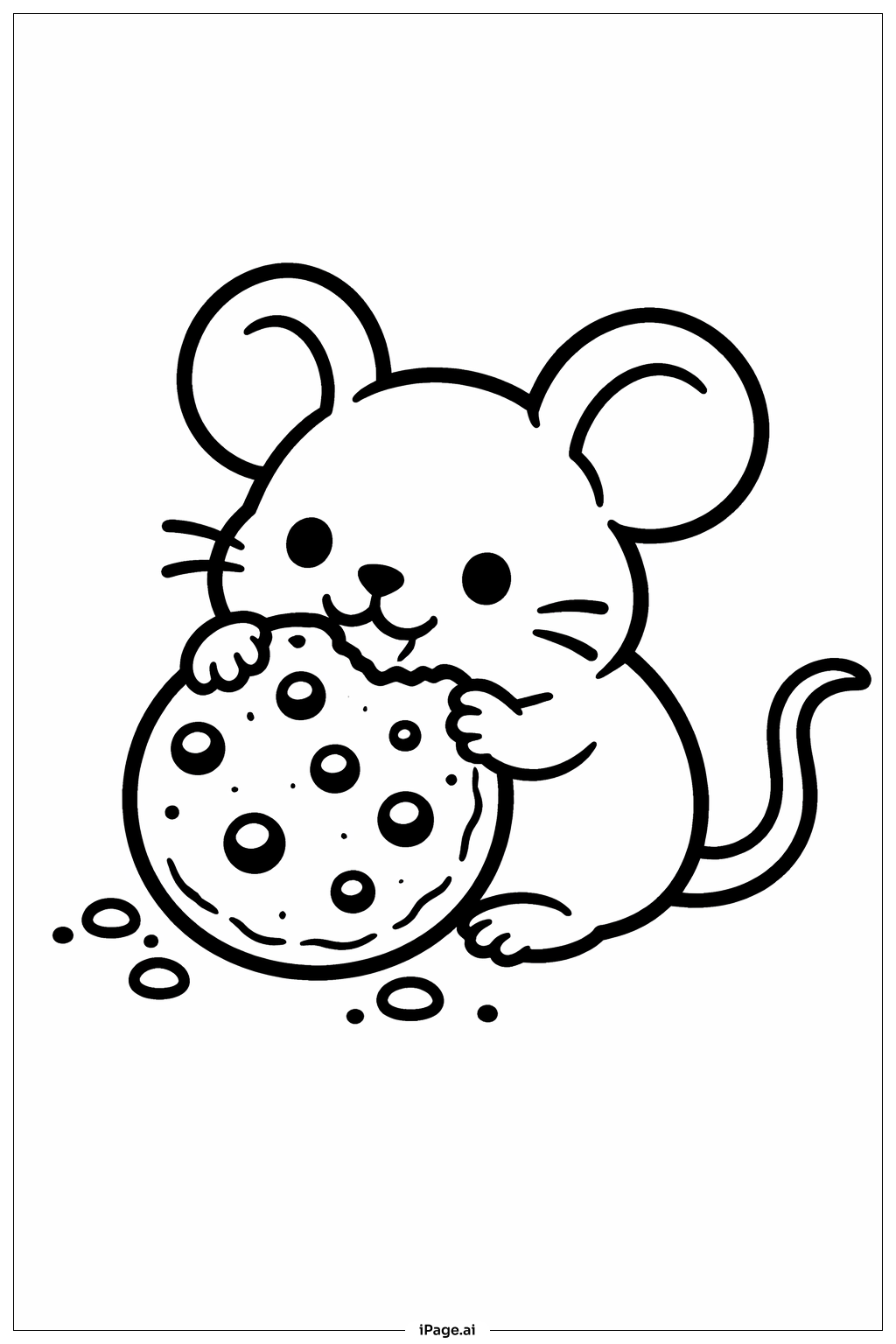
Use soft gray or brown for the mouse's body to make it look natural. Color the ears and tail with lighter shades like pink or light brown. For the cookie, try using a warm beige or light brown color, and a darker brown for the chocolate chips. You can also add some shadows with darker colors to show the edges of the mouse and the cookie. Don’t forget to color the crumbs around the cookie as small bits of brown or beige. The background can be left white or filled with light pastel colors so the mouse and cookie stand out.
Coloring challenges: Which parts are difficult to color and need attention for Mouse Eating Cookie coloring page?
1. Coloring the mouse’s small paws and fingers can be tricky because they are tiny and need careful coloring to stay inside the lines. 2. The mouse's ears have inner curves that need careful shading to make them look realistic and soft. 3. The cookie has many small chocolate chips that require attention to detail while coloring to avoid coloring outside the chips. 4. Crumbs scattered around the cookie are small shapes that need precision to color neatly. 5. Coloring the mouse’s tail with curves can be challenging to keep it smooth and even in color.
Benefits of coloring books: Advantages of drawing Mouse Eating Cookie coloring page
Coloring this picture helps children improve their fine motor skills by coloring small parts like the mouse’s paws, ears, and cookie chips. It encourages attention to detail and patience. The mouse and cookie theme is fun and engaging, which makes the coloring process enjoyable. It also helps children learn about colors and shading techniques while making the image more lively and three-dimensional. Overall, it promotes creativity and concentration.