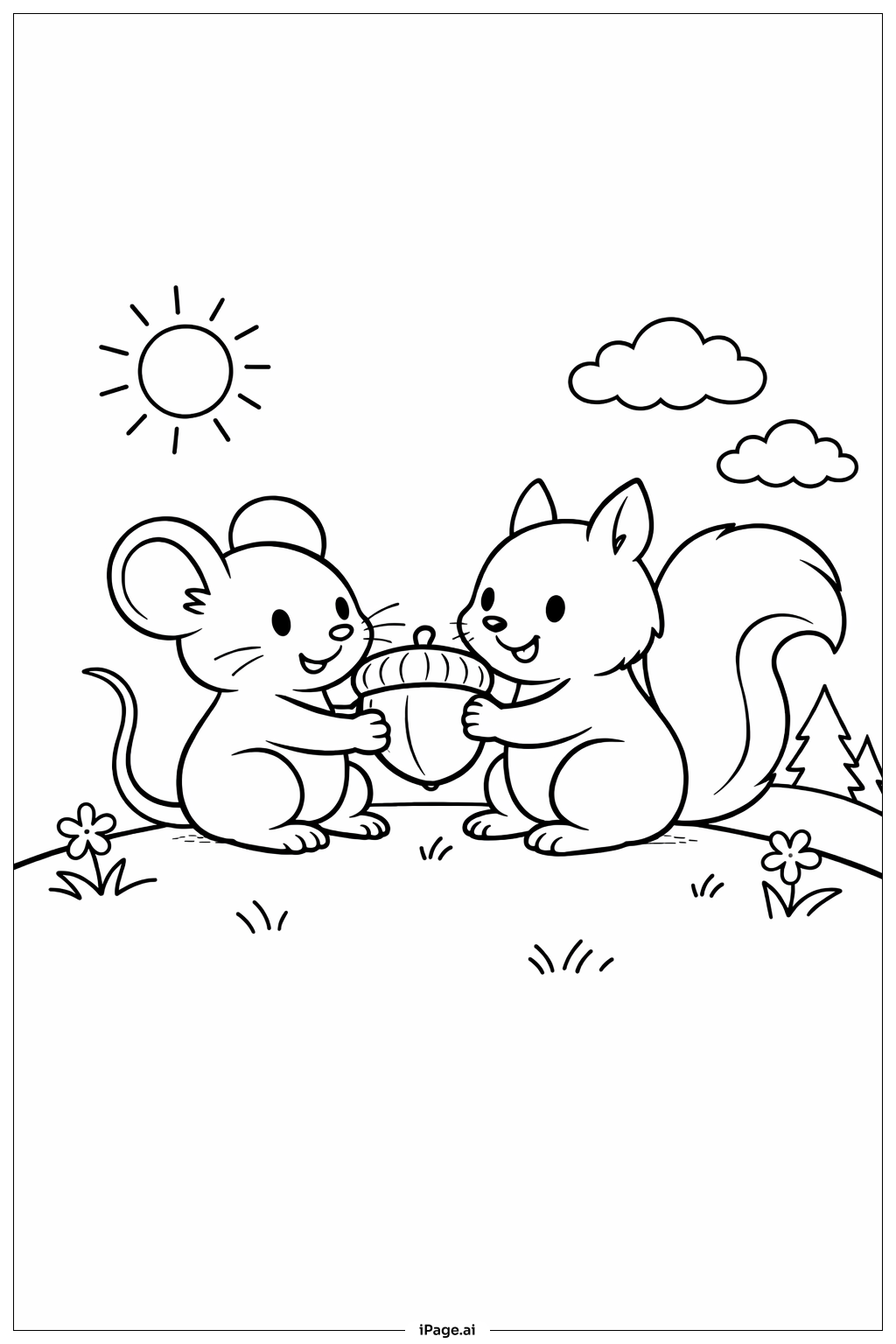
Coloring tips: How to color Mouse And Squirrel coloring page well?
For the mouse, try soft grays or browns for the body, with a lighter cream or pink for the inner ears and belly. The nose can be pink or black, and don't forget to color the whiskers gray or leave them white. For the squirrel, warm browns, oranges, or reddish-browns work beautifully. Consider using different shades of brown to create depth on the bushy tail, perhaps darker at the base and lighter at the tips. The squirrel's belly can be cream or light tan. Both animals' eyes can be black with a small white highlight to make them sparkle. You might add rosy cheeks to both creatures for extra cuteness. Consider a light green or blue background to suggest grass or sky, keeping it simple so the animals remain the stars of the page.
Coloring challenges: Which parts are difficult to color and need attention for Mouse And Squirrel coloring page?
• Tail Texture Details: The squirrel's bushy tail presents the biggest challenge with its numerous fur texture lines. Children need to color carefully within these small sections to create a realistic fluffy appearance. Using multiple shades of the same color family helps create depth, but requires patience and attention to avoid crossing lines. The curved shape means changing hand positions frequently while coloring.
• Small Facial Features: Both animals have tiny facial elements including eyes, noses, whiskers, and inner ear details. These small areas require fine motor control and careful coloring with pencil tips or thin markers. Younger children might find it challenging to stay within these tiny boundaries without accidentally coloring over important details.
• Maintaining Consistent Pressure: To achieve smooth, even coloring across the larger body areas of both animals, children must maintain consistent pressure and coloring direction. This helps avoid streaky or patchy results, especially when using colored pencils. The mouse's round body and the squirrel's torso are substantial areas that require steady hand control.
• Differentiation Between Characters: Since both animals appear together, children should choose colors that make each animal distinct while still looking harmonious. This requires planning ahead and understanding color relationships, which can be challenging for younger colorists who might impulsively choose similar colors for both creatures.
Benefits of coloring books: Advantages of drawing Mouse And Squirrel coloring page
Coloring this mouse and squirrel page offers wonderful developmental benefits for children. It strengthens fine motor skills and hand-eye coordination as they navigate the different sized areas, from tiny facial features to larger body sections. The varying complexity levels allow children to challenge themselves progressively. Working with the squirrel's textured tail encourages attention to detail and patience. This page also teaches children about woodland animals and friendship, sparking conversations about nature and animal behavior. Choosing complementary colors for two characters develops color theory understanding and artistic decision-making. The adorable subject matter keeps children engaged and motivated to complete the project. Successfully finishing this page builds confidence and a sense of accomplishment, especially when tackling the more detailed areas like the bushy tail and small features.