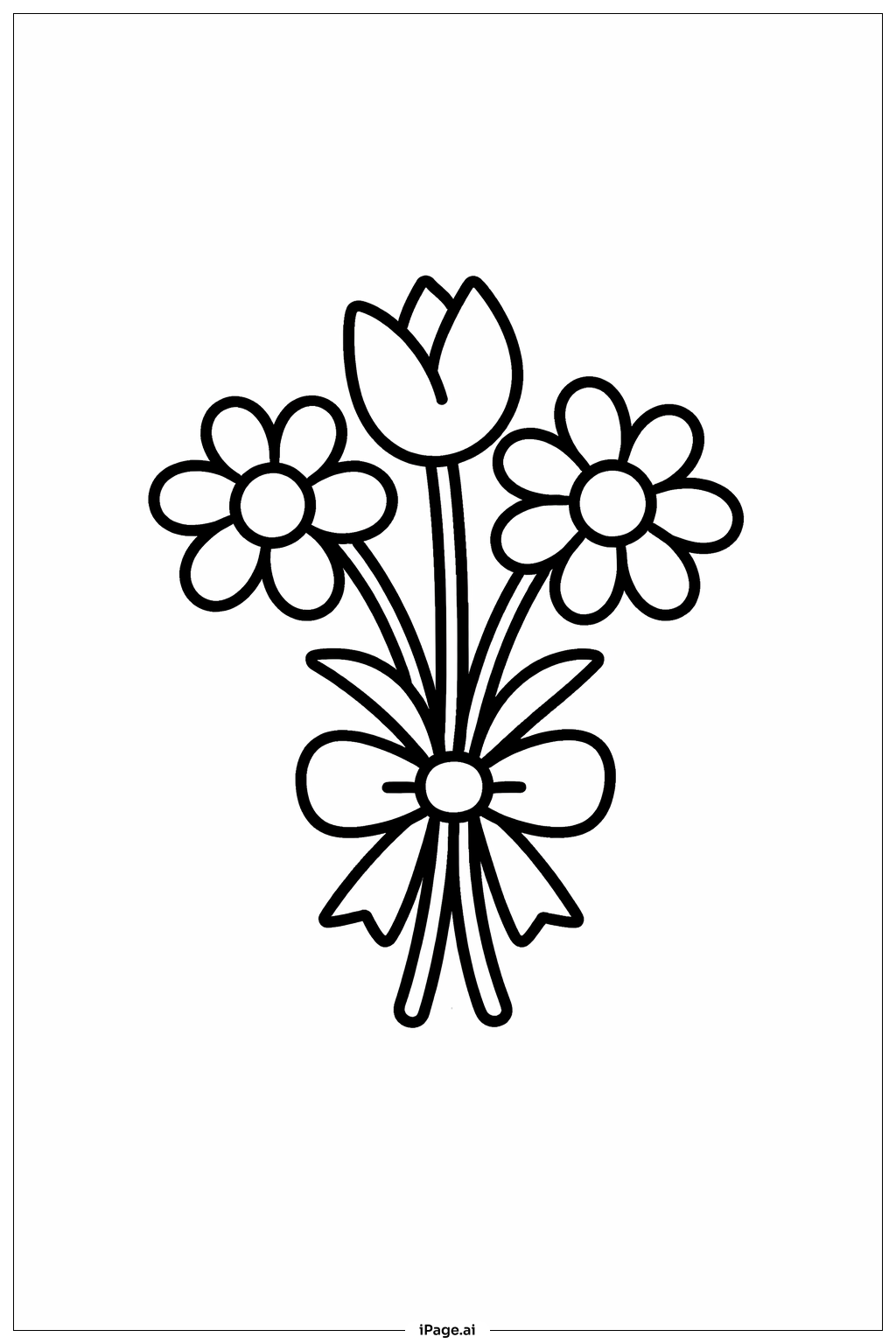
Coloring tips: How to color Mothers' Day Simple Bouquet coloring page well?
For this beautiful Mother's Day bouquet, consider using warm and loving colors that celebrate Mom. Try coloring the roses in classic red or soft pink shades, while the daisies could be bright yellow with white petals. The leaves work wonderfully in various shades of green, from light lime to deep forest tones. For the ribbon, consider Mom's favorite color, or use elegant gold, silver, or purple. You can make each flower different colors to create a vibrant, cheerful arrangement. Add light shading around the petal edges to give dimension, and use darker greens in the shadowed areas of the leaves. Don't forget to color the flower centers with contrasting colors like brown, orange, or yellow to make them pop and bring the bouquet to life.
Coloring challenges: Which parts are difficult to color and need attention for Mothers' Day Simple Bouquet coloring page?
• Petal Overlapping: The flowers in this bouquet have multiple overlapping petals that require careful attention to maintain distinct boundaries between each petal layer. Children need to track which petal is in front and which is behind, coloring each section separately to avoid bleeding colors together. This spatial awareness challenge helps develop planning skills as they decide which areas to color first and how to keep the edges clean and defined.
• Small Detailed Spaces: The flower centers, leaf veins, and the areas where the ribbon weaves around the stems contain small, intricate spaces that can be difficult to color neatly. Younger children may struggle with keeping their coloring tools inside these tiny boundaries, requiring steady hand control and patience. Using fine-tipped markers or sharpened colored pencils can help, but it demands concentration and precision to fill these areas without going outside the lines.
• Ribbon Dimension: The flowing ribbon wrapped around the bouquet creates a three-dimensional effect with curves, folds, and overlapping sections. Understanding which part of the ribbon is on top and which is underneath requires visual perception skills. Choosing colors or shading techniques to show the ribbon's texture and movement adds another layer of complexity, as children must think about light sources and how fabric appears when it bends and twists.
• Color Coordination: With multiple flowers in one arrangement, deciding on a harmonious color scheme that looks balanced and pleasing requires artistic decision-making. Children must consider which colors work well together and how to distribute them across the bouquet so no single area looks too heavy or empty, developing their understanding of color theory and composition.
Benefits of coloring books: Advantages of drawing Mothers' Day Simple Bouquet coloring page
Coloring this Mothers' Day bouquet offers wonderful benefits for young artists. It helps develop fine motor skills and hand-eye coordination as children carefully fill in the detailed petals and leaves. The overlapping elements teach spatial reasoning and problem-solving as they figure out which sections to color first. This activity encourages creativity in choosing color combinations and designing a unique gift for Mom, building confidence and self-expression. It also promotes patience and focus, as completing the intricate details requires sustained attention. The emotional connection to Mothers' Day makes this coloring experience meaningful, teaching children about expressing love and appreciation through handmade gifts. Additionally, the finished artwork provides a sense of accomplishment and creates a treasured keepsake that celebrates the special bond between mother and child.