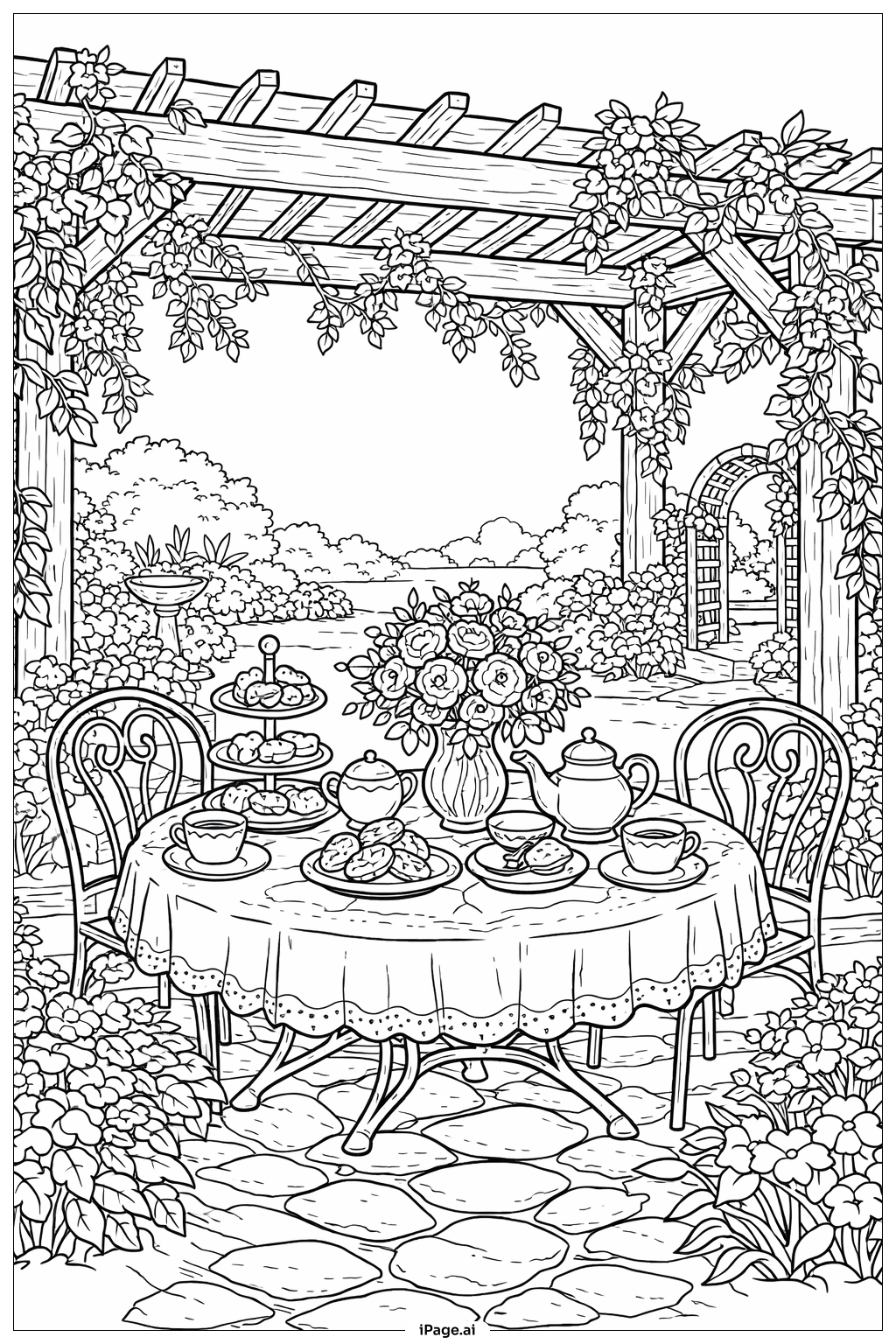
Coloring tips: How to color Mothers' Day Garden Tea Table coloring page well?
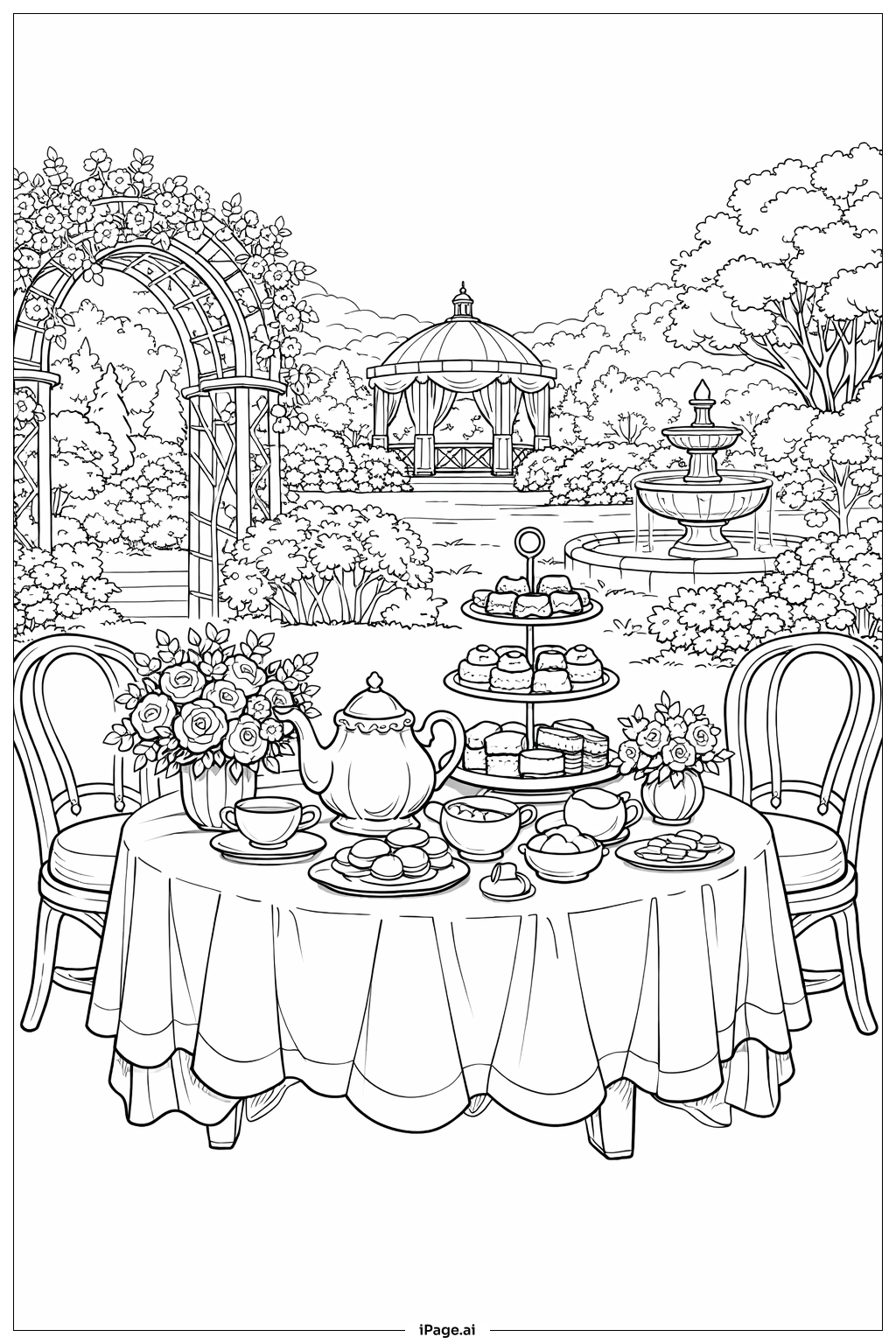
Start with the beautiful cake as your focal point. Use soft pink, lavender, or cream for the frosted layers, and add vibrant colors like red, yellow, or purple for the flower topper. Color the teacups in classic patterns—try delicate blue and white china designs, or mix pastel colors for a playful touch. The table can be painted in natural wood tones like light brown or gray, or go with white for an elegant garden look. For the chairs, choose romantic shades like mint green, pale yellow, or antique white. The flowers and plants offer wonderful opportunities—use bright pinks, oranges, yellows, and purples for blooms, with various shades of green for leaves and stems. Consider adding golden or bronze accents to decorative elements for extra elegance.
Coloring challenges: Which parts are difficult to color and need attention for Mothers' Day Garden Tea Table coloring page?
• Symmetrical Arrangement Details: The table setting features multiple matching items positioned on both sides, including teacups, saucers, and decorative elements. Maintaining consistent colors and patterns across these symmetrical pieces requires careful planning and attention to detail. Young colorists may find it challenging to replicate the same color scheme on opposite sides of the table, especially when working with patterned china or decorative motifs.
• Layered Cake Decoration: The centerpiece cake presents complexity with its multiple tiers and floral topper. Each layer needs distinct yet harmonious coloring to create visual separation. The flowers on top require delicate color choices that complement the cake without overwhelming it. Shading the rounded edges of each tier to create dimension adds another level of difficulty for beginners.
• Intricate Chair Details: The garden chairs feature curved lines and ornamental designs that include fine details and scrollwork. Coloring within these small, decorative areas without crossing lines demands steady hand control and patience. The curved backs and legs also benefit from shading techniques to show their three-dimensional form, which can be challenging for younger artists.
• Floral Variety and Depth: Multiple flowers and potted plants surround the scene, each requiring different colors to create variety and visual interest. Distinguishing between foreground and background flowers through color intensity and shading helps create depth. Layering different shades of green for leaves and stems while keeping flowers distinct requires thoughtful color coordination and spatial awareness.
Benefits of coloring books: Advantages of drawing Mothers' Day Garden Tea Table coloring page
Coloring this Mothers' Day garden tea scene helps children develop fine motor skills through detailed work on small elements like teacup patterns and flower petals. The symmetrical layout teaches visual planning and color consistency as they work to match elements on both sides of the table. This image encourages creativity in choosing color combinations for the various decorative items while learning about complementary colors. The tea party theme introduces cultural appreciation for special celebrations and family traditions. Working on the intricate details builds patience and focus, essential skills for academic success. The cheerful, celebratory subject matter promotes positive emotions and provides a meaningful way to create a gift for mothers or maternal figures, fostering emotional expression and gratitude.