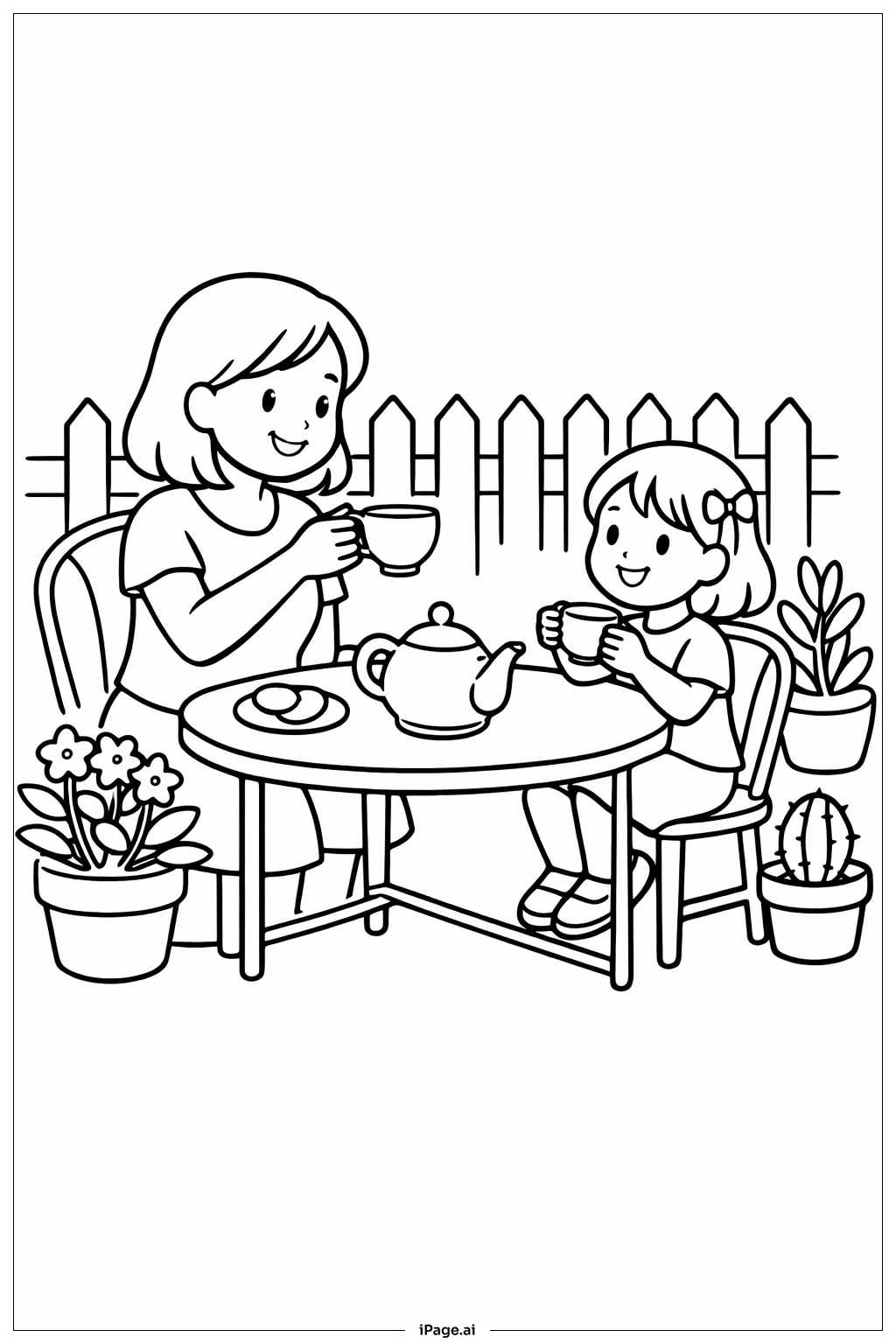
Coloring tips: How to color Mothers' Day Garden Tea coloring page well?
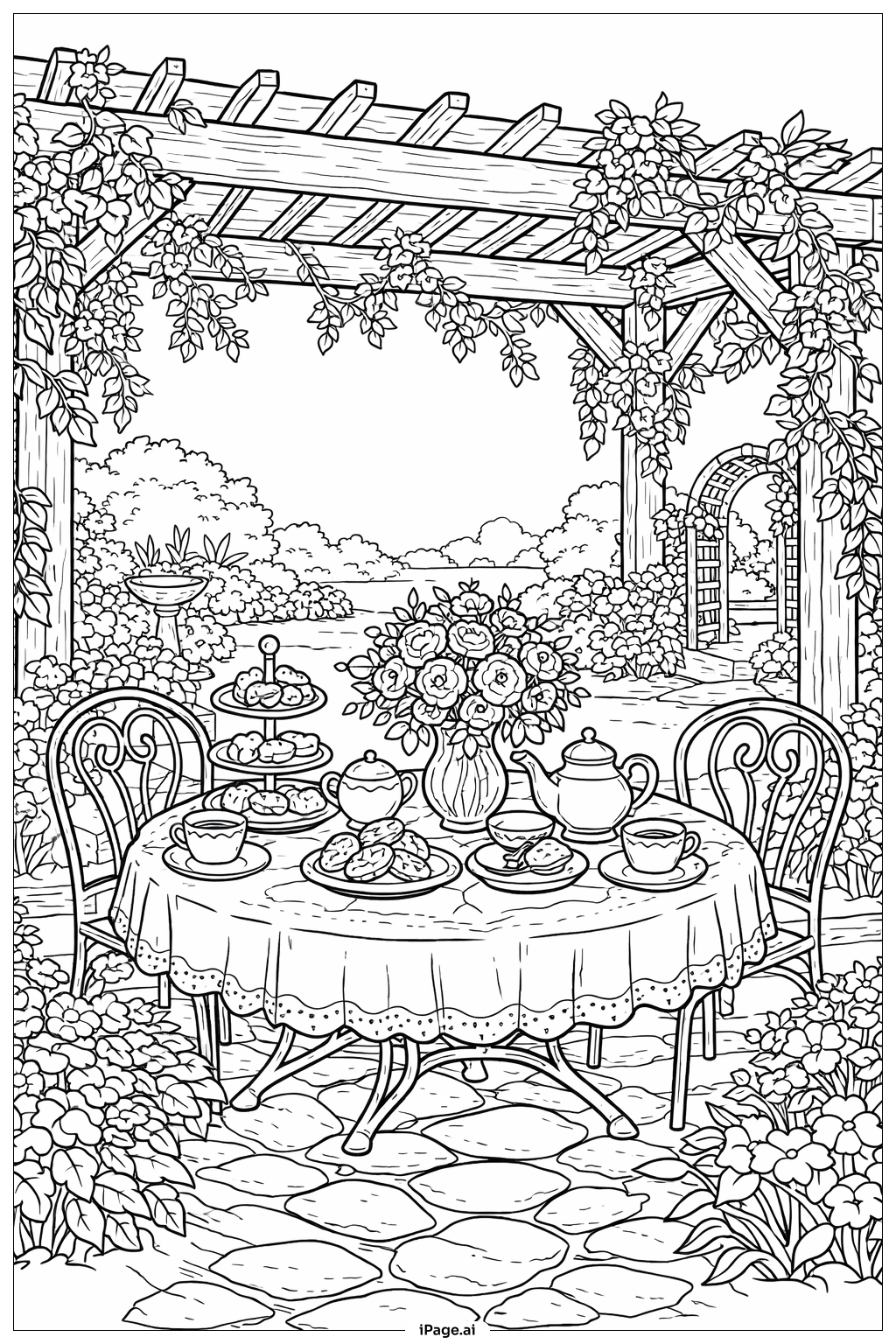
Start with the figures by coloring the mother's outfit in soft pastels like lavender or rose pink, while the child can wear cheerful colors like sunny yellow or sky blue. For the flowers throughout the garden, use a variety of bright colors such as red roses, purple lilacs, yellow daisies, and pink tulips to create a vibrant garden atmosphere. The teapot and cups can be decorated with delicate patterns using blues, greens, or floral designs. Color the treats on the tiered stand in appetizing shades like chocolate brown for cookies, strawberry pink for cakes, and cream yellow for pastries. Use rich greens in different shades for the foliage and vines to add depth. The butterflies can be colored in striking combinations like orange and black, or blue and yellow. Add a soft blue sky in the background and perhaps a golden sun to complete this warm, celebratory scene.
Coloring challenges: Which parts are difficult to color and need attention for Mothers' Day Garden Tea coloring page?
• Intricate Floral Details: The garden scene contains numerous flowers with multiple petals and layers, requiring careful attention to stay within the lines. Each flower has delicate details that need different colors to create realistic blooms. Young children may find it challenging to color small flower centers and thin petals without colors bleeding together. Consider using fine-tipped coloring tools for precision.
• Complex Background Elements: The decorative arch, climbing vines, and layered foliage create overlapping elements that can be confusing to color. Distinguishing between foreground flowers and background leaves requires planning which sections to color first. The intertwining vines need consistent coloring to maintain visual coherence throughout the arch structure.
• Detailed Tea Set and Food Items: The teapot, cups, and tiered stand feature fine decorative patterns and small elements that demand steady hands and patience. The treats on the stand each have unique shapes and details requiring different color choices. Shading the curved surfaces of the teapot and cups to create dimension adds another layer of difficulty.
• Butterfly Wing Patterns: The butterflies have intricate wing patterns with symmetrical designs that look best when colored with matching detail on both sides. Creating realistic butterfly effects requires blending colors and adding patterns, which can be challenging for younger colorists.
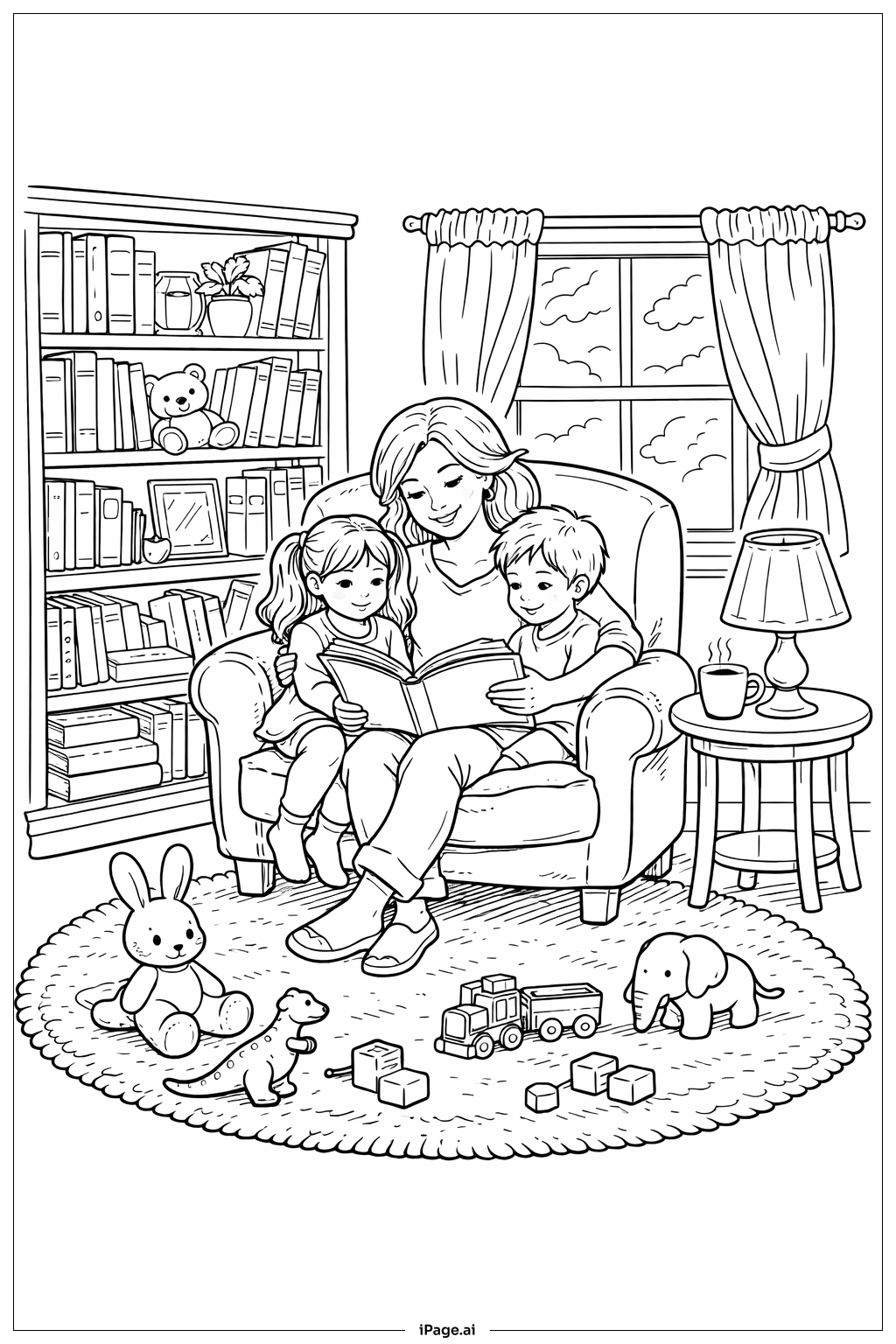
• Clothing and Fabric Textures: The figures' clothing may have folds, patterns, or details that benefit from shading techniques to look three-dimensional. Adding patterns like polka dots or stripes to dresses requires steady control and planning.
Benefits of coloring books: Advantages of drawing Mothers' Day Garden Tea coloring page
Coloring this Mothers' Day Garden Tea scene helps children develop fine motor skills through the detailed work required for flowers, butterflies, and tea set elements. It encourages creativity as they choose color combinations for the garden and decide how to decorate the tea party setting. This image provides an opportunity to learn about color harmony by selecting complementary colors for flowers and foliage. The theme promotes emotional connection and appreciation for mothers, making it a meaningful activity for Mother's Day celebrations. Working on the intricate details improves focus and concentration while providing a calming, meditative experience. Children can practice color recognition by identifying and naming the various colors they use for different garden elements. Completing this detailed scene builds confidence and provides a sense of accomplishment, resulting in a beautiful finished piece that can be gifted to mother as a heartfelt, personalized present.