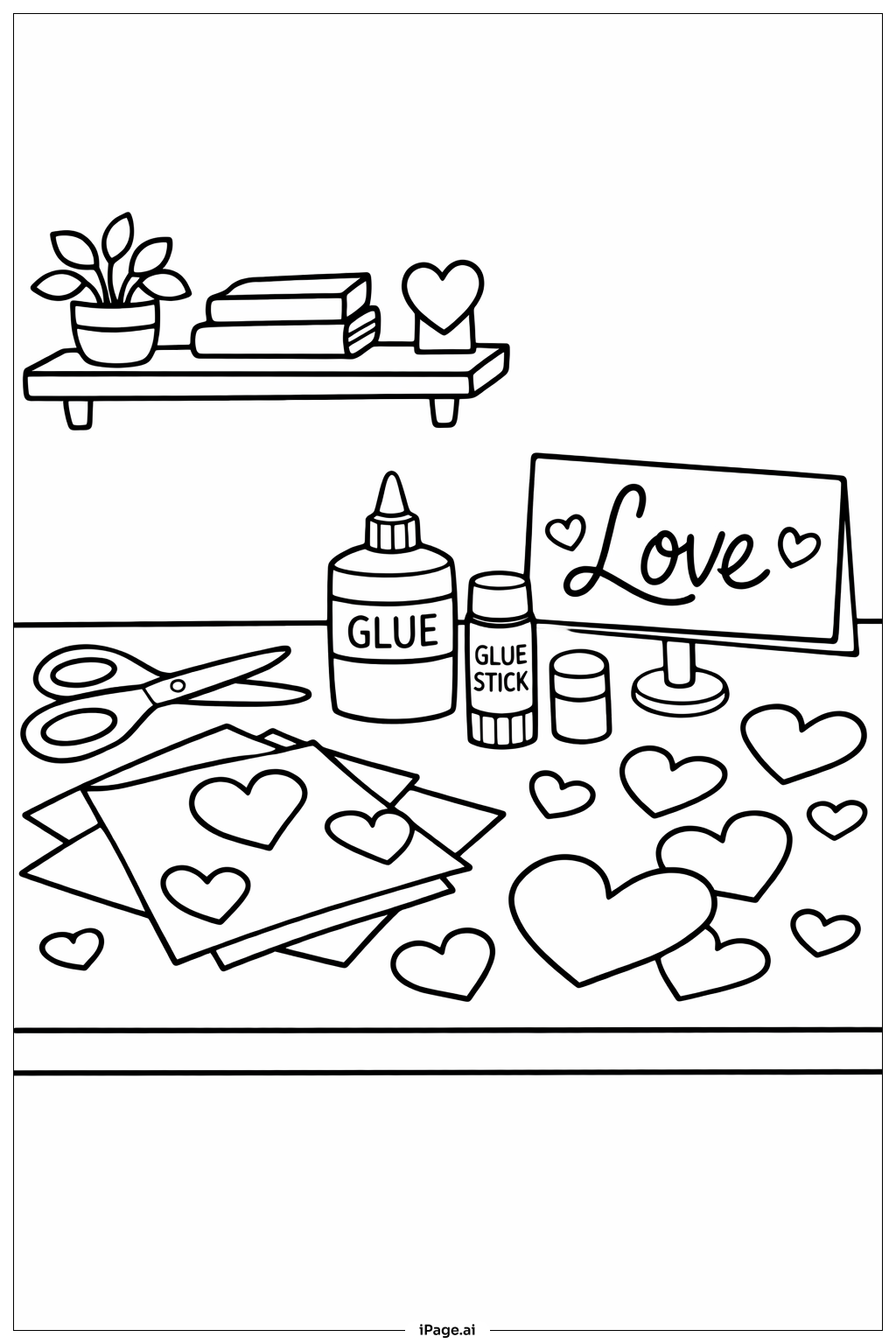
Coloring tips: How to color Mothers' Day Craft Table coloring page well?
Start with the flowers in the vase using bright pinks, reds, and purples to make them pop against green stems and leaves. Color the table in warm brown or natural wood tones to create a cozy foundation. Use cheerful yellows, oranges, and light blues for the craft supplies and paper sheets to show variety. The heart decorations can be colored in classic red or pink shades to emphasize the love theme. Try using rainbow colors for the ribbons and decorative elements to add playfulness. The glue bottles and scissors can be their realistic colors - white or clear for glue, silver for scissor blades with colorful handles. Consider adding patterns to the cards and paper crafts using stripes, dots, or flowers. The background shelves can be softer, muted tones to keep focus on the main crafting area.
Coloring challenges: Which parts are difficult to color and need attention for Mothers' Day Craft Table coloring page?
• Small Detailed Objects: The craft table contains numerous small items like scissors, ribbons, glue bottles, and tiny heart decorations that require careful coloring within tight boundaries. Young children may find it challenging to stay within the lines of these miniature objects without colors bleeding into adjacent areas. Using fine-tipped markers or sharp colored pencils can help, and taking breaks prevents hand fatigue.
• Overlapping Elements: Many objects on the table overlap each other, creating complex layering that requires planning which items are in front and which are behind. Colorers must decide the order to color these elements to maintain visual depth and avoid confusion. It helps to color background items first, then move forward to foreground objects, ensuring each layer is distinct.
• Pattern Creation Opportunities: The papers, cards, and decorative elements offer blank spaces where colorers can add their own patterns, which can be both exciting and overwhelming. Deciding what designs to add requires creativity and planning. Children might benefit from looking at real craft supplies or Mothers' Day cards for inspiration before adding stripes, polka dots, flowers, or other decorative patterns.
• Flower Detailing: The bouquet features multiple flowers with petals, centers, and leaves that need individual attention to create realistic or stylized blooms. Each petal requires shading or gradient techniques to add dimension. Younger artists may choose simple solid colors, while older ones can experiment with blending techniques to create depth and natural-looking flowers.
• Color Coordination: With so many different elements, choosing a harmonious color scheme that looks cohesive rather than chaotic presents a challenge. Balancing warm and cool tones while ensuring the focal points stand out requires thoughtful planning before starting to color.
Benefits of coloring books: Advantages of drawing Mothers' Day Craft Table coloring page
Coloring this Mothers' Day craft table scene helps children develop fine motor skills as they carefully navigate around small objects and detailed areas. It encourages planning and decision-making skills when choosing colors and determining which elements to color first. The image promotes creativity, especially when adding patterns to blank cards and papers, allowing young artists to personalize their work. This coloring page connects children to the meaningful tradition of making handmade gifts for loved ones, fostering appreciation for thoughtful gestures. It provides an opportunity to practice color coordination and understand how different hues work together in a busy scene. The activity can spark conversations about Mothers' Day, gratitude, and family love. Completing this detailed image builds patience and concentration while offering a sense of accomplishment. It's also a wonderful quiet-time activity that can be shared with Mom herself, creating special bonding moments.