Coloring tips: How to color Messi Dribbling Ball Solo coloring page well?
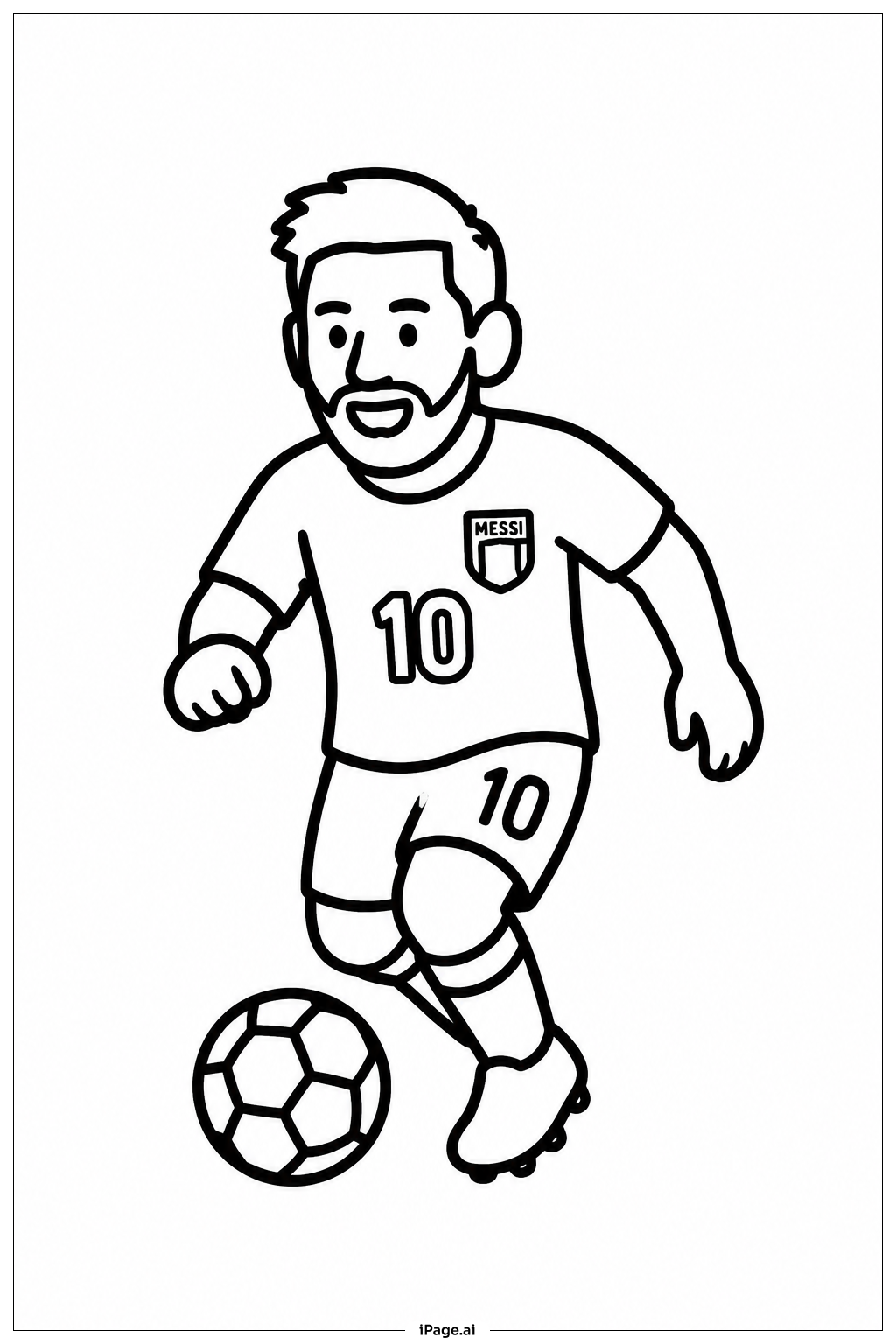
To bring this image to life, use bright and bold colors for Messi’s jersey and shorts, reflecting his iconic team colors. You might use deep blue and red tones or the colors of his current team. For the ball, white with black pentagons is classic, but feel free to use imaginative patterns and colors. The background can be a green soccer field with lighter green stripes or even a stadium with seats in the distance. Try shading the muscles and shoes with darker tones to add depth. Kids can experiment with different colors for the grass, sky, and even Messi’s skin tone to make the image unique and lively.
Coloring challenges: Which parts are difficult to color and need attention for Messi Dribbling Ball Solo coloring page?
• Fine Details: The soccer ball has several small panels that require careful coloring to stay inside the lines and maintain its shape. • Movement Lines: Messi’s legs and feet are positioned to show motion, which may be tricky because you need to color overlapping areas without smudging. • Clothing Shading: His sportswear has folds and creases that need subtle shading to look natural and show a sense of muscle tension. • Facial Features: Coloring Messi’s face while keeping his expression focused can be challenging for younger children due to the small areas and needed precision. • Background Space: Since the background is mostly open, deciding what to fill in without cluttering the image may require creativity and planning.
Benefits of coloring books: Advantages of drawing Messi Dribbling Ball Solo coloring page
Coloring this image helps children improve their hand-eye coordination as they fill in small and detailed areas like the soccer ball and clothing. It encourages focus and patience to carefully add shading and stay inside the lines. This image also stimulates creativity through choices about colors and background elements. For young soccer fans, it can boost motivation by connecting them with their favorite player Messi and the sport they love. Furthermore, coloring scenes that show movement can teach kids about dynamic poses and body positioning, developing both artistic and observational skills.