Coloring tips: How to color May Deer In Meadow coloring page well?
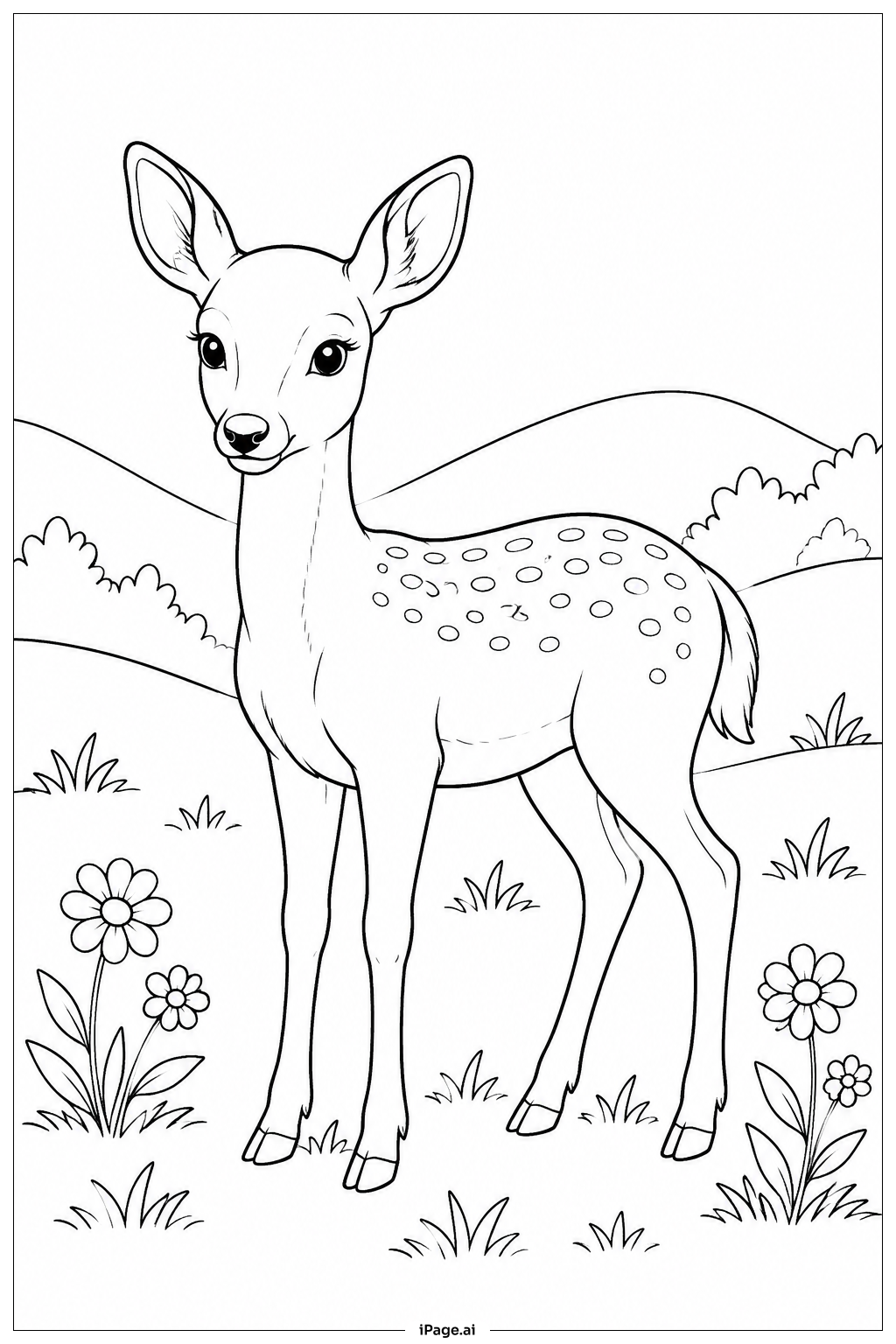
Start with the deer's body using warm tan or golden brown tones. Add a lighter cream or white for the belly and inner ears. Use soft greens in many shades for the meadow grass — mix light green, lime, and deep forest green to give the grass depth. Color the wildflowers in bright, cheerful shades like yellow, pink, purple, and orange. Paint the butterflies with vibrant wings — try blue and orange or pink and yellow combinations. Use a pale blue for the sky and soft lavender or white for any clouds. The trees in the background can be deep green or olive. Keep the deer's eyes dark brown with a tiny white highlight to make them sparkle. Feel free to add your own creative colors to the flowers!
Coloring challenges: Which parts are difficult to color and need attention for May Deer In Meadow coloring page?
• **The Deer's Fur Texture:** The deer has detailed fur patterns, spots, and shading areas that require careful color blending. Using two or three shades of brown — light tan, medium brown, and a darker shadow tone — will help create a realistic, three-dimensional look. Younger colorists may find blending tricky, so using a single warm brown is perfectly fine too.
• **The Meadow Grass and Ground:** The meadow is filled with overlapping blades of grass, stems, and ground details. Coloring each blade individually takes patience. Mixing different green tones — such as yellow-green, emerald, and dark green — adds realism but can be time-consuming. A simpler approach is to color sections in blocks of similar greens.
• **Small Floral Details:** The wildflowers scattered across the meadow are small and close together. Staying within the tiny petal outlines requires a sharp pencil or a fine-tipped marker. Choosing contrasting colors for neighboring flowers helps each bloom stand out clearly.
• **The Background Elements:** Trees, hills, and sky in the background layer behind the deer and meadow. It can be challenging to keep background colors lighter and softer so the deer remains the focal point. Using pastel shades for distant elements helps create a natural sense of depth.
• **Butterfly and Bird Details:** Any small creatures like butterflies or birds have delicate wing patterns and tiny features. These require steady hands and small coloring tools. Gel pens or fine markers work especially well for these intricate areas.
Benefits of coloring books: Advantages of drawing May Deer In Meadow coloring page
Coloring this May Deer In Meadow page offers wonderful benefits for kids and young learners. First, it helps build focus and patience. Staying inside detailed lines takes concentration, which strengthens attention skills over time. Second, choosing colors for the deer, flowers, and sky sparks creativity and imagination. Kids learn to make their own artistic choices and feel proud of the results. Third, coloring is a calming activity. The peaceful nature scene — with a gentle deer and blooming meadow — creates a relaxing, stress-free experience. It is a great way to unwind after a busy day. Fourth, this image introduces children to the natural world. They learn about deer, meadows, wildflowers, and springtime in a fun and engaging way. Fifth, practicing with coloring tools like pencils, crayons, and markers helps develop fine motor skills and hand-eye coordination. These are important skills for writing and other daily tasks. Coloring is not just fun — it is a meaningful creative activity that supports growth at every age!