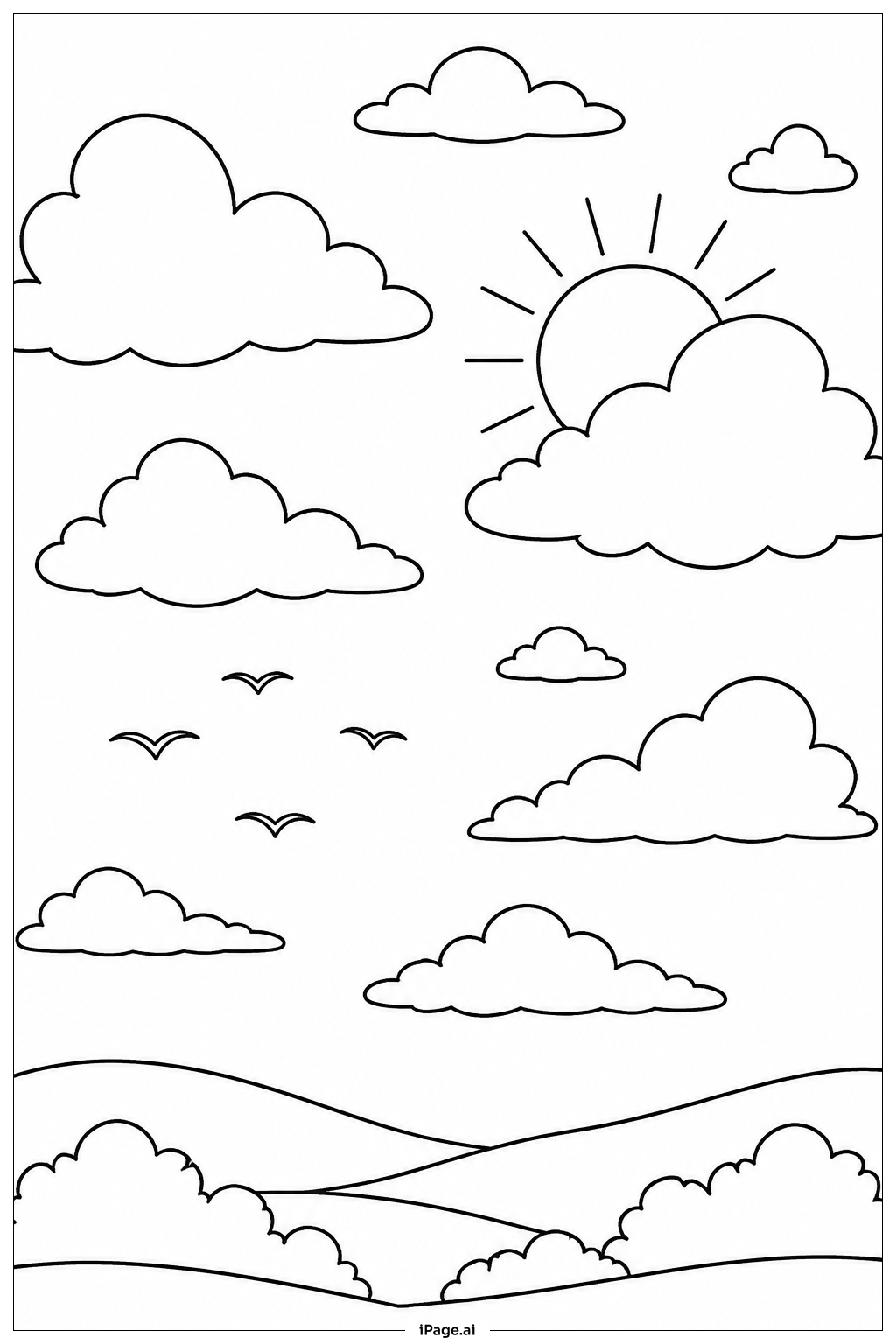
Coloring tips: How to color May Cloudy Sky coloring page well?
Start with the sky background. Use light blue or pale lavender for the open sky areas between the clouds. For the clouds, try soft white, light gray, or pale yellow to show where sunlight peeks through. Add darker gray or blue-gray along the bottom edges of the clouds to give them a puffy, three-dimensional shape. For the landscape below, use fresh spring greens for the hills and fields. You can add a warm yellow-green to show sunlit patches of grass. If there are birds, color them dark gray or black for contrast. Try blending lighter and darker shades in each section to make the scene feel alive and full of depth. This image is perfect for experimenting with soft, cool colors.
Coloring challenges: Which parts are difficult to color and need attention for May Cloudy Sky coloring page?
• Cloud Shading: Clouds may look flat if colored with just one shade. The challenge is to use multiple tones of white, gray, and light blue to make each cloud look round and three-dimensional. Apply darker shades along the lower and inner edges, and keep the tops bright to suggest light coming from above.
• Sky Gradient: The open sky should gradually shift in color, lighter near the clouds and deeper blue toward the top or edges. Achieving a smooth gradient without hard lines can be tricky, especially with crayons or colored pencils. Gentle, overlapping strokes in the same direction help create a natural fade.
• Depth and Layering: Clouds in the background should look smaller and lighter than those in the foreground. This sense of distance is hard to show without careful color choices. Using slightly cooler, less saturated tones for far-away clouds helps push them visually into the background.
• Fine Details like Birds: If the scene includes small birds flying between clouds, these tiny shapes require careful, controlled strokes. Coloring them too dark or too large can make them stand out unnaturally. A fine-tipped tool works best for these small elements.
• Landscape Transition: Where the sky meets the land, blending the colors smoothly is a challenge. The horizon line should feel soft and natural, not harsh. Using a light hand and layering colors gradually near the horizon creates a peaceful, realistic boundary between earth and sky.
Benefits of coloring books: Advantages of drawing May Cloudy Sky coloring page
Coloring this May Cloudy Sky page offers a wide range of creative and personal benefits for kids and beginners alike. Working with soft blues, grays, and greens helps children explore color mixing and shading in a low-pressure, fun way. Trying to make clouds look fluffy and three-dimensional encourages problem-solving and builds confidence in using art tools. The calm, open composition of a sky scene is especially relaxing to color. It gives your mind a gentle focus, which can ease stress and improve mood. For younger children, filling in large cloud shapes develops fine motor skills and hand control. Older kids and teens can challenge themselves with realistic shading and gradient techniques, turning a simple sky into a detailed piece of art. The nature theme also sparks curiosity about weather, seasons, and the world outside. Sitting down to color a peaceful spring sky is a wonderful screen-free activity that encourages mindfulness and creativity. Whether you use crayons, colored pencils, or markers, this page is a great way to practice patience and enjoy the simple pleasure of making something beautiful by hand.