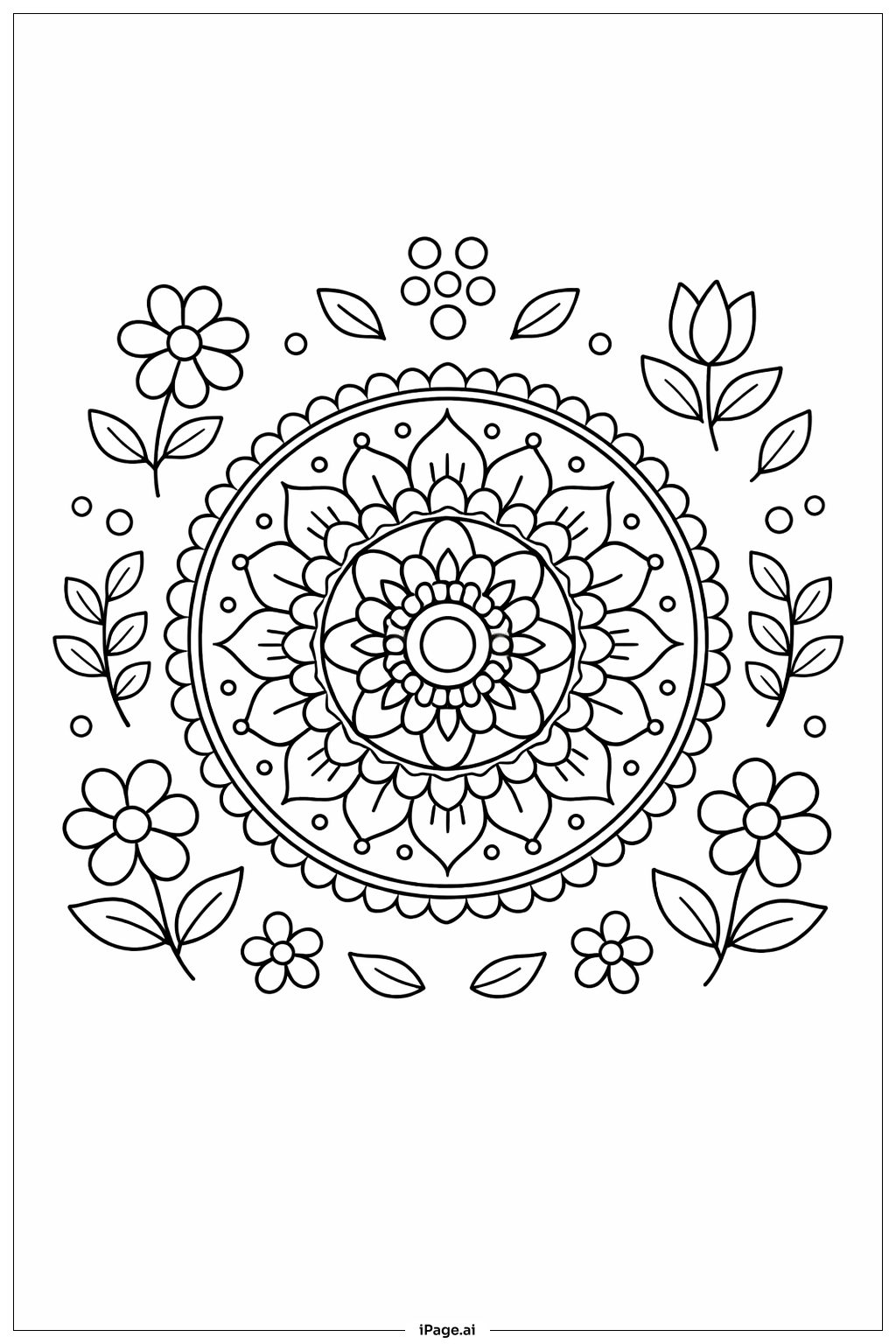
Coloring tips: How to color Mandala Garden coloring page well?
Try using bright and cheerful colors like yellow, pink, purple, and green to make the flowers and leaves stand out. You can choose one color for the main mandala petals and a different color for the smaller details inside it to create contrast. For the leaves, green shades work well, but you can also add some blue or light green to give them more depth. Feel free to use different shades of the same color to fill the petals and leaves for a more realistic look. Use small strokes or gentle shading to color the dots and tiny details in the mandala carefully. Remember to have fun and choose colors that make you happy!
Coloring challenges: Which parts are difficult to color and need attention for Mandala Garden coloring page?
1. The mandala center has small, detailed spaces that need careful coloring to avoid going outside the lines. 2. The symmetrical pattern requires consistent color choices to keep harmony and balance in the design. 3. The small dots and tiny leaves can be hard to color neatly because of their tiny size. 4. Mixing colors well without overlapping in tight spaces needs good control and patience. 5. Deciding which parts to color first can be tricky to avoid smudging or missing some areas shapes behind others.
Benefits of coloring books: Advantages of drawing Mandala Garden coloring page
Coloring this mandala garden helps improve focus and concentration because it needs attention to detail. It encourages creativity by allowing you to experiment with colors and combinations. The symmetrical and repetitive patterns can be relaxing and reduce stress. Coloring small spaces helps develop fine motor skills and hand-eye coordination. Also, completing the picture gives a sense of accomplishment and boosts confidence.