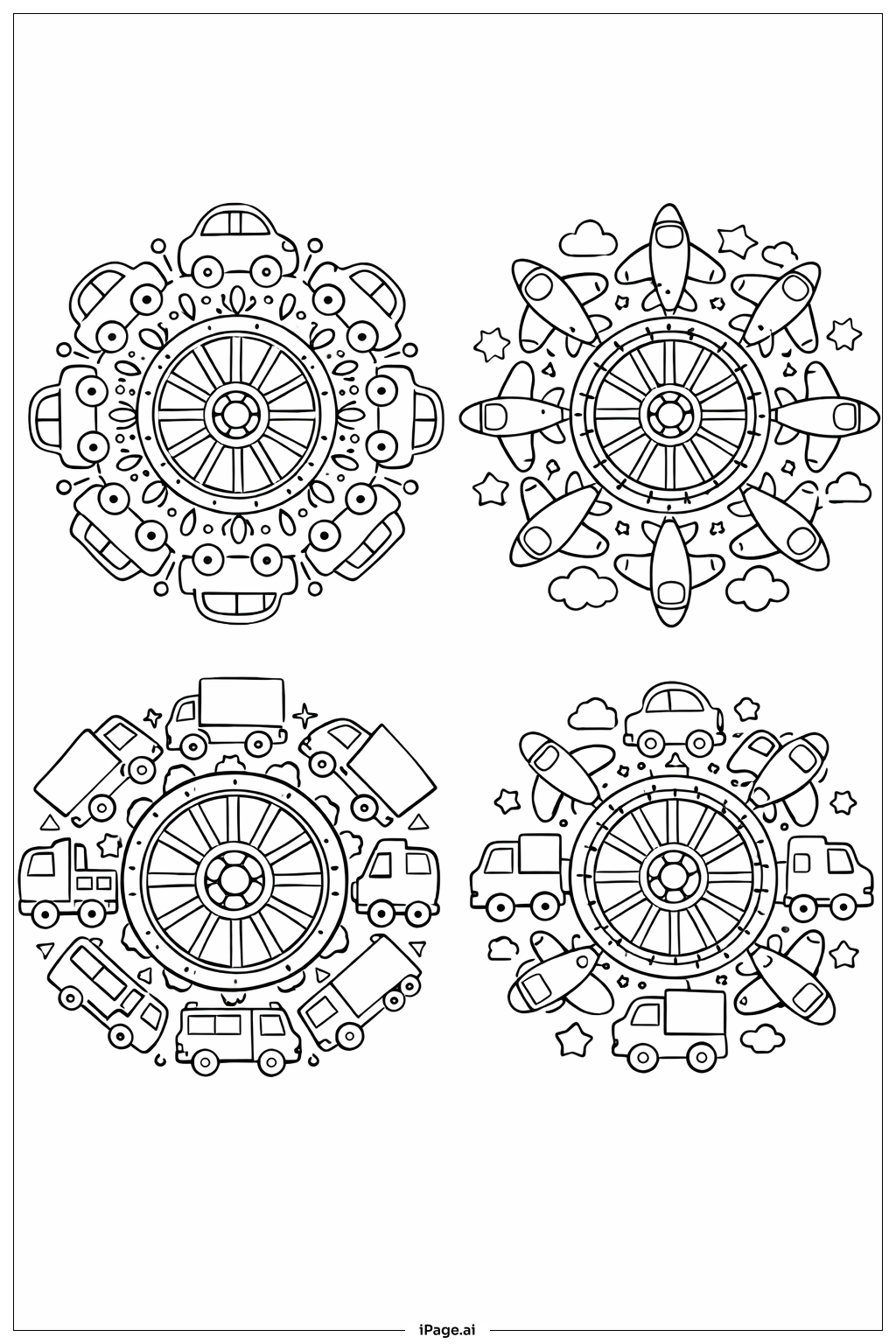
Coloring tips: How to color Mandala Vehicles coloring page well?
Start from the center and work your way outward. This helps keep the design organized and avoids smudging finished sections.
For the vehicles, try bold, energetic colors like red, blue, orange, and yellow. These colors give each transport element a lively, exciting feel.
Use contrasting colors for neighboring sections so each vehicle stands out clearly. For example, place a blue car next to an orange airplane.
The background areas between vehicles work well in softer tones like light purple, mint green, or pale gold. This lets the vehicles pop visually.
Try color gradients on larger vehicle shapes — shifting from dark at the edges to light in the center adds depth and dimension.
Keep the tiny decorative dots and accent lines in a single neutral tone like white, cream, or silver to unify the whole design without overwhelming it.
Colored pencils are great for fine detail areas. Markers or watercolors work nicely on the broader background sections. Have fun mixing tools for a unique, layered result!
Coloring challenges: Which parts are difficult to color and need attention for Mandala Vehicles coloring page?
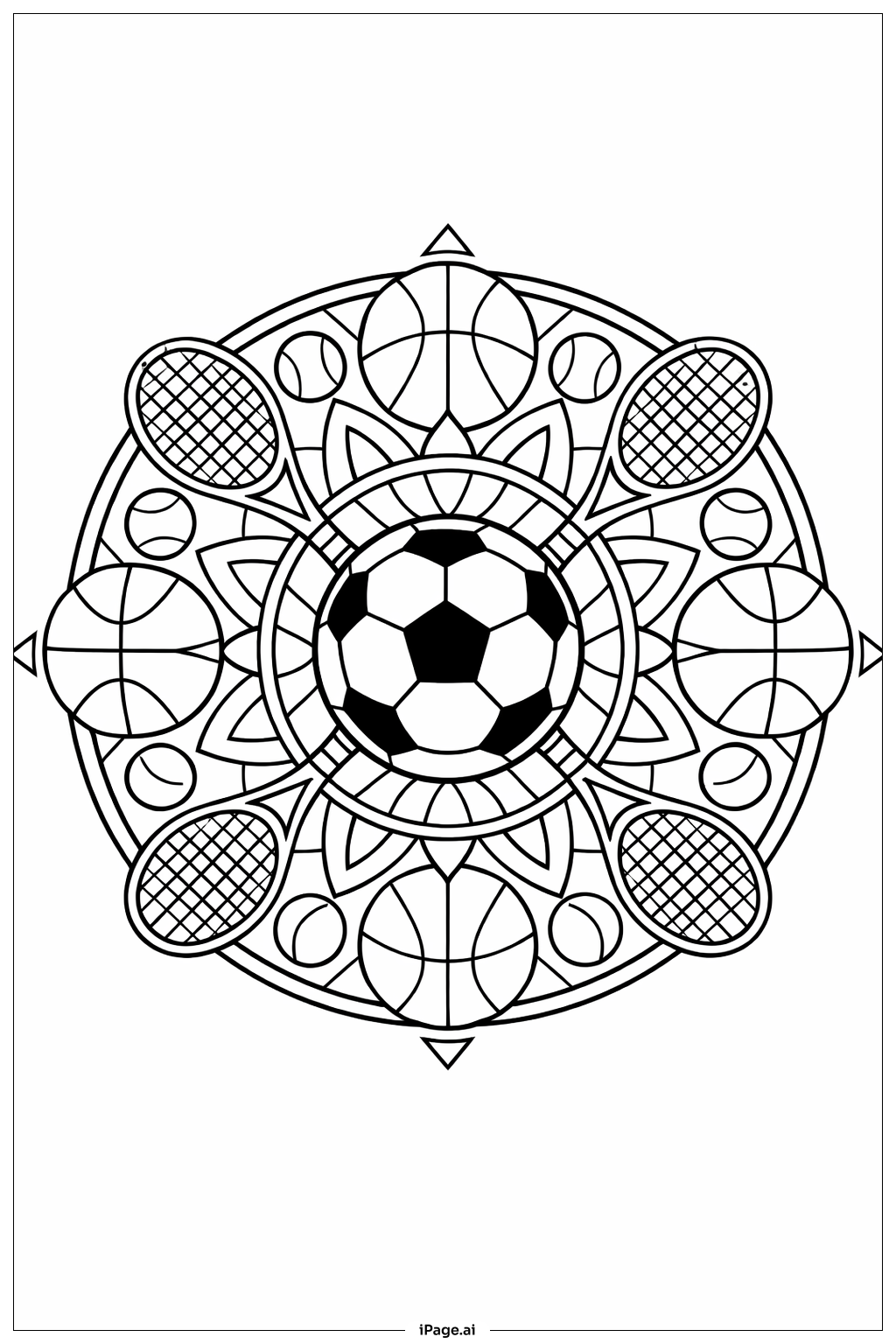
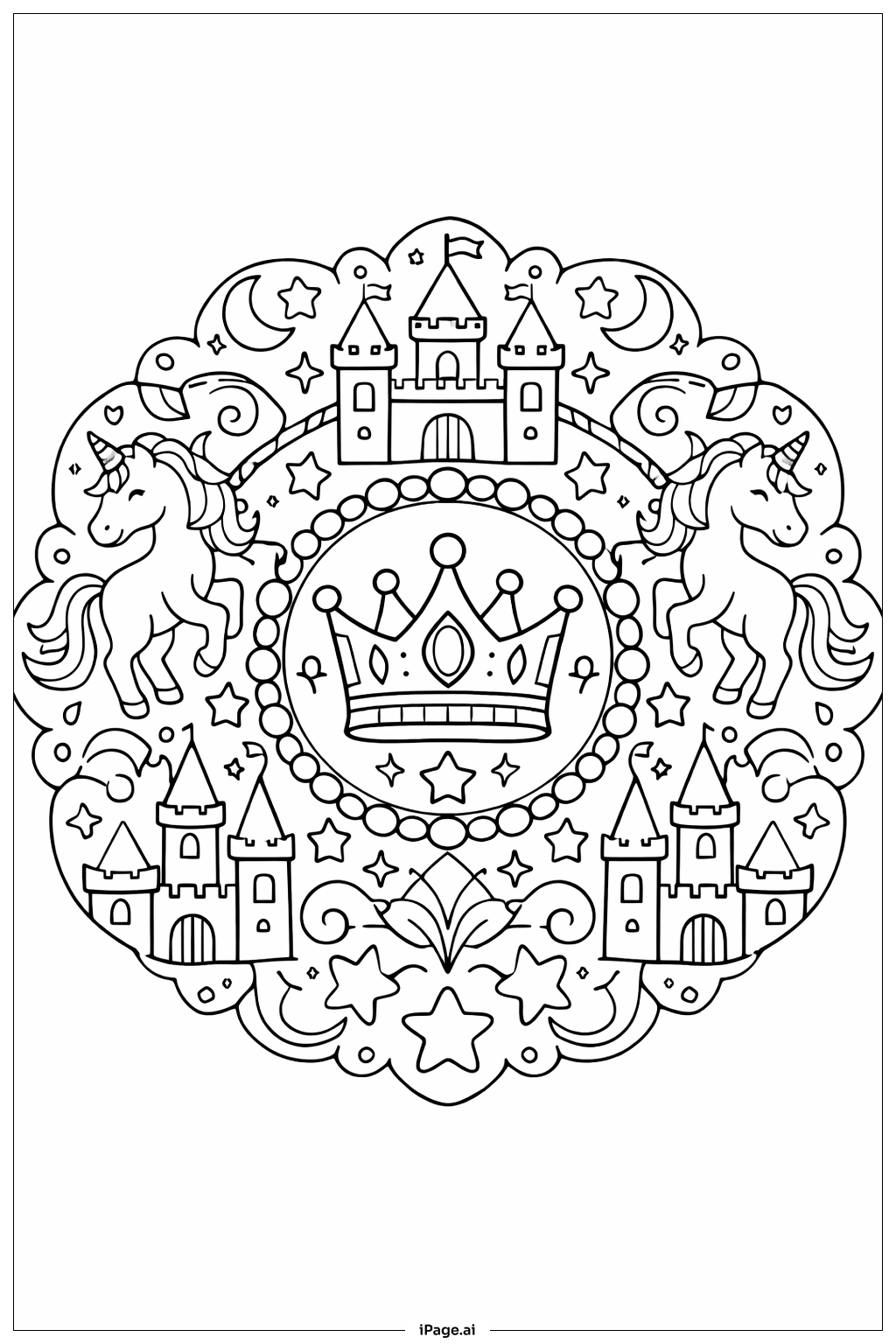
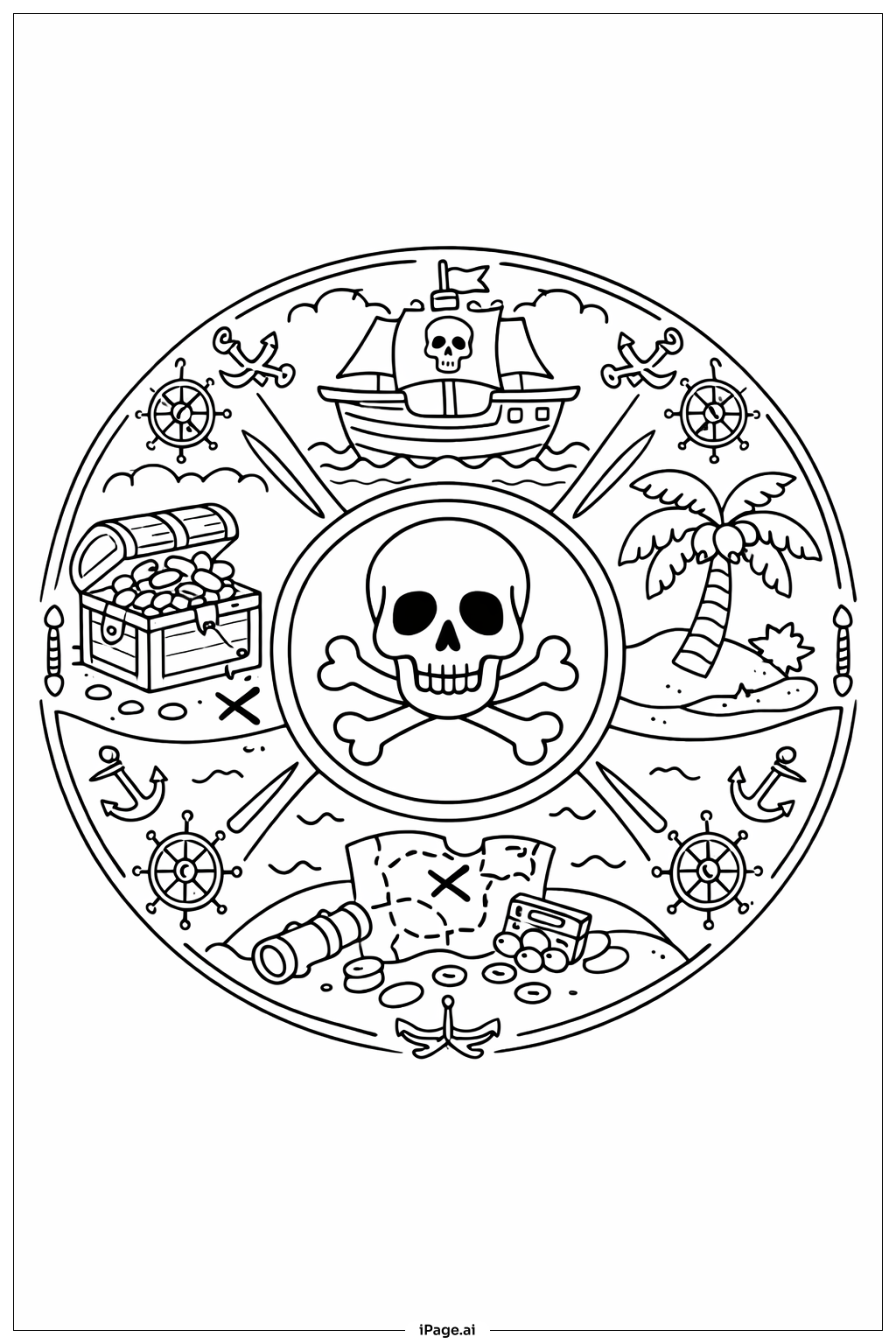
• Intricate Line Density: The mandala is packed with extremely fine lines and tightly spaced details. Vehicles overlap with decorative swirls, dots, and geometric fills, making it easy to accidentally color outside the intended boundary. Young colorists may find it tricky to stay within such small shapes, and even experienced colorists need steady hands and sharp pencil tips to handle this level of density accurately.
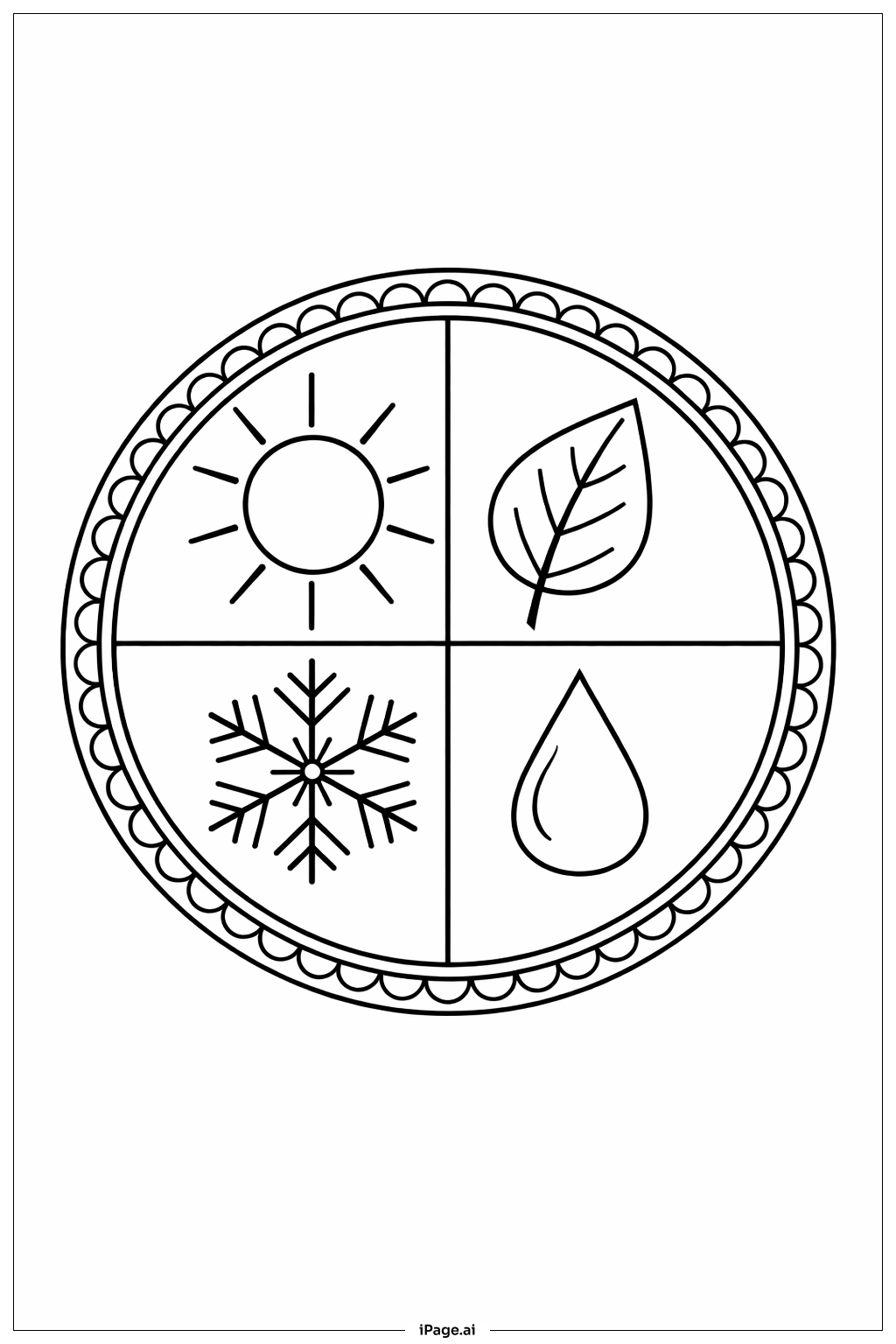
• Symmetry Consistency: The mandala follows a strict radial symmetry, meaning the same vehicle and pattern repeat multiple times around the circle. Maintaining consistent color choices across all matching sections is a real challenge. If one car is colored red on the left side, all corresponding cars in the pattern should match. Losing track of this symmetry can make the finished piece look uneven or unbalanced.
• Color Transition Management: Many sections sit directly next to each other with no buffer space. Blending or transitioning colors smoothly between adjacent vehicles and decorative elements requires careful planning. Using colors that are too similar may cause sections to visually merge, while clashing colors can feel jarring if not thoughtfully arranged.
• Small Accent Details: Scattered throughout the design are tiny dots, miniature swirls, and hair-thin accent lines inside each vehicle shape. These micro-details demand precision tools — a blunt pencil or thick marker tip simply cannot reach into these spaces without muddying the surrounding colors.
• Background Fill Decisions: The negative space between vehicle clusters forms irregular, organic shapes that vary in size. Deciding how to fill these background pockets — whether with a flat color, a gradient, or a pattern — requires advance planning to ensure the overall design feels cohesive rather than patchy.
Benefits of coloring books: Advantages of drawing Mandala Vehicles coloring page
Coloring this Mandala Vehicles page offers a wonderful mix of creative and developmental benefits for kids and adults alike.
For children, it builds fine motor skills and hand-eye coordination as they navigate the intricate lines and small shapes. Staying within detailed boundaries strengthens pencil control, which supports handwriting development too.
The vehicle theme sparks curiosity and imagination. Kids can learn to identify different types of transportation while they color, turning the activity into a fun, informal learning experience.
The mandala format introduces the concept of symmetry and pattern recognition in a hands-on way. Matching colors across repeating sections encourages logical thinking and attention to detail.
For older kids and adults, the complexity of the design makes it a genuinely meditative activity. Focusing on one small section at a time quiets the mind and reduces stress, similar to the calming effect of mindfulness exercises.
Completing a detailed piece like this also builds patience and a sense of accomplishment. Finishing something that required sustained effort feels rewarding and boosts confidence.
Overall, this page is a creative workout that combines artistic expression, cognitive engagement, and relaxation — all in one beautifully designed image. It is a great activity for solo focus time or a shared experience between parents and children.