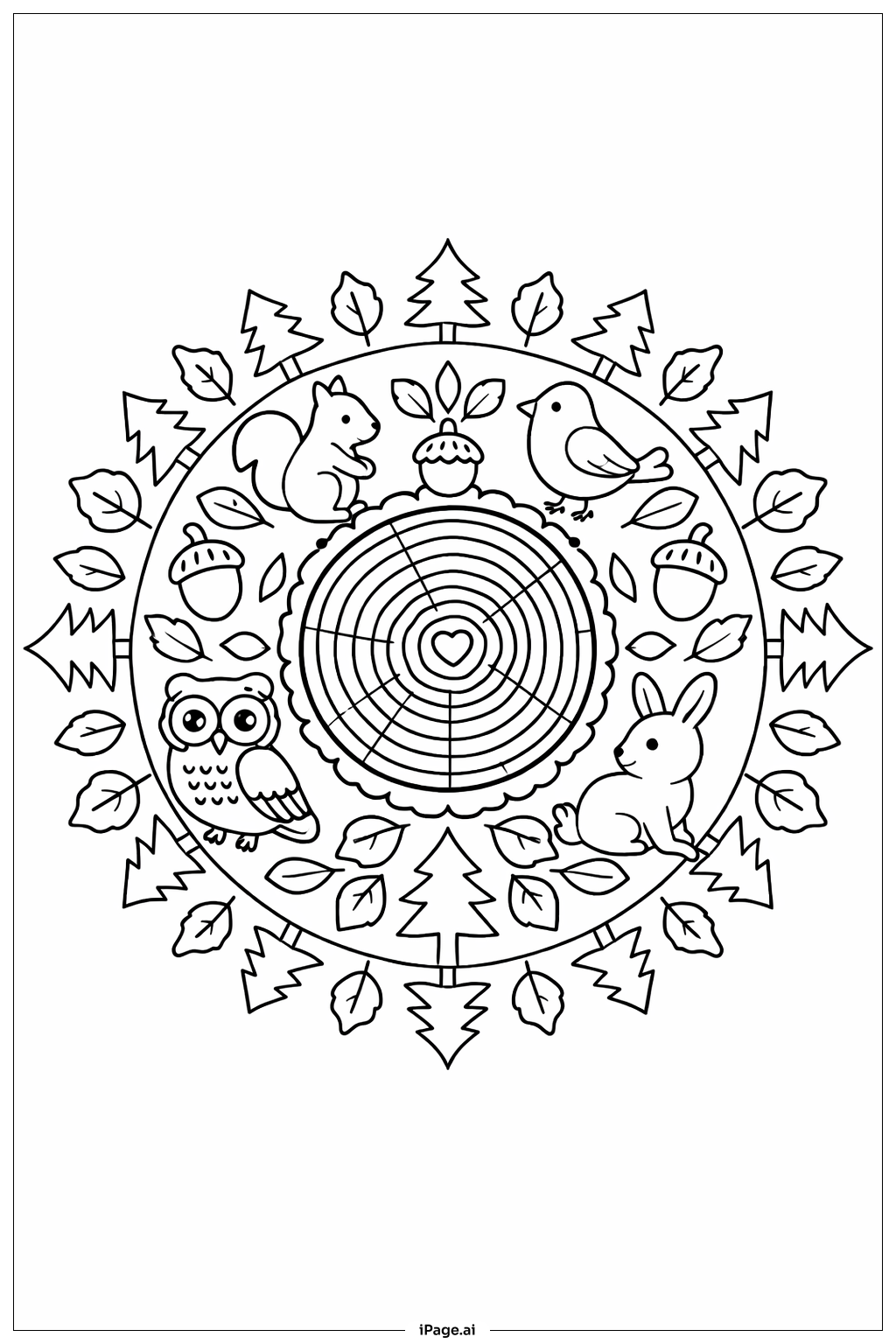
Coloring tips: How to color Mandala Forest coloring page well?
Use green tones for the pine trees and leaves to bring the forest to life. Brown and beige shades work well for the tree trunk and acorns. Each animal can be colored with natural colors: gray or brown for the squirrel, soft blue or yellow for the bird, brown and cream for the owl, and white or light brown for the rabbit. Use bright colors for the acorns’ caps to add a pop of color. Try to use different shades to show depth and texture.
Coloring challenges: Which parts are difficult to color and need attention for Mandala Forest coloring page?
1. Small details like the owl's feathers and the lines in the tree trunk could be tricky to color carefully.
2. The animals are spaced closely with leaves and acorns, which require attention to avoid coloring outside the lines.
3. The circular pattern means colors should be balanced around the design to keep symmetry and harmony.
4. Blending colors softly on the tree rings and animal bodies might be challenging for beginners.
5. Coloring the small leaves and acorns needs patience and control to keep the neatness of the image.
Benefits of coloring books: Advantages of drawing Mandala Forest coloring page
This page helps improve focus and attention to detail while coloring small objects. It encourages creativity by choosing natural colors and experimenting with shading. Coloring animals and nature themes can be calming and promote appreciation for wildlife. It also develops fine motor skills and hand-eye coordination when coloring inside tiny shapes. Overall, it offers a relaxing and enjoyable activity that builds artistic skills.