Coloring tips: How to color Mandala Elephant coloring page well?
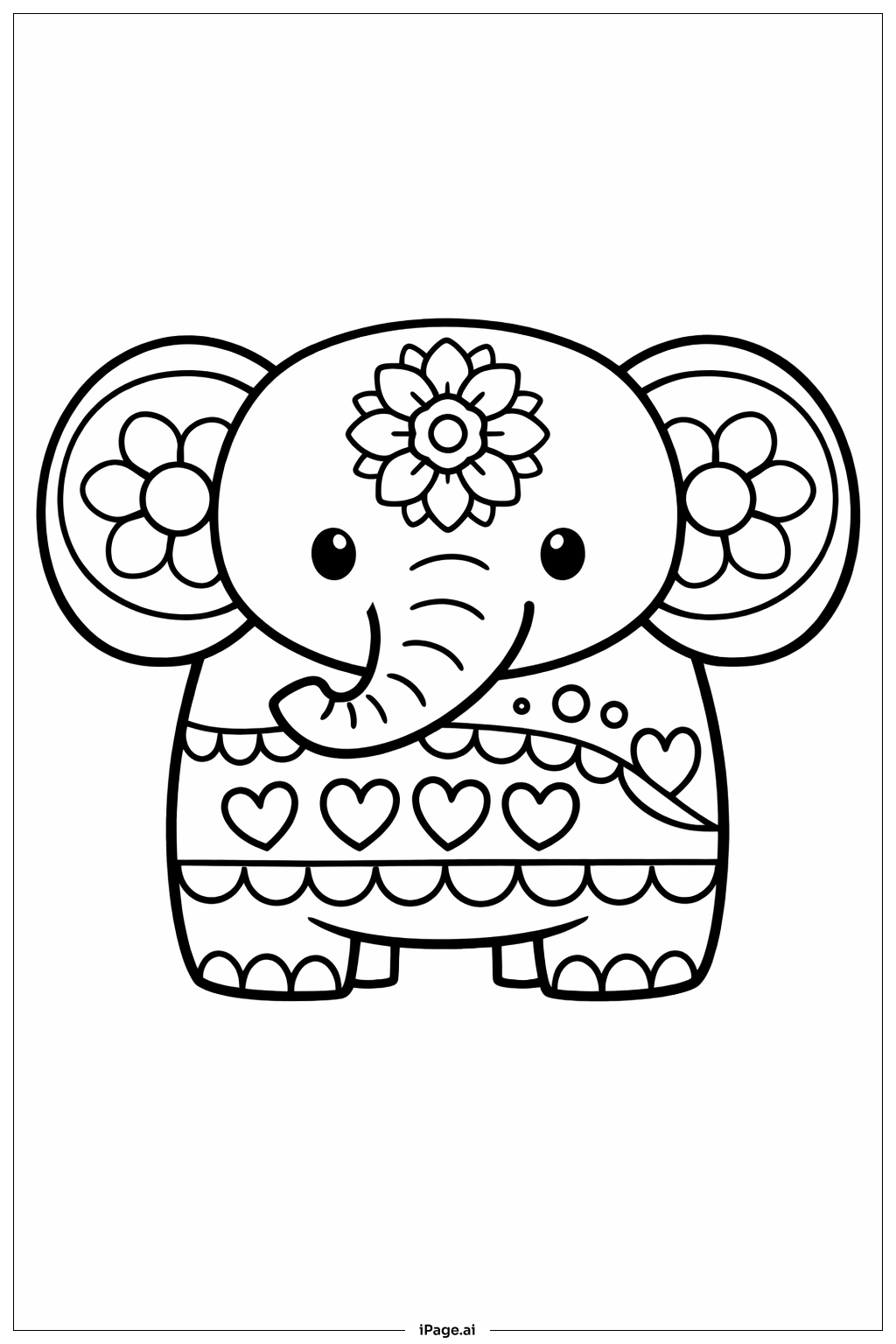
Use bright and cheerful colors like pink, blue, yellow, and green to make the elephant lively. Color the flowers on the ears and forehead in different colors to highlight the mandala patterns. Use a slightly darker shade for the elephant’s body compared to the decorations to make details stand out. Try blending similar colors for the hearts and circles to create a soft look. Remember to color inside the lines carefully to keep the patterns neat. You can also use glitter pens or markers to add sparkle to the flowers and hearts.
Coloring challenges: Which parts are difficult to color and need attention for Mandala Elephant coloring page?
1. Small shapes: The hearts and circles are tiny, requiring careful and steady coloring. 2. Detailed patterns: The flower mandala on the forehead has many petals which need attention to detail. 3. Symmetry: Both ears have identical flower patterns, so colors should be matched to keep balance. 4. Curved lines: The trunk and scalloped borders have smooth curved lines, needing gentle hand movements to avoid coloring outside these lines. 5. Layering colors: To make the elephant look vibrant, blending multiple shades might be challenging for beginners.
Benefits of coloring books: Advantages of drawing Mandala Elephant coloring page
Coloring this elephant helps children develop fine motor skills by practicing careful coloring within small shapes. It encourages creativity as they select colors for different patterns and combine shades. The symmetry in the design teaches balance and attention to detail. Coloring mandala patterns can also be calming and improve concentration. Finally, seeing the beautiful colorful elephant at the end gives a sense of accomplishment and joy.