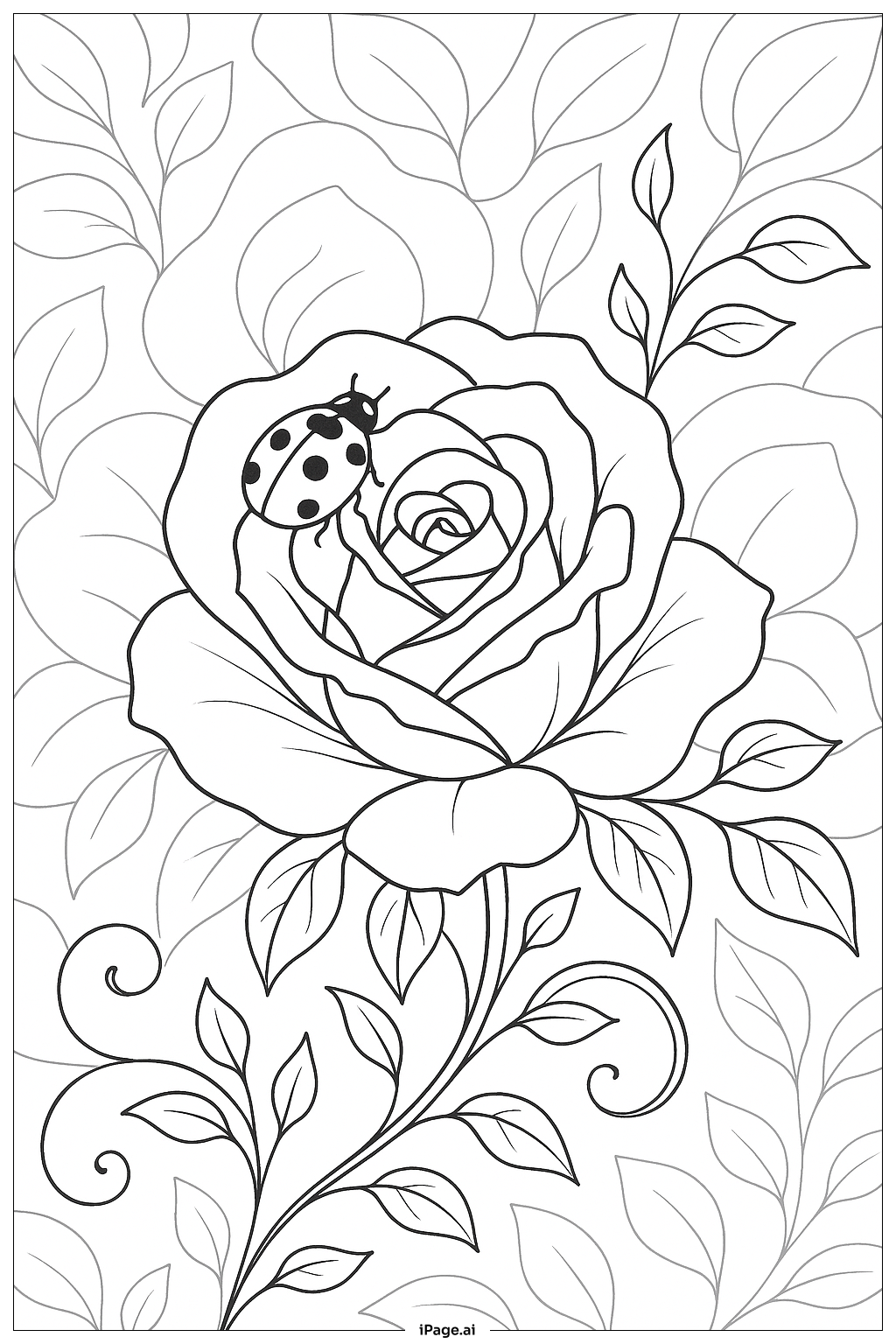
Coloring tips: How to color Ladybug On A Rose With Vines coloring page well?
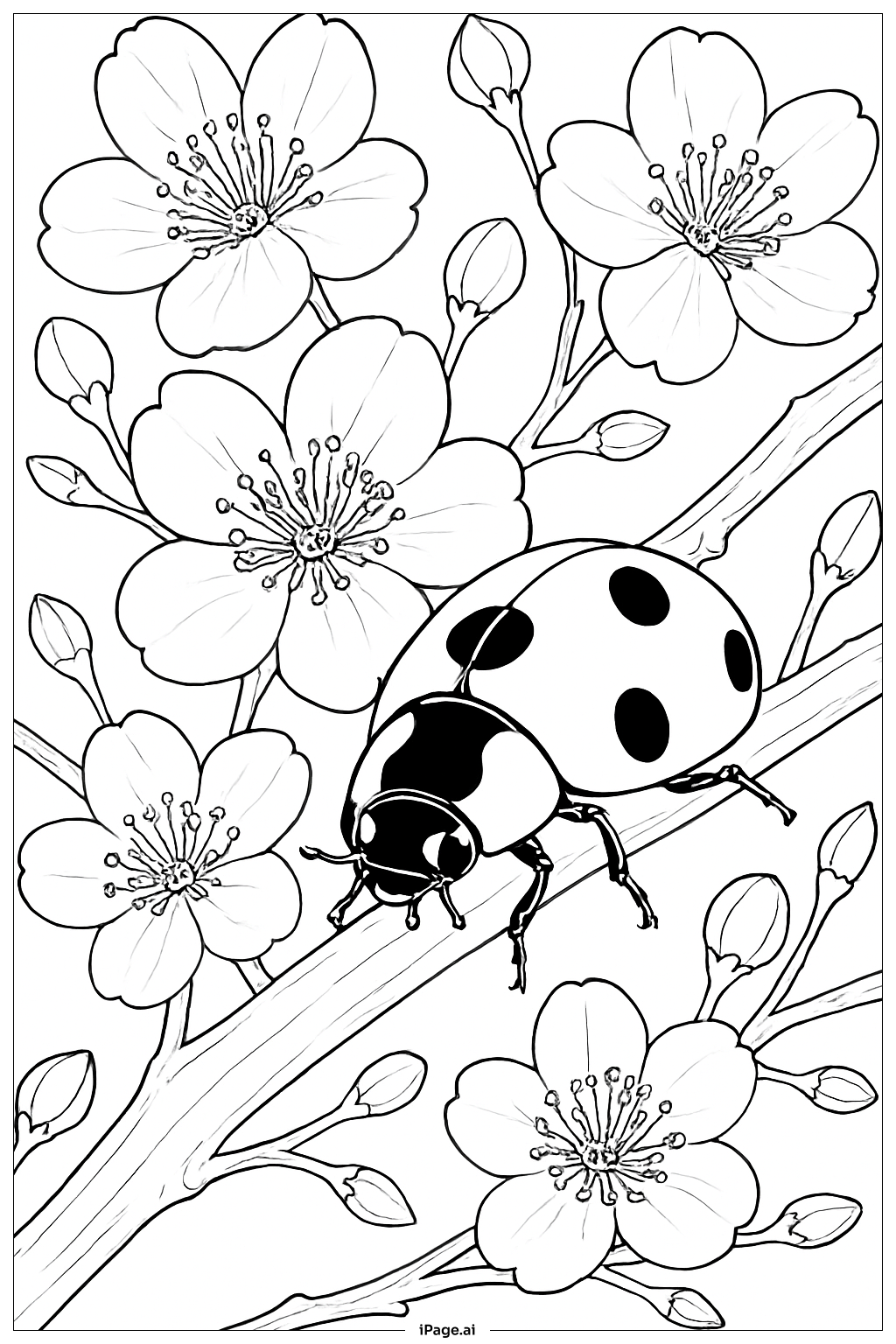
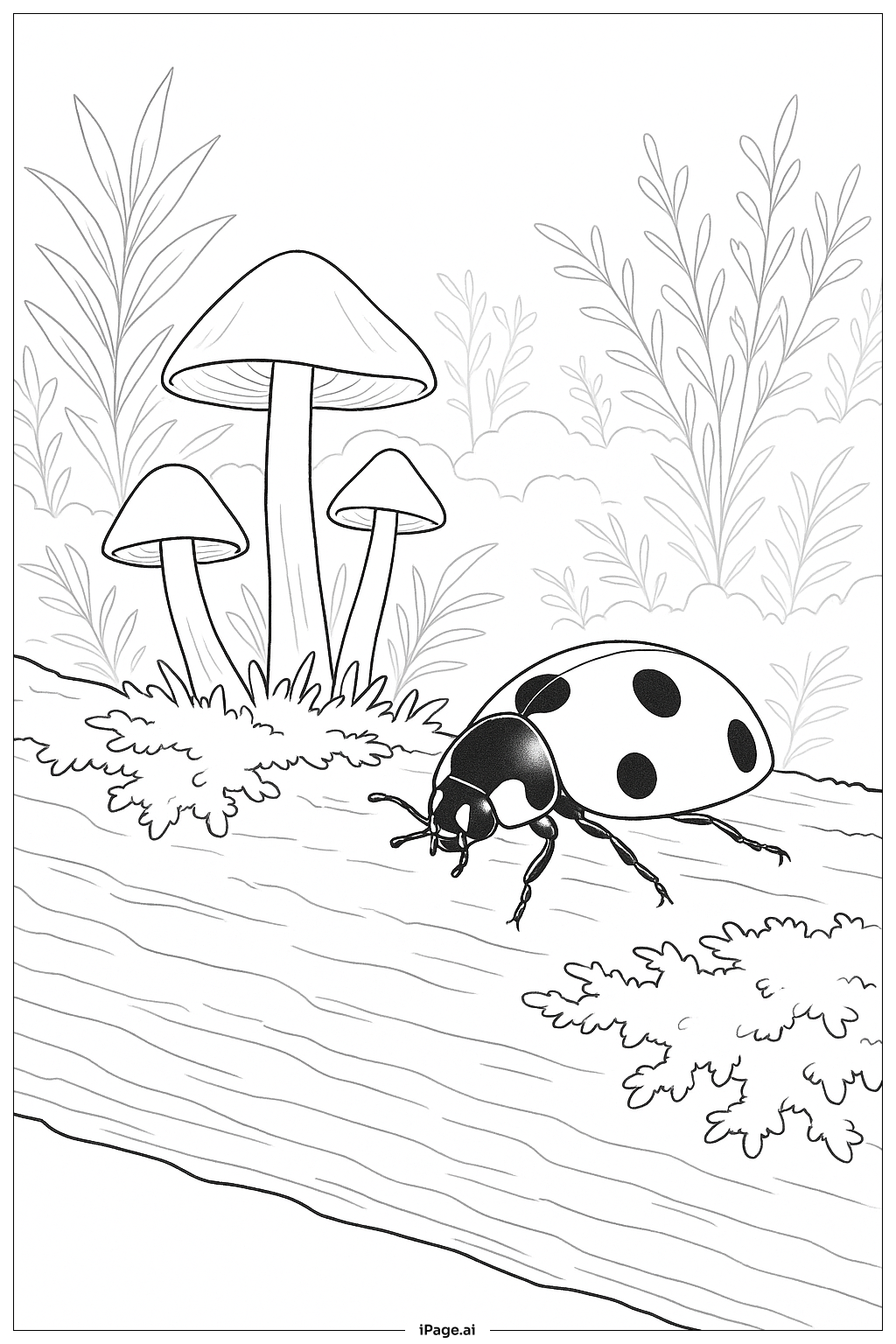
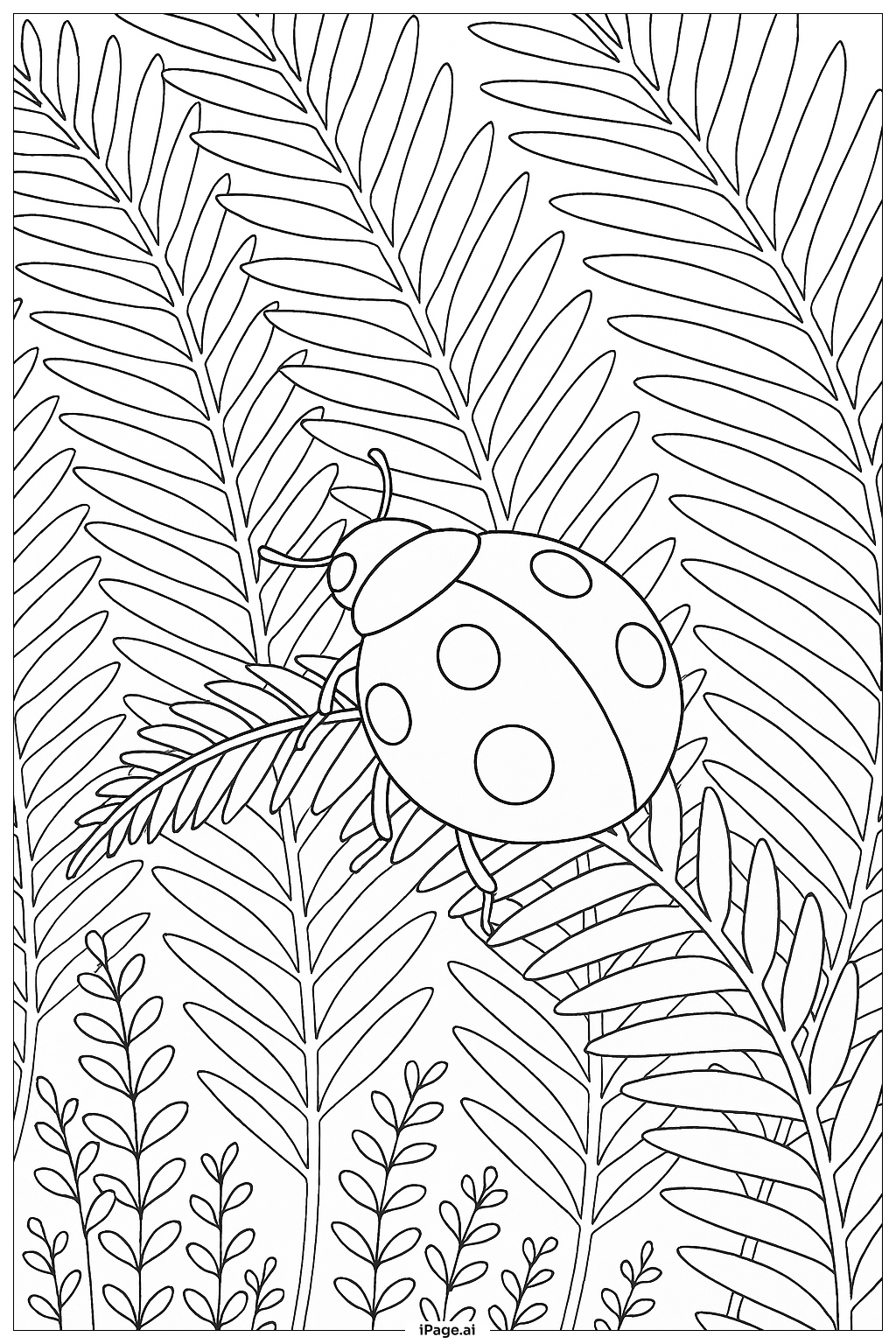
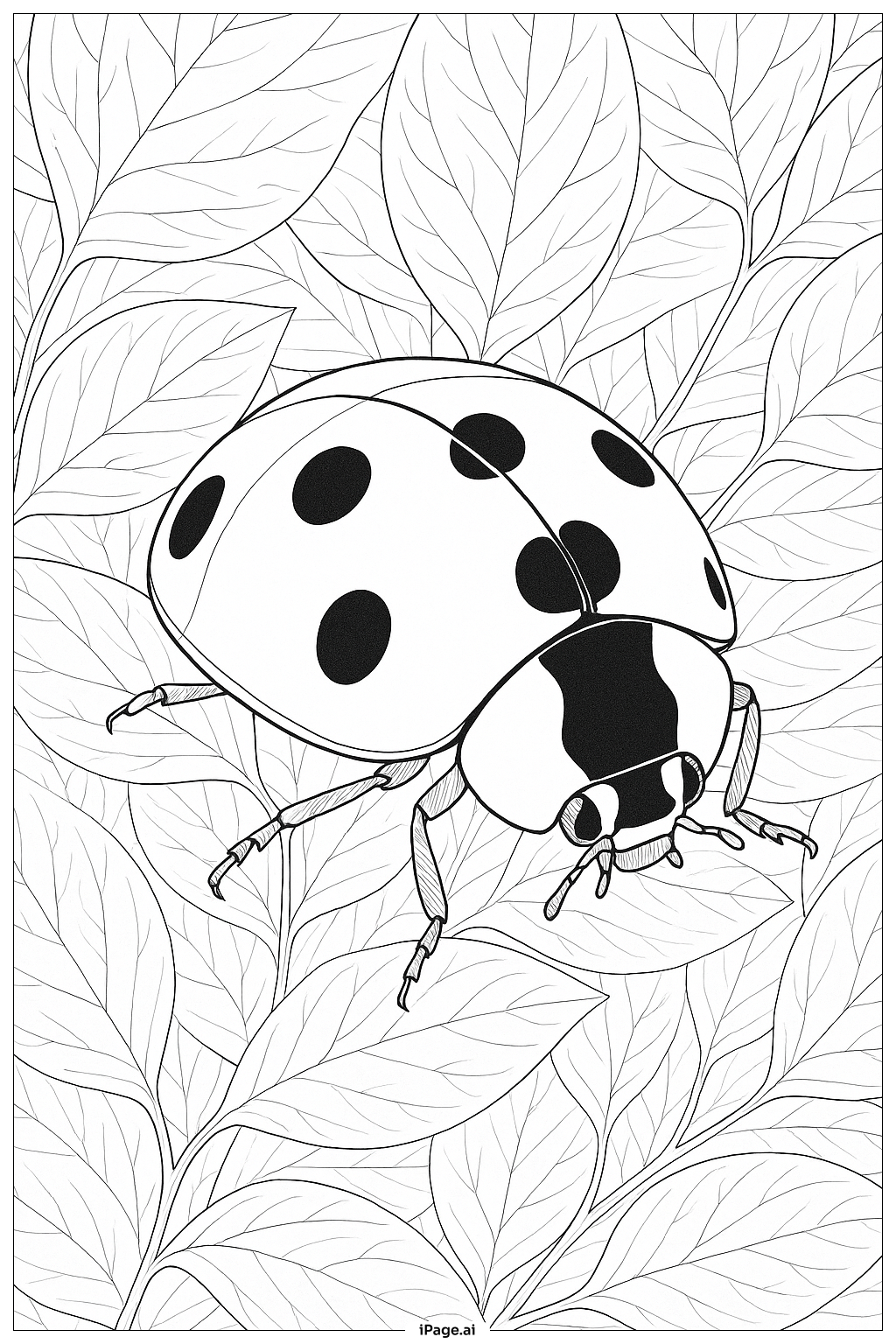
Use bright red for the ladybug's body and black for its spots and head to make it stand out. For the rose, try shades of pink, red, or even orange to create a warm, rich flower. Blend lighter and darker tones on the petals to show depth and curves. Use different shades of green for the leaves and vines to add variety and make the image look lively. You can add some yellow or light green highlights to the leaves for more dimension. Don't forget the background leaves—color them with softer, more muted greens or blues to keep the focus on the rose and ladybug.
Coloring challenges: Which parts are difficult to color and need attention for Ladybug On A Rose With Vines coloring page?
1. Small details: The ladybug’s spots and tiny legs require careful coloring to stay inside the lines without smudging. 2. Petal outlines: The rose petals overlap each other, making it tricky to color each section neatly and show the flower's layers. 3. Leaf veins: Many leaves have thin lines representing veins, which need precision to avoid coloring over them. 4. Intricate vines: The curling vines with multiple leaves need steady handwork to keep the lines sharp and clean. 5. Color blending: Creating shading on the rose petals to show depth may be difficult for beginners, requiring gradual color transitions.
Benefits of coloring books: Advantages of drawing Ladybug On A Rose With Vines coloring page
Coloring this image helps improve fine motor skills by practicing precise coloring in small areas like the ladybug and leaf veins. It encourages creativity in choosing colors for the rose, leaves, and ladybug, allowing children to explore warm and cool tones. Coloring the overlapping petals teaches attention to detail and patience. It also helps develop an understanding of nature's shapes, such as flowers and insects. Completing this page can give a sense of accomplishment and boost confidence in young artists.