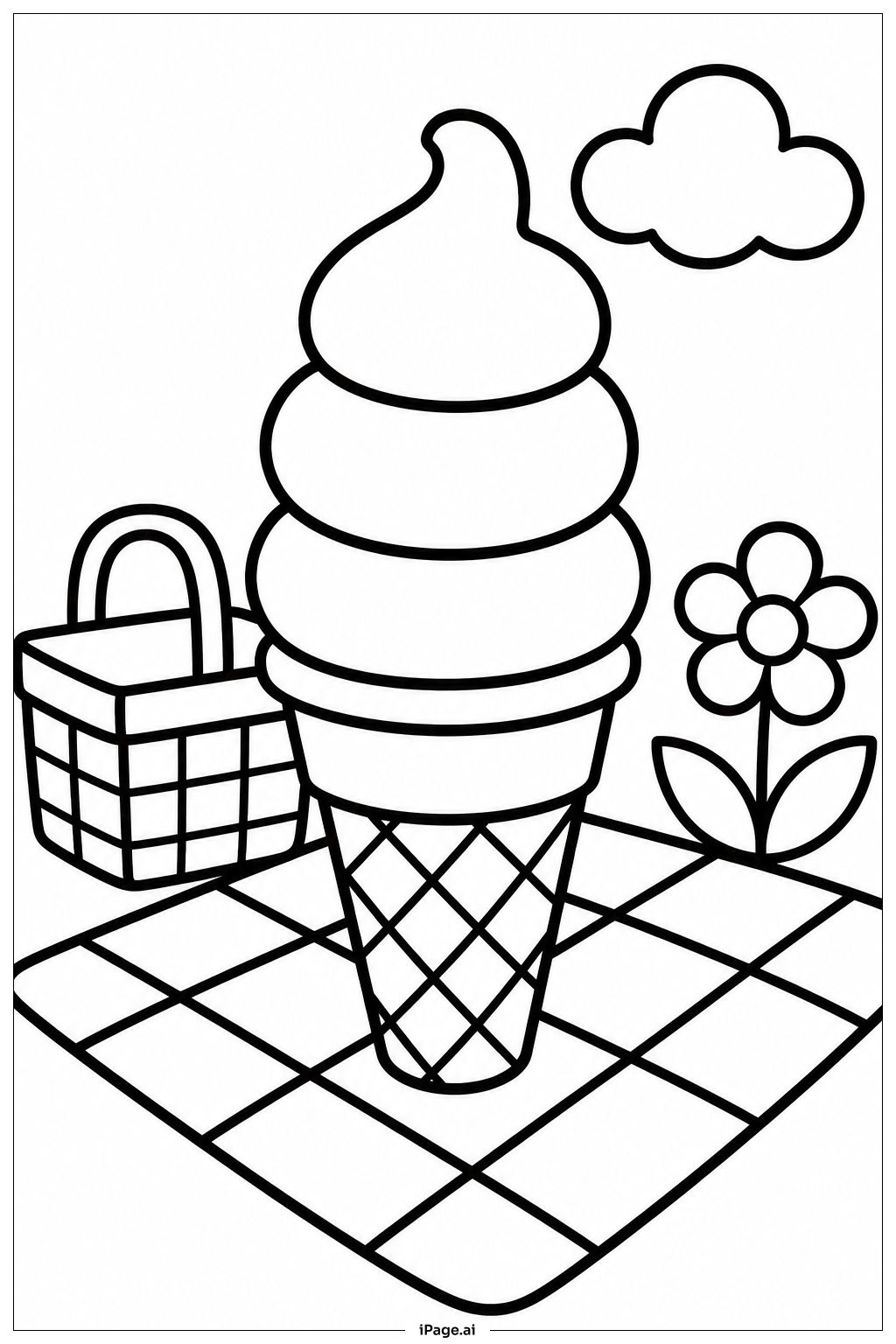
Coloring tips: How to color Ice Cream Cone On Blanket coloring page well?
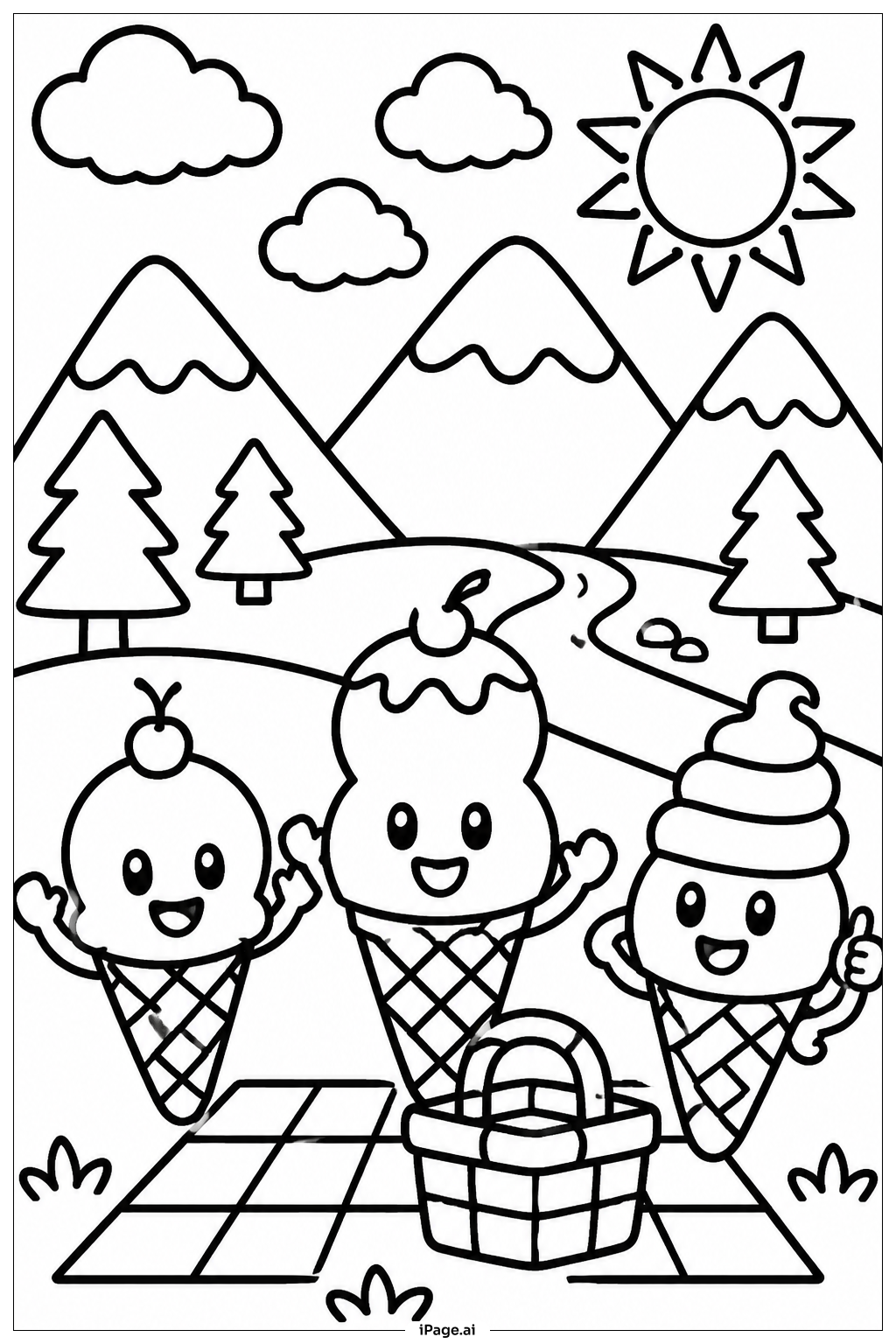
For the ice cream scoops, try using bright and appetizing colors like pink for strawberry, brown for chocolate, and yellow for vanilla. You could also experiment with mint green, orange for mango, or purple for grape flavors. The waffle cone looks wonderful in light brown or tan shades, with darker brown lines to emphasize the crosshatch pattern. For the blanket, classic red and white checks create a traditional picnic look, but you could also try blue and white, or any color combination you love. Color the grass in various shades of green to add depth and realism. Make the flowers colorful with reds, yellows, pinks, or purples to brighten the scene. Consider using a light blue or soft yellow background to suggest sky or sunshine, creating a warm summer atmosphere.
Coloring challenges: Which parts are difficult to color and need attention for Ice Cream Cone On Blanket coloring page?
• Ice Cream Scoop Textures: Each scoop has unique surface details that require careful attention. The wavy lines and dimpled textures need consistent coloring to look realistic. Younger children might find it challenging to stay within these curved boundaries while maintaining even color distribution. Using light pressure and building up color gradually helps achieve a smooth, creamy appearance.
• Waffle Cone Pattern: The diamond crosshatch pattern on the cone contains many small geometric shapes that must be colored precisely. Each diamond section is quite tiny, requiring steady hand control and patience. Children may struggle with keeping colors inside these narrow spaces. Using fine-tipped coloring tools and working slowly section by section makes this task more manageable.
• Checkered Blanket Design: The alternating squares of the blanket pattern demand careful planning to maintain the checkerboard effect. It is easy to lose track of which squares should be which color, especially around the edges where the pattern curves. Counting squares and marking a pattern beforehand can prevent mistakes and ensure a neat, organized appearance.
• Small Background Details: The flowers, grass blades, and scattered elements around the blanket contain fine lines and small spaces. These tiny areas can be difficult for younger colorists to fill without going outside the lines. The varying sizes and shapes require frequent tool changes or careful maneuvering to color effectively without smudging adjacent areas.
Benefits of coloring books: Advantages of drawing Ice Cream Cone On Blanket coloring page
Coloring this ice cream scene helps children develop fine motor skills through the varied elements requiring different levels of precision. The repetitive pattern work on the cone and blanket builds concentration and attention to detail. This image encourages color recognition and creative decision-making as children choose flavors and coordinate their color schemes. The summer theme sparks imagination and conversation about outdoor activities and favorite treats. Working on the small details like flowers and grass improves hand-eye coordination and patience. The checkered pattern introduces basic geometry concepts in a fun, approachable way. Completing this cheerful scene provides a sense of accomplishment and can be displayed proudly. The relatable subject matter makes coloring feel relevant and enjoyable, encouraging children to express their personal tastes through their color choices.