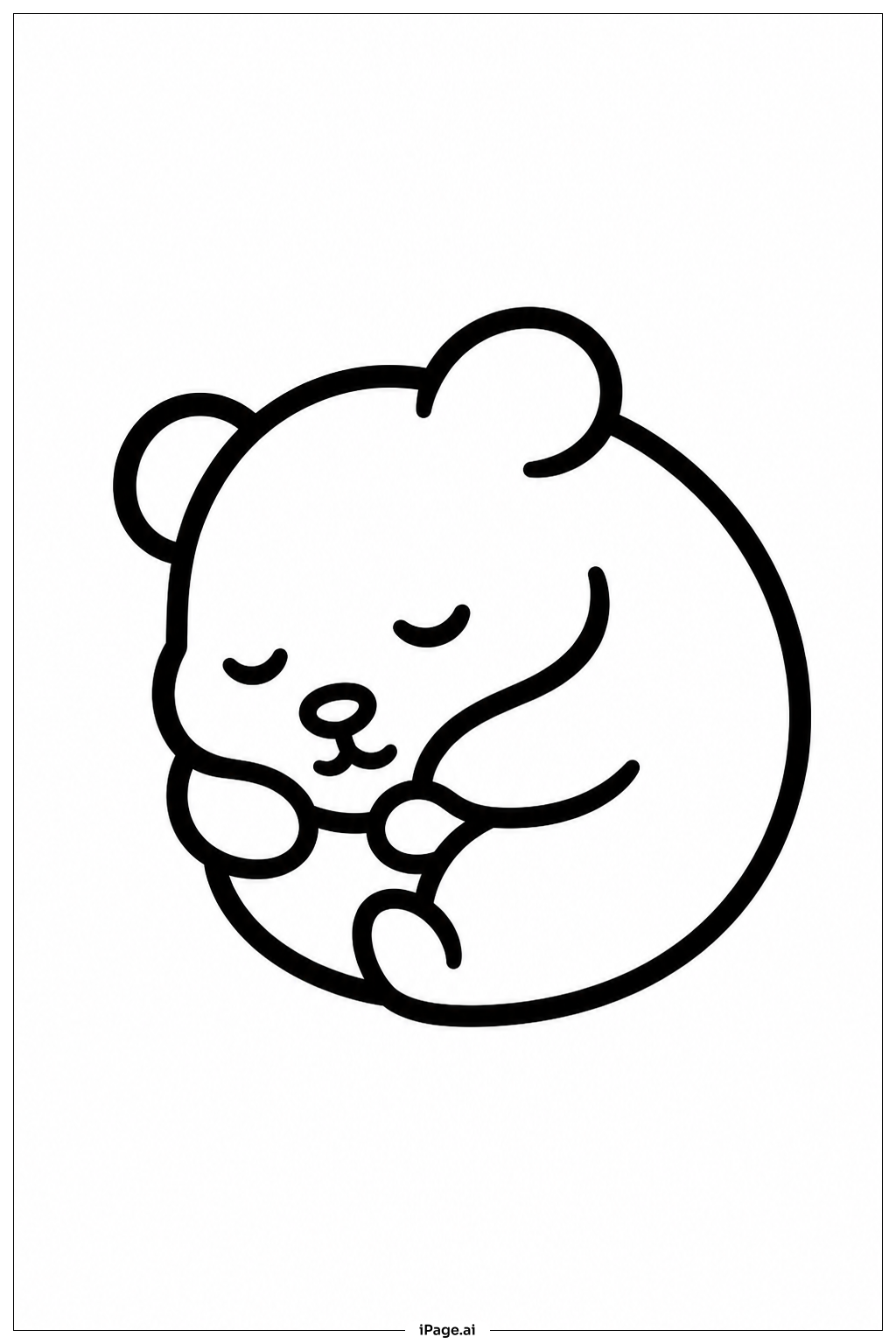
Coloring tips: How to color Sleeping Hamster coloring page well?
Start with the hamster's body using warm, soft shades. Light golden brown or sandy beige works great for the main fur. Use a slightly darker brown for the back and sides to add depth. Leave the belly area in a very light cream or pale white to show the softer underbelly fur. Color the tiny nose with a gentle pink or light rose shade. The small paws can be colored in a soft peach or pale pink tone. For the ears, use a warm pink on the inner part and a light tan on the outer edge. If there is bedding or nesting material, try soft yellows, light tans, or warm whites to keep the cozy feeling. Add gentle shading with colored pencils or watercolor crayons to make the fur look fluffy and three-dimensional. Blend colors smoothly to keep the overall look soft and cuddly. Avoid very dark or bold colors, as lighter and warmer tones best capture the sleepy, gentle mood of this image.
Coloring challenges: Which parts are difficult to color and need attention for Sleeping Hamster coloring page?
• Fur Texture Details: The hamster's body is covered with many fine lines that represent its fluffy fur. Staying within these tiny lines while adding color requires a steady hand and a sharp pencil or fine-tipped marker. Rushing through this area can make the fur look flat or messy instead of soft and realistic.
• Smooth Color Blending: To make the hamster look round and three-dimensional, you need to blend colors gradually from light to dark. This is tricky because the transition must be smooth, especially across the curved belly and back. Uneven blending can make the hamster look patchy rather than soft and fluffy.
• Tiny Features: The hamster has very small details like the nose, closed eyelids, tiny paws, and rounded ears. These areas are quite small, making it hard to apply color precisely without going outside the lines. Using a very fine coloring tool is important here, but controlling it in a limited space takes practice and patience.
• Keeping Colors Consistent: Since the hamster's fur has several tones blending together, it can be hard to keep the overall color scheme looking natural and unified. Jumping between too many different shades without a clear plan can make the image look unbalanced. Choosing a limited warm color palette beforehand helps avoid this challenge.
• Background and Bedding Separation: If the image includes bedding or surrounding material, it can be hard to separate those areas visually from the hamster's own fur. Using slightly different tones or textures for each section helps make the hamster stand out clearly from its cozy resting spot.
Benefits of coloring books: Advantages of drawing Sleeping Hamster coloring page
Coloring this Sleeping Hamster image offers many wonderful benefits for kids and adults alike. The peaceful subject matter creates a calming atmosphere that helps reduce stress and anxiety. Focusing on soft colors and gentle shapes encourages a relaxed, mindful state, almost like a quiet moment of meditation.
For younger children, this image helps develop fine motor skills and hand-eye coordination. Carefully coloring the small details, like the tiny paws and rounded ears, trains little hands to move with more control and precision.
The image also sparks creativity. Choosing which shades of brown, pink, or cream to use encourages kids to make their own color decisions and express themselves freely. There is no single right answer, and that freedom builds confidence.
For older kids and adults, the challenge of blending fur textures and adding shading provides a satisfying artistic exercise. It teaches basic color theory in a fun and approachable way.
Coloring cute animal images like this one can also inspire empathy and a love of animals in children. It gently encourages them to think about the natural world and the small creatures that share it with us.
Overall, this image is a joyful, soothing, and skill-building coloring experience for all ages.