Coloring tips: How to color Hamster Market Stalls coloring page well?
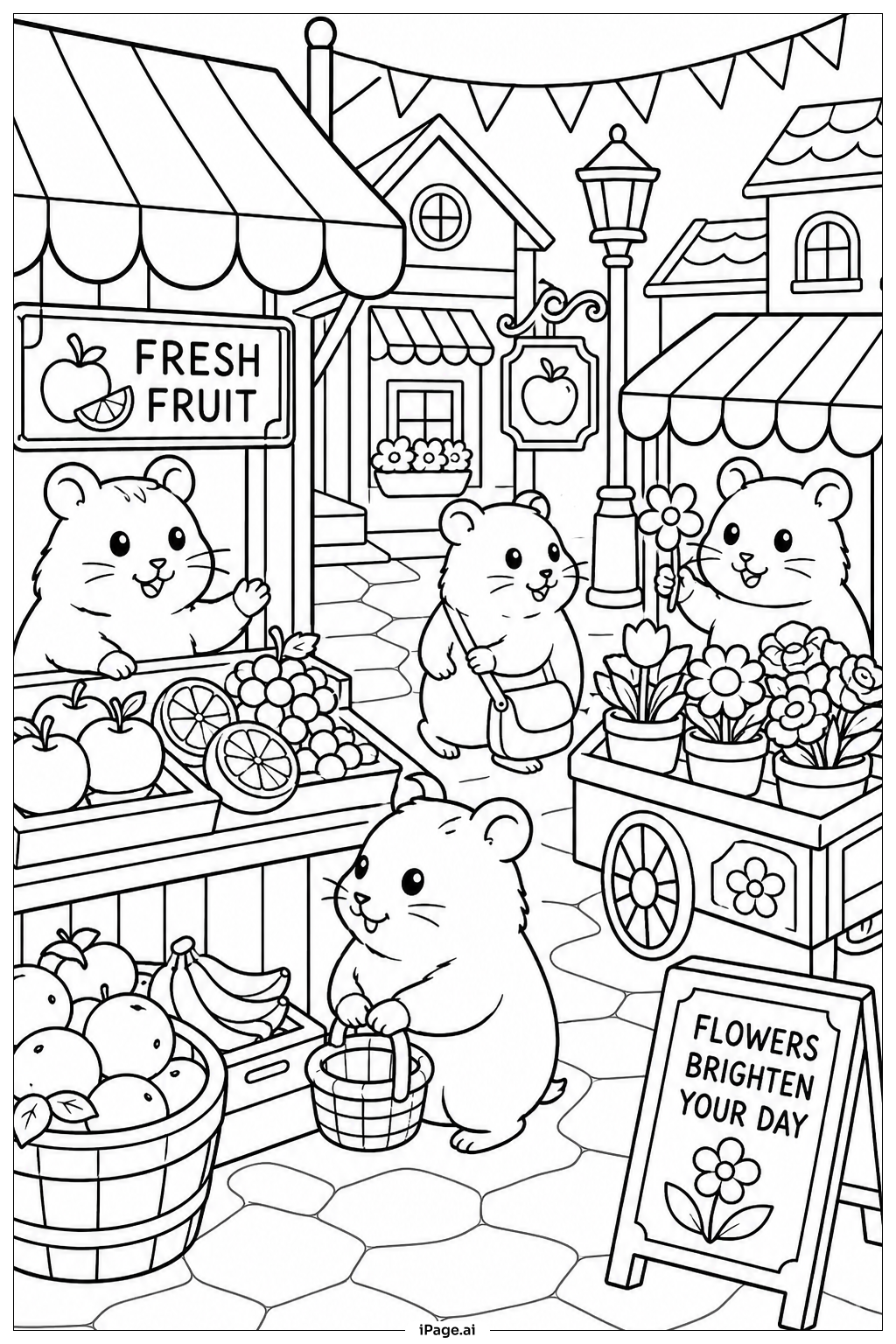
Start with the hamster using soft browns, tans, or golden yellows for the fur, adding white to the chest and paws. Give the nose a pink touch and the eyes a dark sparkle. For the market stall, use natural wood tones like light brown or tan for the planks and crates. The striped awning looks wonderful in bright, cheerful colors like red and white, blue and yellow, or green and white stripes. Make the produce vibrant and realistic: bright red for apples and strawberries, orange for carrots, green for lettuce and leafy vegetables, purple for grapes or eggplants, and yellow for bananas or corn. Consider adding shadows under the crates and behind the hamster using darker shades to create depth and dimension in your artwork.
Coloring challenges: Which parts are difficult to color and need attention for Hamster Market Stalls coloring page?
• Small Details on the Hamster: The hamster features intricate elements like tiny paws, whiskers, rounded ears, and facial features that require careful coloring with fine-tipped markers or colored pencils. Children may find it challenging to stay within these small areas, especially around the eyes and nose. Using light pressure and patience will help achieve clean results without smudging or crossing lines.
• Multiple Produce Items: The market stall contains numerous fruits and vegetables, each requiring different colors and potentially creating confusion about which item is which. Young colorists might struggle to identify each produce type and choose appropriate realistic colors. It helps to look at reference images of real fruits and vegetables or to use creative imagination for a more whimsical approach.
• Wooden Texture and Grain: The stall's wooden planks, crates, and shelves offer an opportunity to create realistic wood grain patterns using varying shades of brown. Achieving this textured look requires blending techniques and layering different tones, which can be difficult for beginners. Alternatively, a simple flat color approach works perfectly well for younger artists.
• Striped Awning Pattern: The canopy features a striped pattern that demands precision and steady hand control to keep the stripes even and consistent. Coloring alternating stripes without accidentally coloring into the wrong stripe requires focus and careful attention, especially where the fabric appears to fold or curve.
• Depth and Shading: Creating a three-dimensional appearance through shading on the rounded hamster body, the cylindrical produce items, and the recessed areas of the stall adds complexity. Understanding where light sources create highlights and shadows takes practice and spatial awareness that develops over time.
Benefits of coloring books: Advantages of drawing Hamster Market Stalls coloring page
Coloring this Hamster Market Stalls page offers wonderful developmental benefits for children. It helps improve fine motor skills and hand-eye coordination through the detailed work required for the hamster's small features and various produce items. The scene encourages learning about healthy foods, fruits, and vegetables, sparking conversations about nutrition and where food comes from. Children can practice color recognition and matching by choosing realistic colors for each produce item or experiment with creative color choices. The charming market setting promotes imaginative play and storytelling, allowing kids to create narratives about the hamster shopkeeper and customers. The varying levels of detail accommodate different skill levels, making it suitable for a wide age range. Completing this page builds concentration, patience, and a sense of accomplishment while providing a relaxing, screen-free activity.