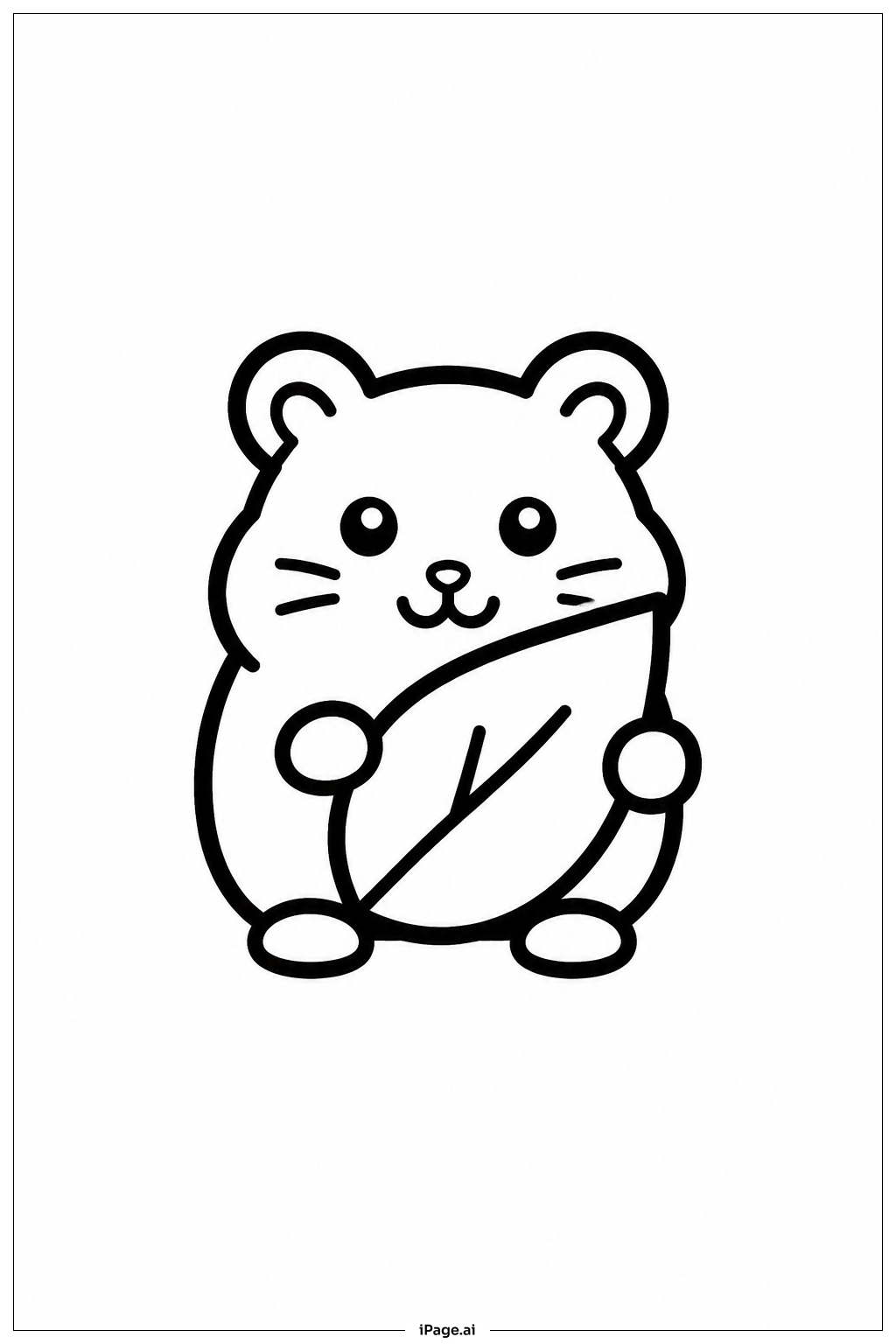
Coloring tips: How to color Hamster With Leaf coloring page well?
When coloring this image, start with soft browns, creams, or light grays for the Hamster’s fur to show its fluffiness. Use gentle strokes to keep it looking soft. For the leaf, try different shades of green. You can add lighter greens to the center vein and darker greens toward the edges to make it look natural. The scattered leaves on the ground can have autumn colors like yellow, orange, or red to add warmth. You can use subtle shading around the Hamster’s paws and ears to create depth. Keep the background simple or leave it white so the Hamster and the leaf stand out nicely. Feel free to experiment with gentle pastel colors for a soft, calm feeling.
Coloring challenges: Which parts are difficult to color and need attention for Hamster With Leaf coloring page?
• Fine Details: The Hamster has small intricate features like whiskers and tiny paws that need careful coloring to avoid smudging or coloring outside the lines. Patience is required. • Leaf Veins: Coloring the leaf with its detailed veins can be challenging to keep the veins visible while applying color to the whole leaf. Using lighter and darker greens delicately helps. • Shading Fur: Achieving the Hamster’s fluffy fur effect involves gentle, small strokes with colored pencils or crayons, which can be tricky for younger children to master. • Color Balance: Choosing colors that make the Hamster stand out from the leaf without overwhelming the image requires thoughtful color choice and layering. • Small Background Elements: The scattered leaves on the ground are small and may need attention to detail to prevent color bleeding or mixing with the Hamster’s fur colors.
Benefits of coloring books: Advantages of drawing Hamster With Leaf coloring page
Coloring this Hamster With Leaf image helps children improve their fine motor skills by controlling detail work on the small paws and leaf veins. It encourages creativity in choosing colors and experimenting with shading techniques. This artwork also helps develop focus and patience, as filling in the tiny sections requires careful attention. Moreover, the image inspires observation skills by noticing natural textures like fur and leaf veins. Coloring this scene can be calming and enjoyable, providing a sense of accomplishment once completed. It also helps children connect with nature by appreciating animals and plants through art.