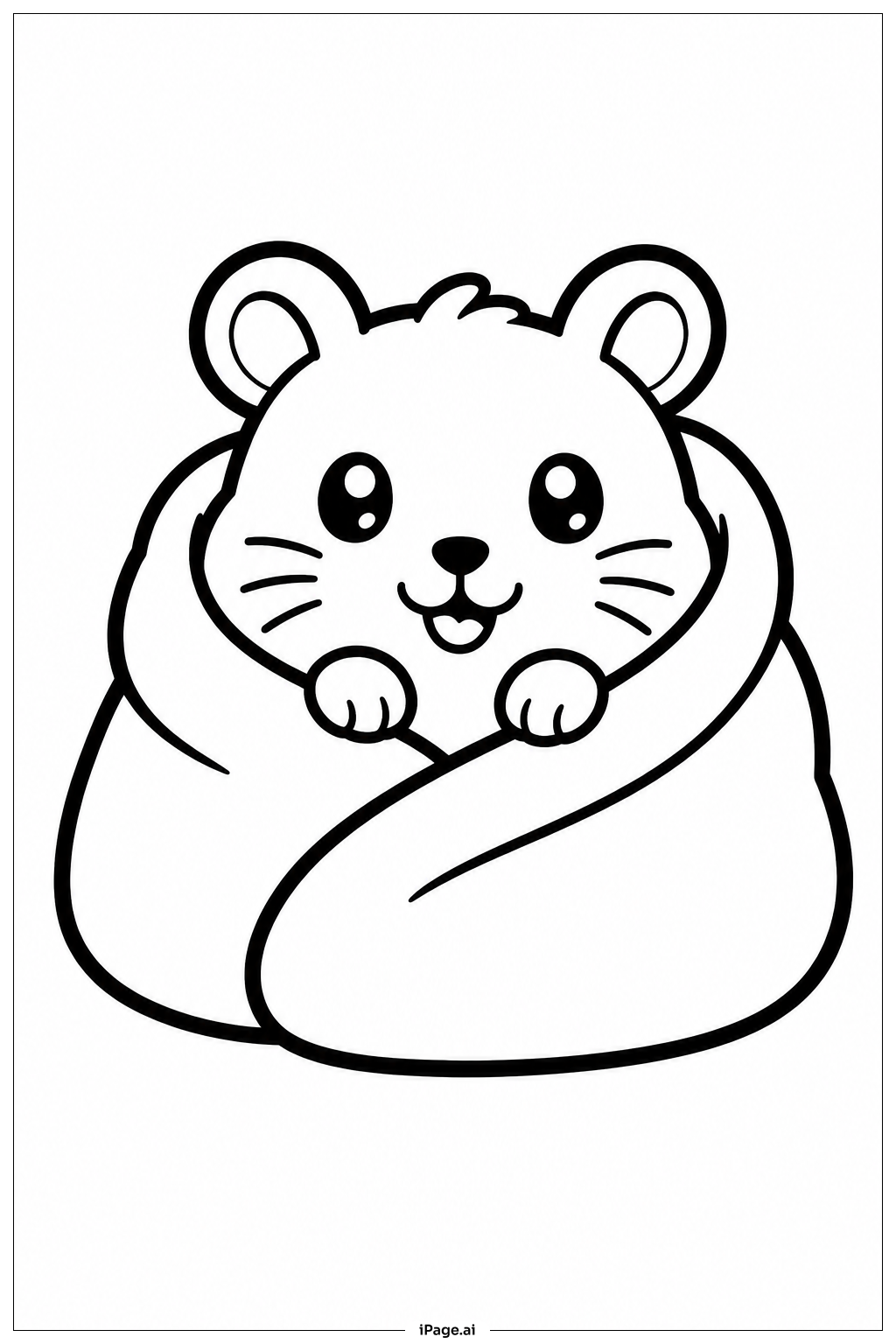
Coloring tips: How to color Hamster With Blanket coloring page well?
Start with the hamster's body. Use warm shades like golden yellow, light brown, or soft cream for the fur. The belly area is usually lighter, so try pale beige or white there. Add a soft pink or peach tone to the inner ears and nose for a lifelike touch. The eyes can be colored dark brown or black, with a tiny white dot left uncolored to show a cute sparkle. For the blanket, have fun with color! Try a pastel blue, lavender, or soft pink to give it a cozy, snuggly feel. You can add small patterns like stripes or dots to make it more interesting. Use slightly darker shades of the same color to show the folds and shadows in the blanket fabric. Keep the overall palette soft and warm to match the peaceful mood of the scene. Colored pencils or watercolor crayons work great for blending the fur texture smoothly.
Coloring challenges: Which parts are difficult to color and need attention for Hamster With Blanket coloring page?
• Hamster Fur Texture: The hamster's fur has many small detail lines that follow the curves of its body. Coloring these neatly without going outside the lines can be tricky. Try using short, light strokes that follow the direction of the fur to make it look fluffy and natural. Layering two shades of brown or gold can help add depth.
• Tiny Facial Features: The hamster's face includes very small details like the eyes, nose, and mouth. These areas require a fine-tipped pencil or marker to fill in carefully. The eyes especially need a steady hand — leaving a small white highlight uncolored makes the face look lively and expressive.
• Blanket Folds and Shadows: The blanket has soft wrinkles and folds that create areas of light and shadow. To make the blanket look three-dimensional, you need to use at least two shades of the same color — a lighter one for raised areas and a slightly darker one for the creases. This shading technique can be challenging for beginners.
• Chubby Cheek Blending: Hamsters are known for their puffy cheeks. To capture this roundness, try gently blending a slightly darker shade along the outer edges of the cheeks and keeping the center lighter. This gives a soft, rounded look that brings the hamster to life.
• Keeping Colors Harmonious: With both the hamster and the blanket to color, choosing shades that look good together takes some thought. Avoid colors that clash — pick a blanket color that complements the warm tones of the fur for a pleasant, balanced final result.
Benefits of coloring books: Advantages of drawing Hamster With Blanket coloring page
Coloring this sweet hamster scene brings many wonderful benefits for kids. First, it helps build fine motor skills. Carefully coloring small details like the hamster's eyes and fur strengthens hand muscles and improves pencil control — skills that are important for writing and drawing. Second, it encourages creativity. Choosing colors for the blanket and fur lets children make their own artistic decisions, building confidence and imagination. There is no wrong answer — every color choice makes the picture uniquely theirs. Third, it promotes focus and patience. Taking time to color neatly within the lines and blend shades helps children practice concentration in a fun, low-pressure way. Fourth, the calm and cozy theme of the image has a soothing effect. Coloring peaceful scenes like a snuggly hamster can help children relax, reduce stress, and unwind after a busy day. Finally, completing a finished piece gives children a real sense of pride and accomplishment. They can display their artwork, share it with family, or even give it as a gift — making the experience both fun and meaningful.