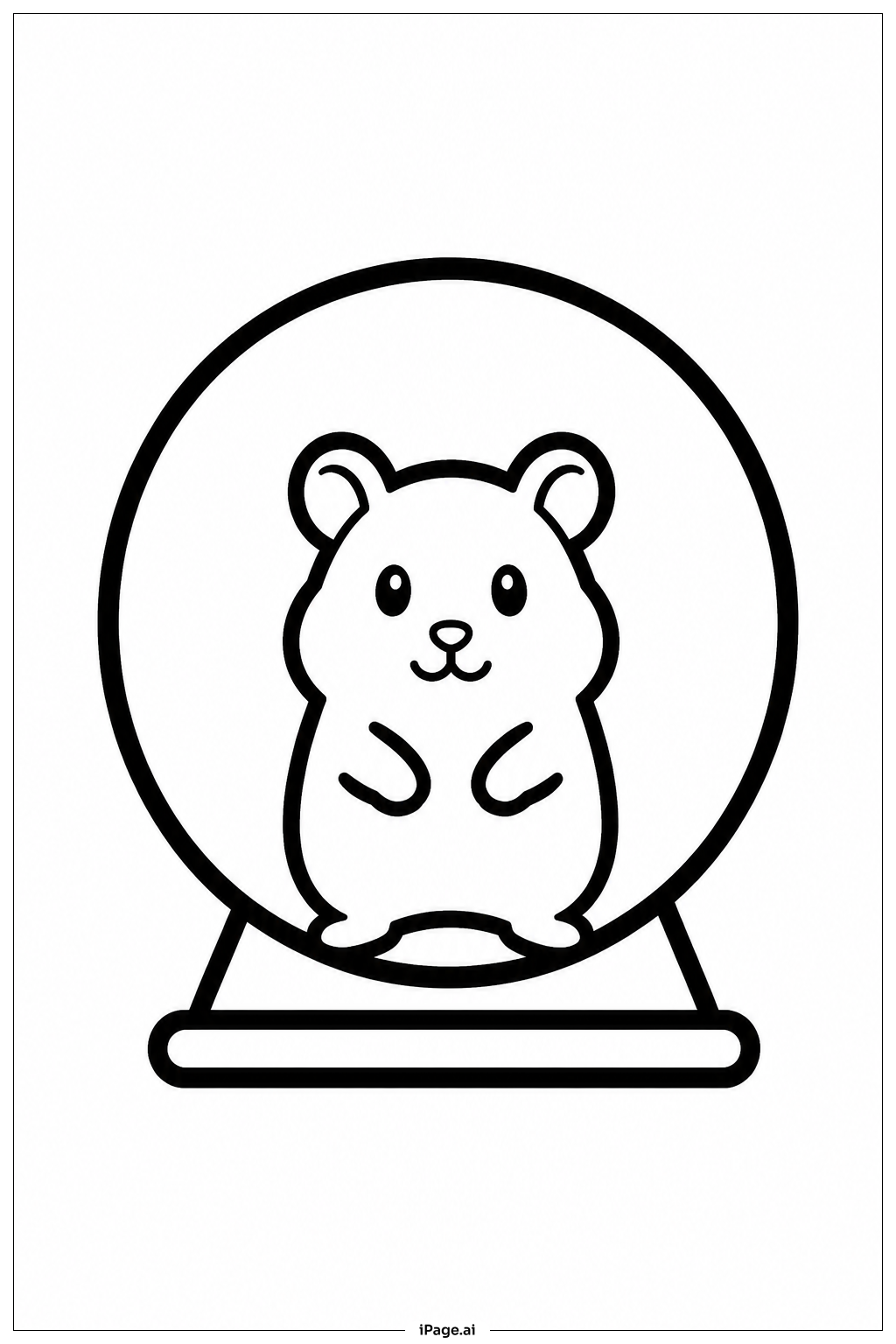
Coloring tips: How to color Hamster On Wheel coloring page well?
Try using warm tones like light brown, golden, or soft orange shades to color the Hamster’s fur. You can add light pink or peach tones for its tiny ears, nose, and cheeks to make it look gentle and cute. For the wheel, try different metallic colors like silver or gray to show it is made of metal. You could also use bright colors like blue, red, or green on the wheel’s stand or frame to make it eye-catching. Don’t forget to color the shadow areas under the wheel with soft grays or blues to add depth. Feel free to be creative and use fun patterns or spots on the Hamster or parts of the wheel to make your artwork unique.
Coloring challenges: Which parts are difficult to color and need attention for Hamster On Wheel coloring page?
• Small Details: The Hamster has tiny features such as small paws, ears, and a nose. Coloring these small parts cleanly can be challenging for younger children due to their size and fine lines. • Circular Wheel Shape: The wheel’s round shape with spokes requires care to color evenly. It may be tricky to stay within the lines and show the spinning motion through color shading. • Overlapping Lines: Some lines of the Hamster’s body overlap with the wheel’s spokes and base. Deciding which parts to color first and how to keep colors from blending can be confusing, especially when using markers or wet media. • Shading and Texture: Adding texture to the Hamster’s fur and shading on the metal wheel to show reflections or shadows can be difficult but is important for making the picture look lively and realistic. • Space Around the Wheel: The background space is mostly open, so deciding how to color or decorate that area might require creativity and planning to avoid overwhelming the main image.
Benefits of coloring books: Advantages of drawing Hamster On Wheel coloring page
Coloring this image helps improve fine motor skills by encouraging careful control of coloring tools within small spaces. It also boosts focus and patience, especially when dealing with repetitive sections like the wheel spokes. Children can practice color recognition and blending by choosing and mixing different shades to create realistic fur and metal effects. This activity encourages creativity as they decide how to decorate the background or add personal touches. Moreover, coloring animals like the Hamster can foster empathy and a better understanding of pets and nature. Finally, completing this coloring page can give a sense of achievement and confidence in artistic abilities.



