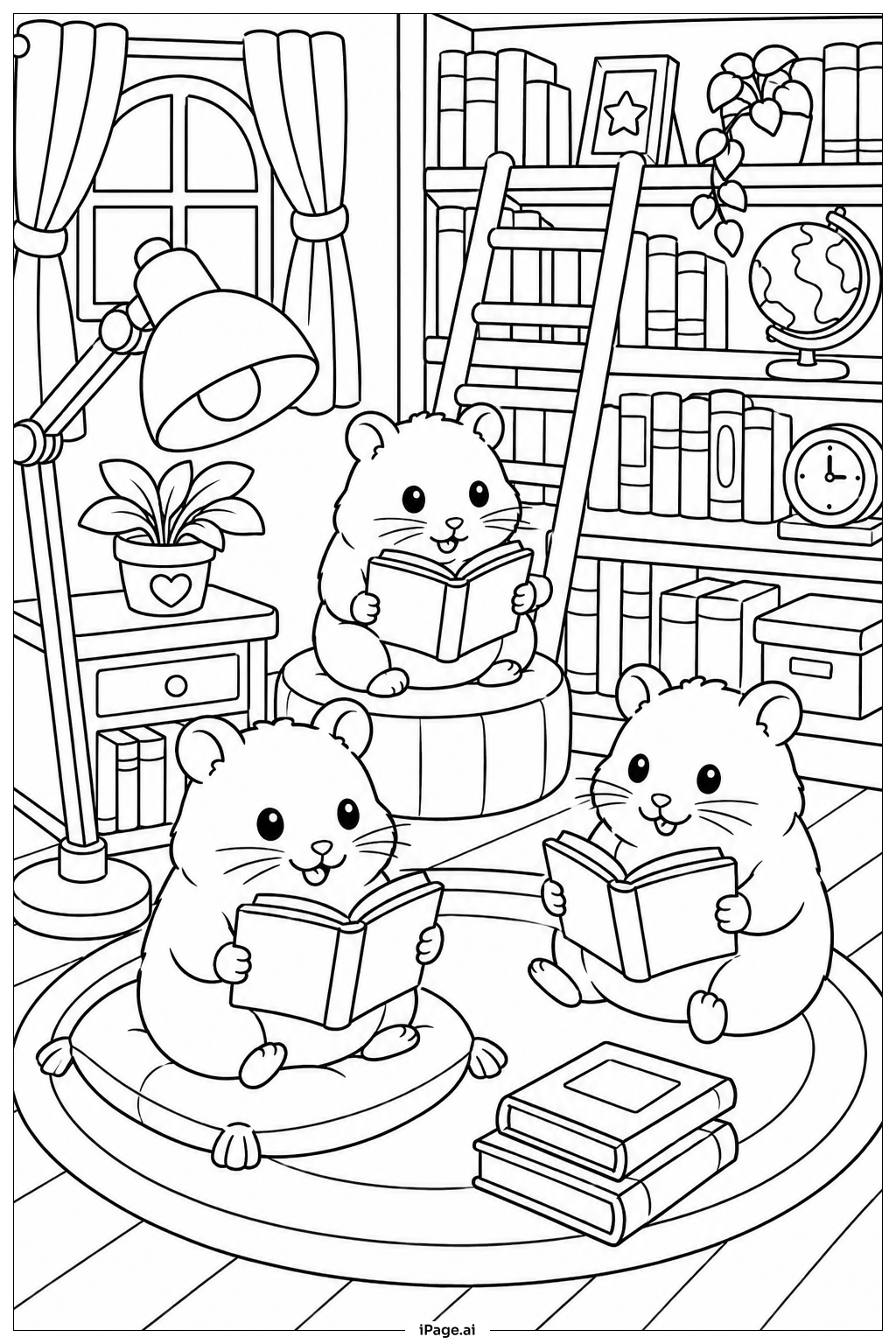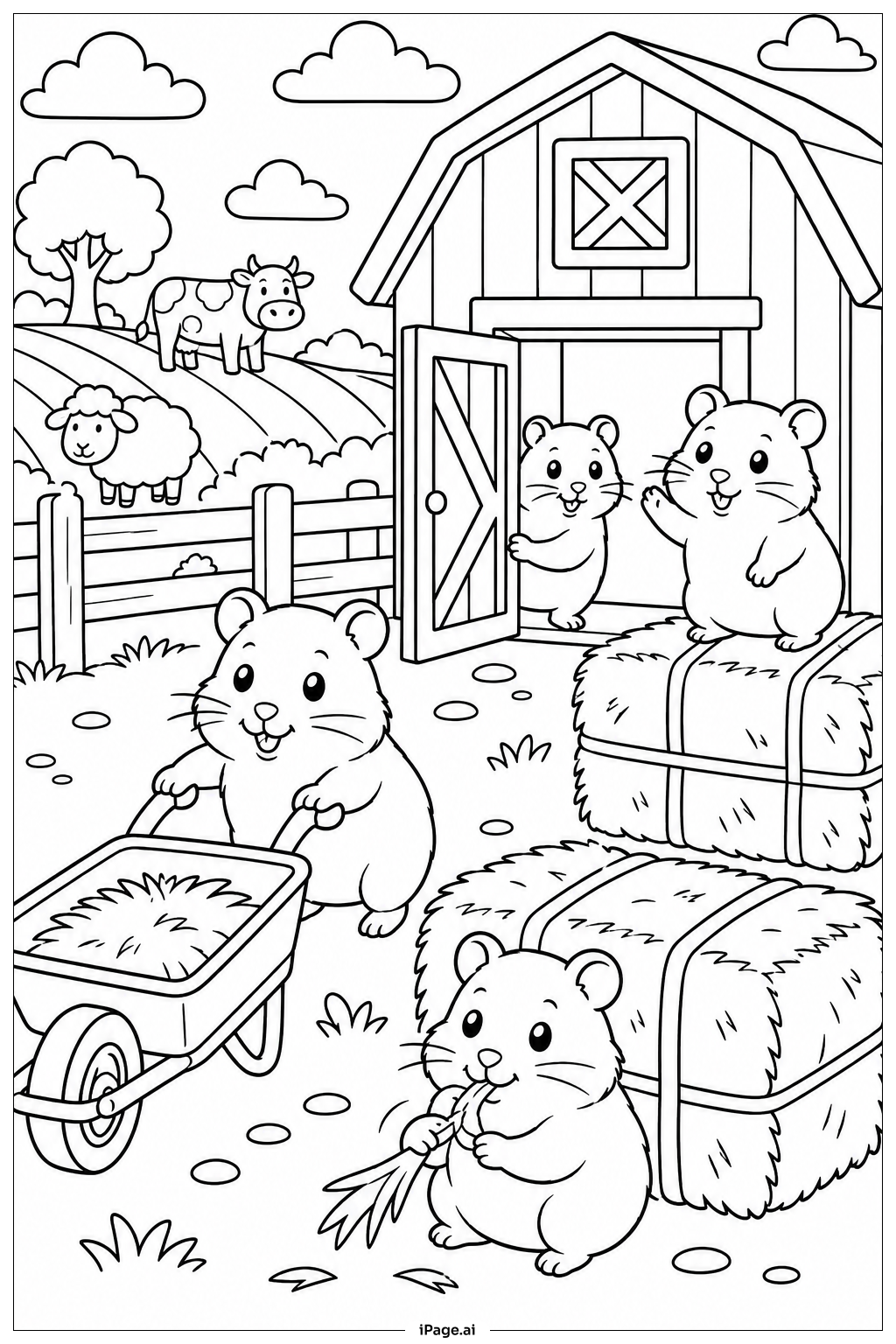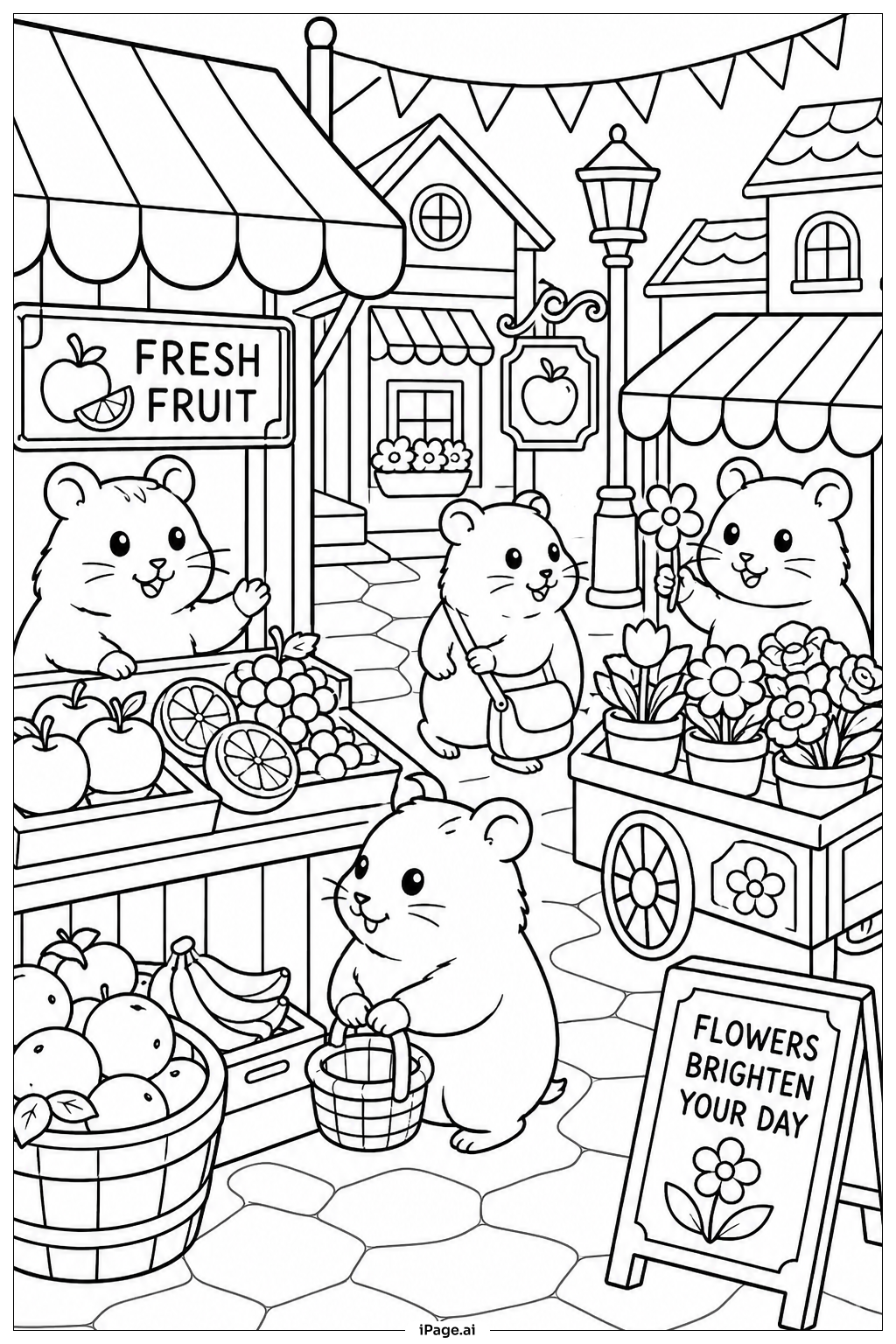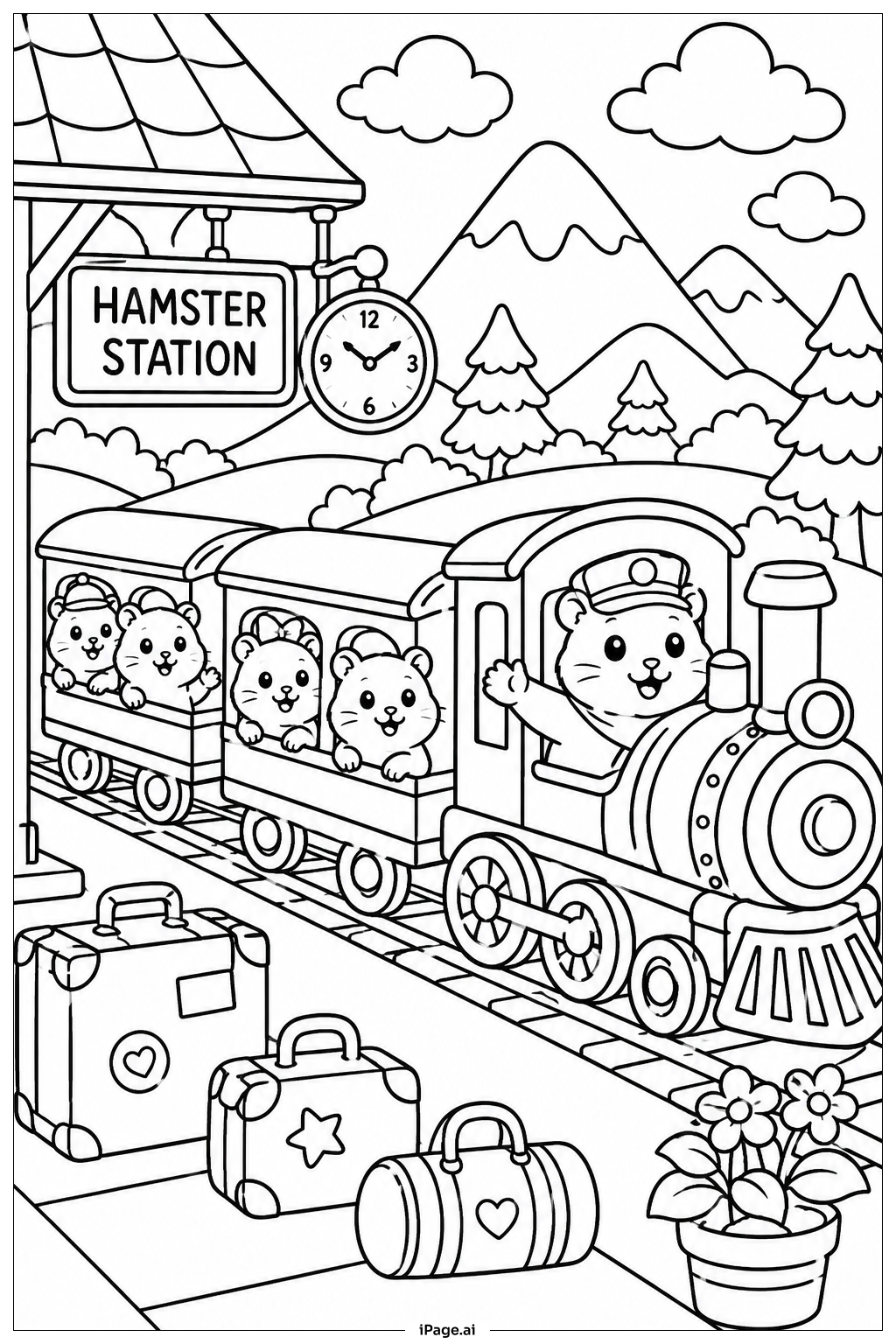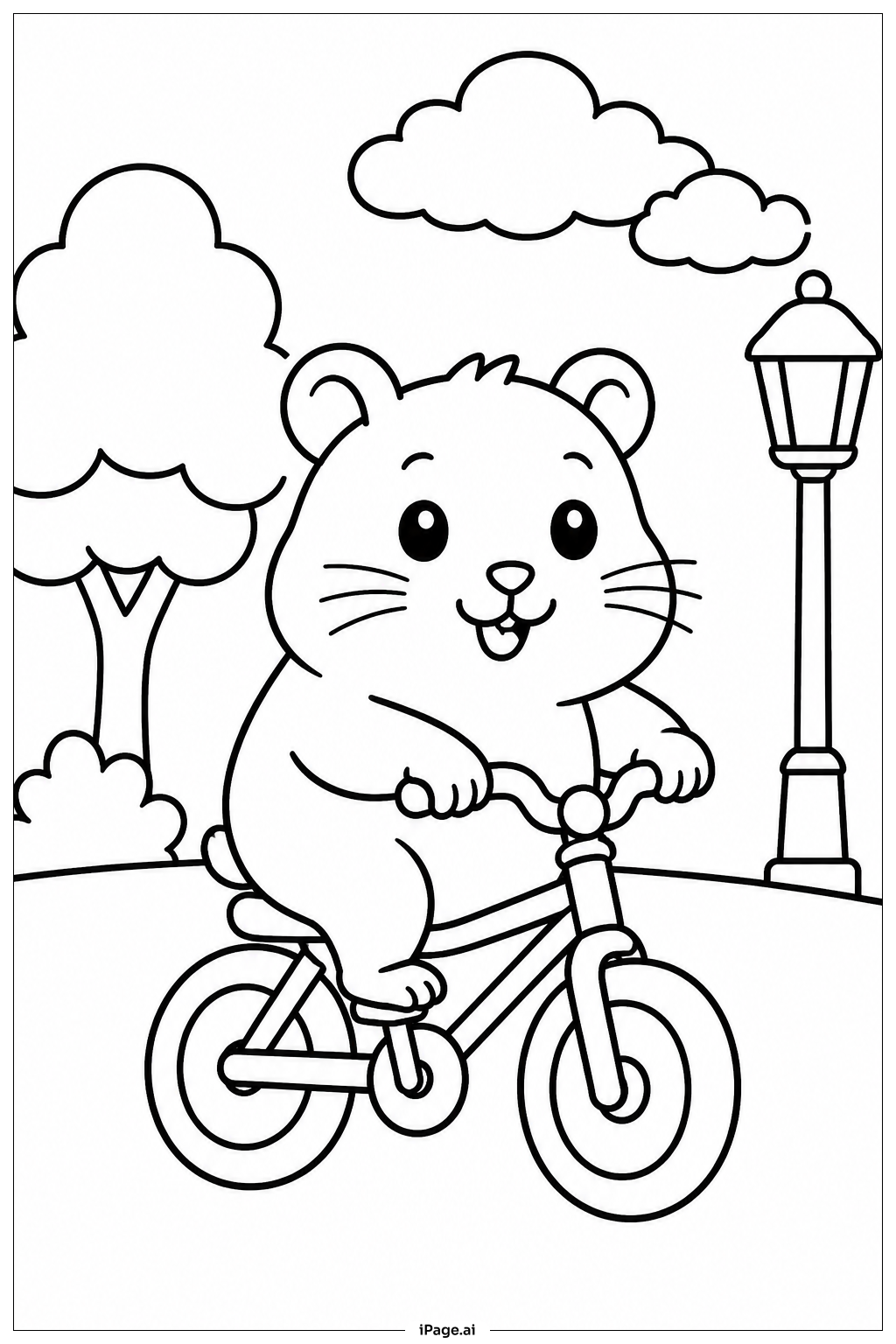
Coloring tips: How to color Hamster On Bicycle coloring page well?
Start with the hamster's body first. Use warm golden brown or sandy beige for the fur. Add a slightly darker shade on the edges to give it a soft, rounded look. Color the chubby cheeks with a light rosy pink. Use bright colors for the helmet — red, blue, or yellow all work great. For the bicycle, try a bold color like red or orange for the frame. Use gray or silver for the spokes and metal parts. The basket can be light brown like woven straw. Color the wheels dark gray or black. For the background, use light green for the grass and bright yellow for a sunny sky. Add purple, pink, or white for the little flowers. Let kids choose their favorite colors freely — there are no wrong choices here. The goal is to have fun and make the scene come alive with color.
Coloring challenges: Which parts are difficult to color and need attention for Hamster On Bicycle coloring page?
• Hamster Fur Texture: The hamster's round, fluffy body can be tricky to color realistically. Getting a smooth gradient from lighter fur on the belly to darker fur on the back takes patience. Young colorists may need to practice blending two shades gently without harsh lines to achieve a soft, natural look.
• Bicycle Spokes and Frame Details: The bicycle has thin spokes inside the wheels and a narrow frame structure. These small, closely spaced lines require a steady hand and a fine-tipped pencil or marker. Coloring inside each section without going over the lines is one of the biggest challenges in this image, especially for younger children.
• Tiny Paws and Facial Features: The hamster's small paws gripping the handlebars and its detailed facial features — eyes, nose, and mouth — are very small areas to color. Using the tip of a colored pencil or a fine marker is essential here. Pressing too hard can fill in the tiny spaces and lose the cute expression.
• Helmet Detailing: The helmet sits on top of the hamster's head and may include small vent lines or a strap. Staying within these small sections while using contrasting colors to highlight the straps versus the main helmet shell requires careful attention and a light touch.
• Background Balance: Coloring the background elements like flowers, grass, and the path without overpowering the main character is a subtle challenge. Using lighter, softer tones for the background helps keep the hamster and bicycle as the visual focus of the scene.
Benefits of coloring books: Advantages of drawing Hamster On Bicycle coloring page
Coloring this Hamster On Bicycle page offers a wide range of benefits for children and young artists. First, it helps build fine motor skills. Carefully coloring small areas like the spokes, tiny paws, and facial features trains hand muscles and improves pencil control. Second, it supports focus and concentration. Staying within the lines and planning which colors to use encourages children to slow down, pay attention, and think ahead. Third, it sparks creativity. Kids get to choose their own color combinations for the hamster, bicycle, and background, which builds confidence in their artistic choices. Fourth, it introduces color theory in a playful way. Deciding which colors look good together — like pairing a warm fur tone with a bright bike frame — teaches basic design thinking without any pressure. Fifth, it provides emotional comfort. The fun, lighthearted scene of a hamster cycling along a sunny path creates a joyful, stress-free coloring experience. It can help children relax after a busy day at school. Finally, completing the page gives kids a sense of accomplishment and pride in their finished artwork, boosting self-esteem and motivation to keep creating.