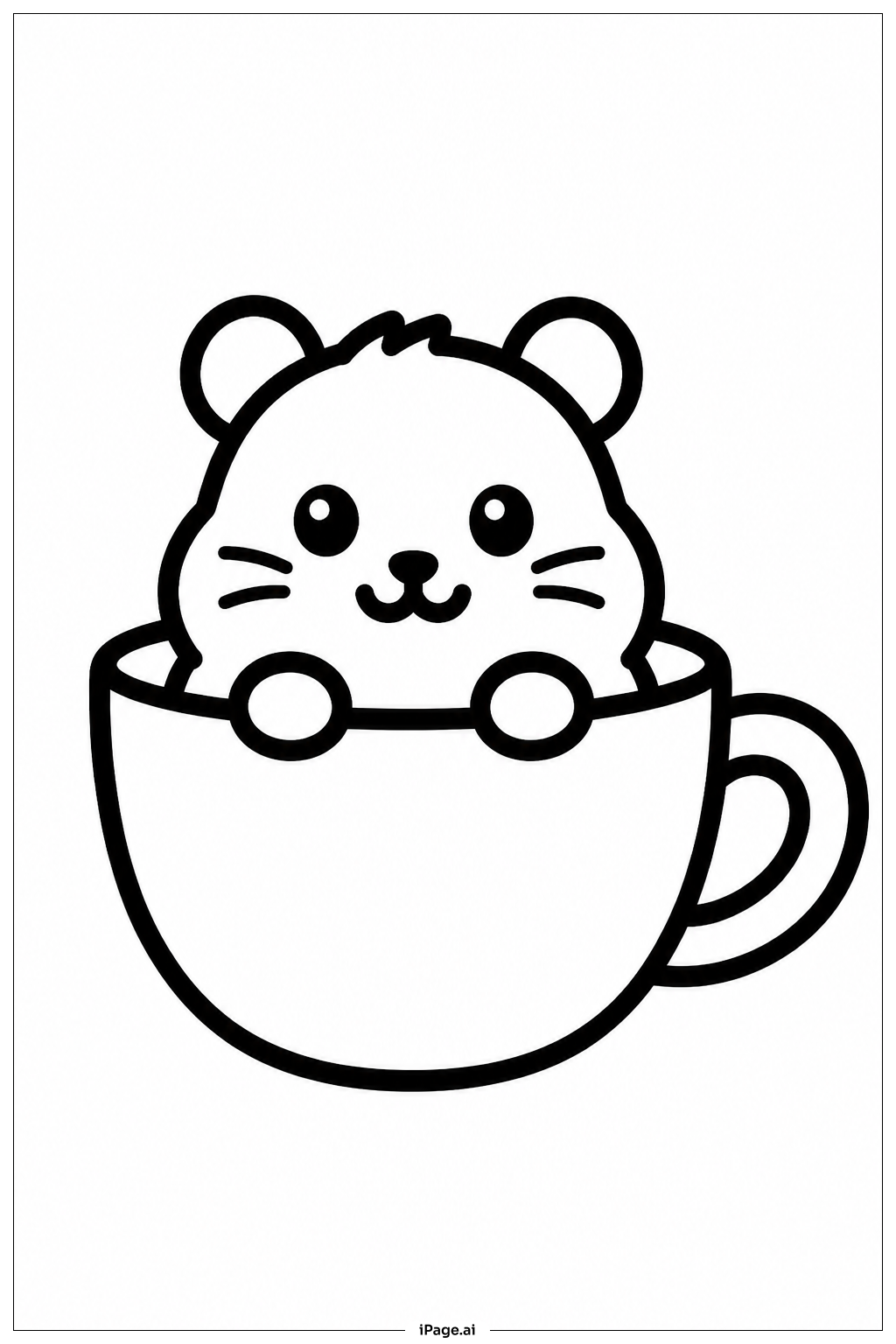
Coloring tips: How to color Hamster In Teacup coloring page well?
Start with the hamster's body using warm golden brown or sandy tones. Use a slightly darker shade around the edges of the fur to add depth and texture. Leave the belly area lighter, perhaps a creamy white or pale yellow, to show the soft underbelly. For the eyes, use a deep black or dark brown, and add a tiny white dot to create a shiny, lively look. Color the inner ears a soft pink. For the teacup, you can go with classic white and add a fun pattern using colors like blue, pink, or purple. The handle can match the cup or be a contrasting color. Try using light and dark shades of the same color to make the cup look round and three-dimensional. Add small flowers, dots, or stripes to the teacup pattern to personalize it. Feel free to use any colors you love to make this image your own.
Coloring challenges: Which parts are difficult to color and need attention for Hamster In Teacup coloring page?
• Hamster Fur Texture: The hamster's fluffy fur is made up of many short, layered strokes. Coloring all those tiny overlapping lines takes patience. Use short, light strokes in the direction the fur grows to keep it looking natural and soft. Switching between two or three close shades will help the fur look realistic and full of life.
• Small Facial Features: The hamster has tiny eyes, a small nose, and little whisker areas all packed closely together. These details are very small and easy to smudge or color outside the lines. Use a sharpened pencil or a fine-tipped marker to stay precise and keep each feature clear and distinct.
• Teacup Patterns and Curves: The teacup has a curved surface with decorative patterns on it. Coloring curved shapes evenly without streaks or uneven patches is tricky. Try using circular strokes to follow the curve of the cup. Keep your pressure consistent so the color stays smooth from top to bottom.
• Contrast Between Hamster and Cup: The hamster sits inside the cup, so the two elements need to look clearly separate. If the hamster and the teacup are too similar in color, they will blend together and look flat. Choose colors that contrast well, such as a warm brown hamster against a cool blue or white cup, so each part stands out clearly.
• Depth and Shadows: Adding shadows inside the cup where the hamster sits will make the image look more three-dimensional. This requires gently blending a darker shade in the lower parts of the cup interior. Blending smoothly without harsh lines takes practice but makes a big difference in the final result.
Benefits of coloring books: Advantages of drawing Hamster In Teacup coloring page
Coloring this image of a hamster sitting in a teacup offers a range of wonderful benefits for children and beginners alike. The cute and playful subject makes it easy to stay engaged and motivated from start to finish.
Working on the hamster's fur helps children practice fine motor skills. Staying within the small, detailed lines trains hand control and improves pencil grip over time. These are important skills that support writing and drawing development.
Choosing colors for the teacup pattern encourages creative thinking. Kids get to make their own design choices, which builds confidence and self-expression. There are no wrong answers, so every child can feel proud of their finished page.
The calming and repetitive action of coloring helps reduce stress and anxiety. Focusing on a fun task like this allows children to relax, unwind, and enjoy a screen-free activity. It promotes mindfulness in a natural, enjoyable way.
Coloring also supports color recognition and understanding of contrast. Figuring out which colors look best together on the hamster and the teacup teaches basic color theory in a hands-on way.
Overall, this charming image makes coloring feel like a joyful adventure rather than a chore. It is a perfect activity for quiet afternoons, classrooms, or family time together.