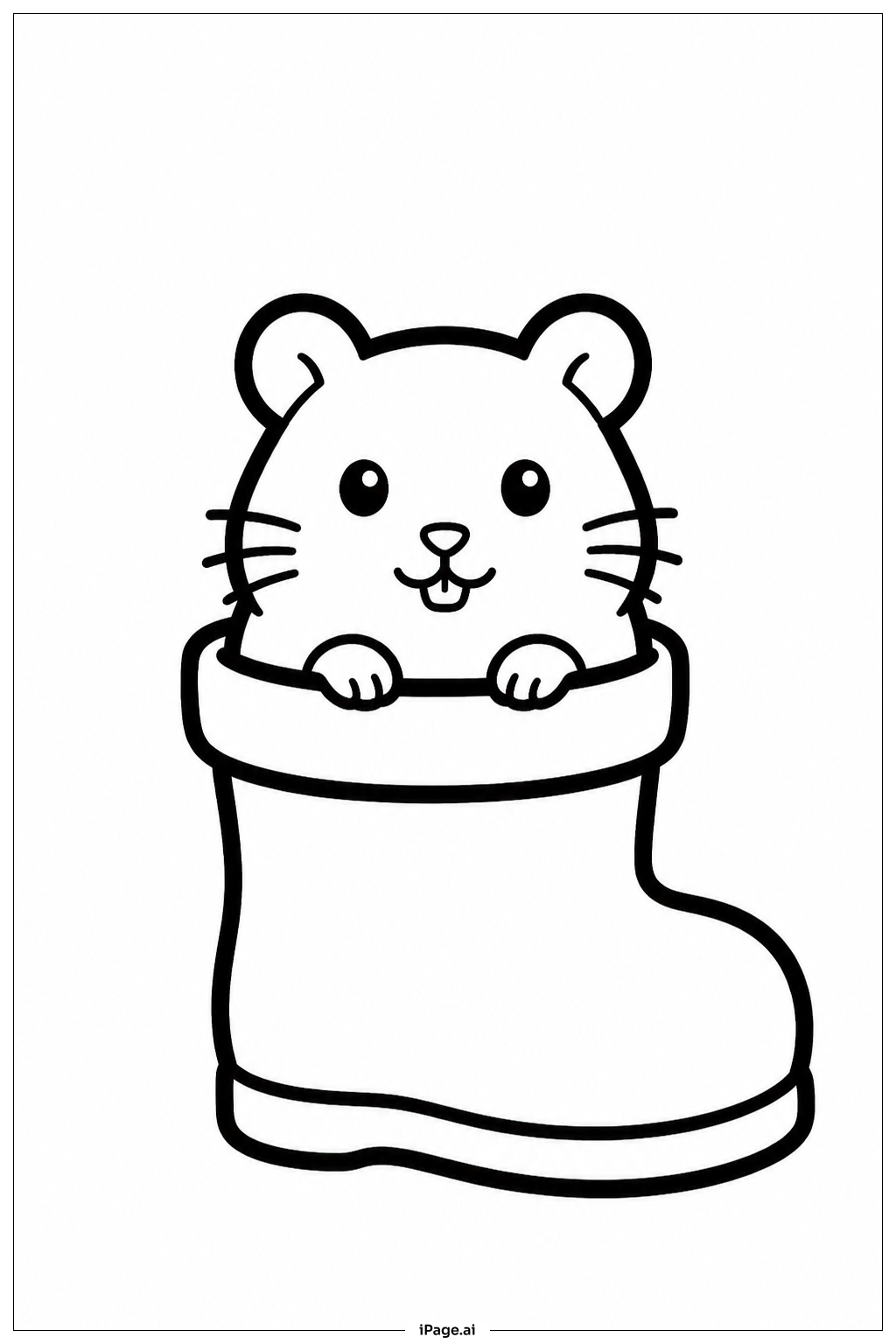
Coloring tips: How to color Hamster In Boot coloring page well?
To color this image, start with warm colors for the Hamster like light browns, creams, or soft oranges for its fur. Use gentle blending for a fluffy texture. For the boot, try shades of brown such as tan, chestnut, or dark chocolate to make it look like worn leather. You can add darker colors to the boot’s stitching and sole to create depth. Use lighter colors on the edges of the boot to show highlights and texture. For the background or ground, soft greens or blues work well if you want to add natural elements like grass or sky. Keep your coloring inside the lines for a nice clean finish and have fun making the Hamster look lively and cute.
Coloring challenges: Which parts are difficult to color and need attention for Hamster In Boot coloring page?
• Small Details: The Hamster’s face and paws have tiny features that require careful coloring to avoid coloring outside the lines.
• Texture Variation: Differentiating the fluffy fur of the Hamster from the smooth leather of the boot can be tricky and needs different coloring styles.
• Shading and Highlights: Adding depth to the boot’s creases and stitching requires subtle shading; this can be challenging for younger children.
• Proportions: Balancing the large size of the boot with the small Hamster while coloring so that neither looks out of place.
• Consistency: Maintaining consistent color tones on the large surfaces like the boot without leaving white patches requires patience and attention.
Benefits of coloring books: Advantages of drawing Hamster In Boot coloring page
Coloring this image helps improve fine motor skills by encouraging careful hand control, especially around the small details of the Hamster. It also develops attention to detail when distinguishing between different textures like fur and leather. Choosing and applying shading colors promotes understanding of light and shadow effects. For children, it enhances creativity as they decide which colors to use to make the scene lively and cozy. Overall, working on this cute and playful image can boost focus, patience, and artistic confidence in kids aged 4 to 16.