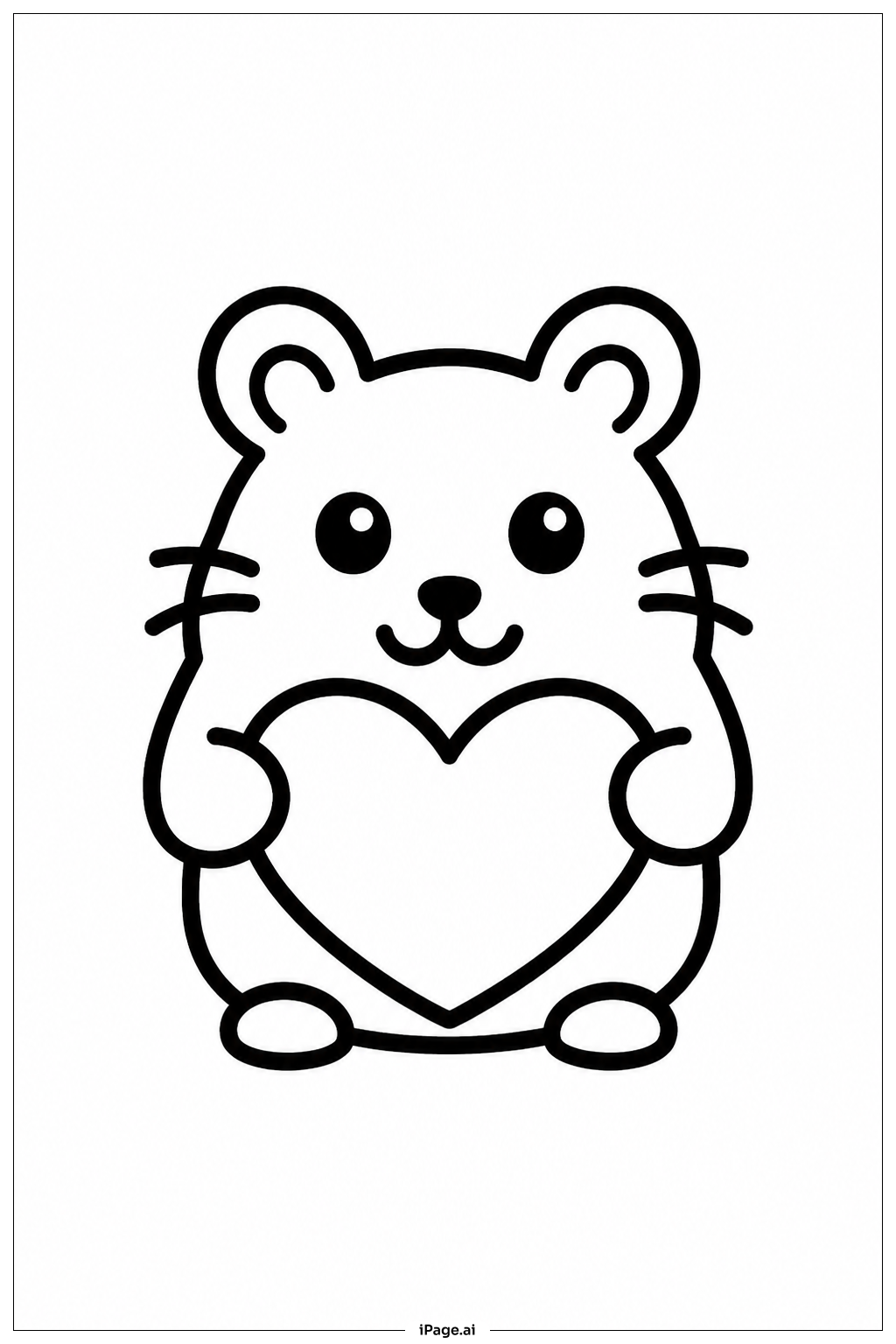
Coloring tips: How to color Hamster Holding Heart coloring page well?
Start with the hamster's body using warm, earthy tones. Light brown or golden tan works great for the fur. Use a slightly darker shade on the edges to create depth and show the roundness of the body. The belly area can be colored with a softer, creamier shade to make it look fluffy and soft. For the cheeks, try a light peach or pale pink to give the hamster a sweet, rosy look. Color the eyes dark brown or black, and add a tiny white dot to make them sparkle with life. The ears look lovely in a soft pink on the inside. For the heart, bold red or deep pink makes it pop with energy and love. You can also try a gradient effect, going from light pink in the center to a rich red on the edges. Use gentle strokes throughout to keep the texture feeling soft and cozy. This image is a great chance to explore warm, happy colors.
Coloring challenges: Which parts are difficult to color and need attention for Hamster Holding Heart coloring page?
• Fur Texture Details: The hamster's body is covered with fine lines that suggest soft fur. Coloring these lines carefully without making the overall tone look too dark or patchy is tricky. You need to use light, feathery strokes and build up color gradually. Going too heavy too fast can make the fur look stiff instead of fluffy.
• Tiny Facial Features: The hamster's face has small but important details — the eyes, nose, and mouth are close together and quite tiny. Staying inside these small areas without smudging or bleeding into surrounding spaces requires a sharp pencil or fine-tipped marker. A mistake here can change the whole expression of the character.
• Chubby Body Shading: The hamster has a round, full body with lots of curves. Showing depth and dimension on a round surface means you need to understand where light hits and where shadows fall. Flat coloring can make the hamster look two-dimensional, while proper shading brings it to life.
• The Heart Shape: The heart is large and smooth, which means any uneven coloring or streaks will be very visible. Achieving a clean, even fill — or a smooth gradient — takes patience and steady hand control. Blending from one shade to another inside the heart shape can be especially hard for younger colorists.
• Contrast Between Subject and Background: Keeping the hamster and the heart visually separate from each other while still making them look like one unified image is a balance challenge. Choosing colors that complement each other without clashing or blending together is key to a polished final result.
Benefits of coloring books: Advantages of drawing Hamster Holding Heart coloring page
Coloring this sweet hamster image offers a wonderful range of benefits for children and young artists. The process of carefully filling in the fur, face, and heart encourages focus and concentration, helping kids practice patience as they work through each section. Choosing colors for the hamster's coat and the heart builds early decision-making skills and creative confidence. The soft, curved shapes of the hamster's body are gentle on the hand, making this image great for younger children still developing their fine motor control. At the same time, the detailed fur lines and small facial features offer a rewarding challenge for older kids who want to sharpen their precision. The loving theme of a hamster holding a heart also makes this a wonderful emotional activity. Kids can think about feelings like love, kindness, and care as they color, connecting art with positive emotions. Completing the image gives a real sense of pride and accomplishment. This page also works beautifully as a handmade gift — a colored version can be given to a parent, friend, or family member as a personal and heartfelt gesture. Overall, it is a joyful, calming, and enriching coloring experience.