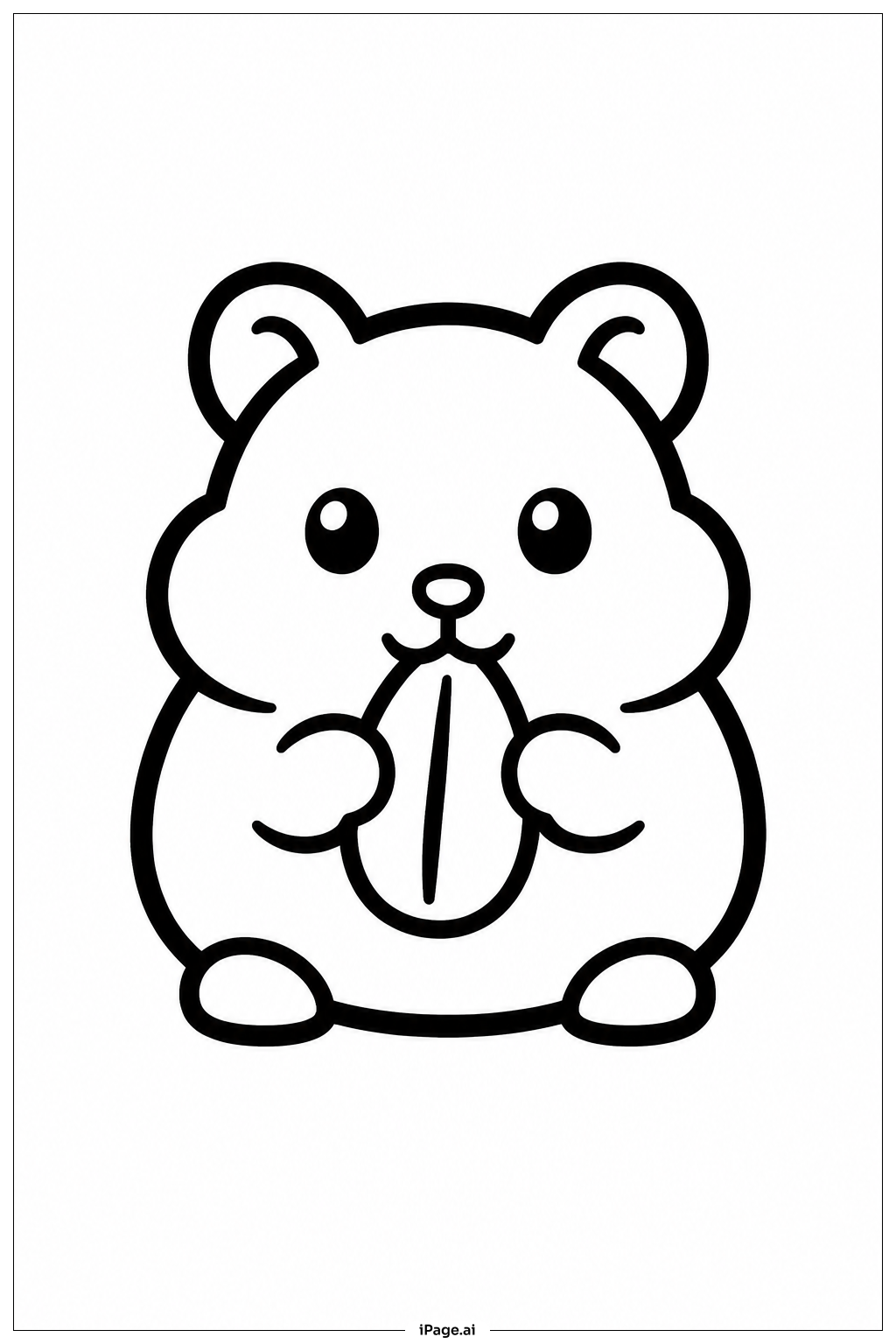
Coloring tips: How to color Hamster Eating Seed coloring page well?
Start by choosing warm colors for the hamster’s fur, like soft browns, tans, and creams, to give a natural look. You can add a touch of pink to the ears, nose, and cheeks to make the hamster look friendly and lively. For the seed, use a darker shade like brown or tan to show contrast against the fur. The eyes should be colored black or dark brown with a tiny white spot left uncolored to make them shiny and full of life. If you want to create a background, use light greens or yellows to suggest grass or a gentle environment that suits a hamster’s natural home. Remember to color softly and stay within the lines to make the image neat and pleasant.
Coloring challenges: Which parts are difficult to color and need attention for Hamster Eating Seed coloring page?
• Small Details: The hamster’s tiny paws, whiskers, and seed are very small and require careful coloring to avoid smudging or coloring outside the lines. This can be challenging for younger children or beginners. • Fur Texture: Capturing the fluffy look of the hamster’s fur can be difficult because it involves coloring small strokes or shading to show softness and volume rather than flat color. • Color Contrast: Balancing the colors between the hamster’s fur and the seed can be tricky since both may use earth tones. Choosing distinct shades is important so the seed stands out clearly. • Shiny Eyes: Giving the eyes a realistic shine needs precision, leaving small white areas uncolored, which may be hard to execute perfectly. • Background Simplicity: Though the background is simple, deciding how much detail to add without overpowering the hamster requires a good sense of composition and color harmony.
Benefits of coloring books: Advantages of drawing Hamster Eating Seed coloring page
Coloring this hamster image helps children improve fine motor skills by practicing control in small areas like the paws and seed. It encourages attention to detail, especially when working on the fur texture and shiny eyes. The activity also boosts creativity by allowing choices in coloring the hamster’s fur and background environment. Coloring animals like hamsters can increase empathy towards creatures and nature by engaging children emotionally. Finally, completing this image provides a sense of achievement and relaxation, making coloring both a fun and calming experience.