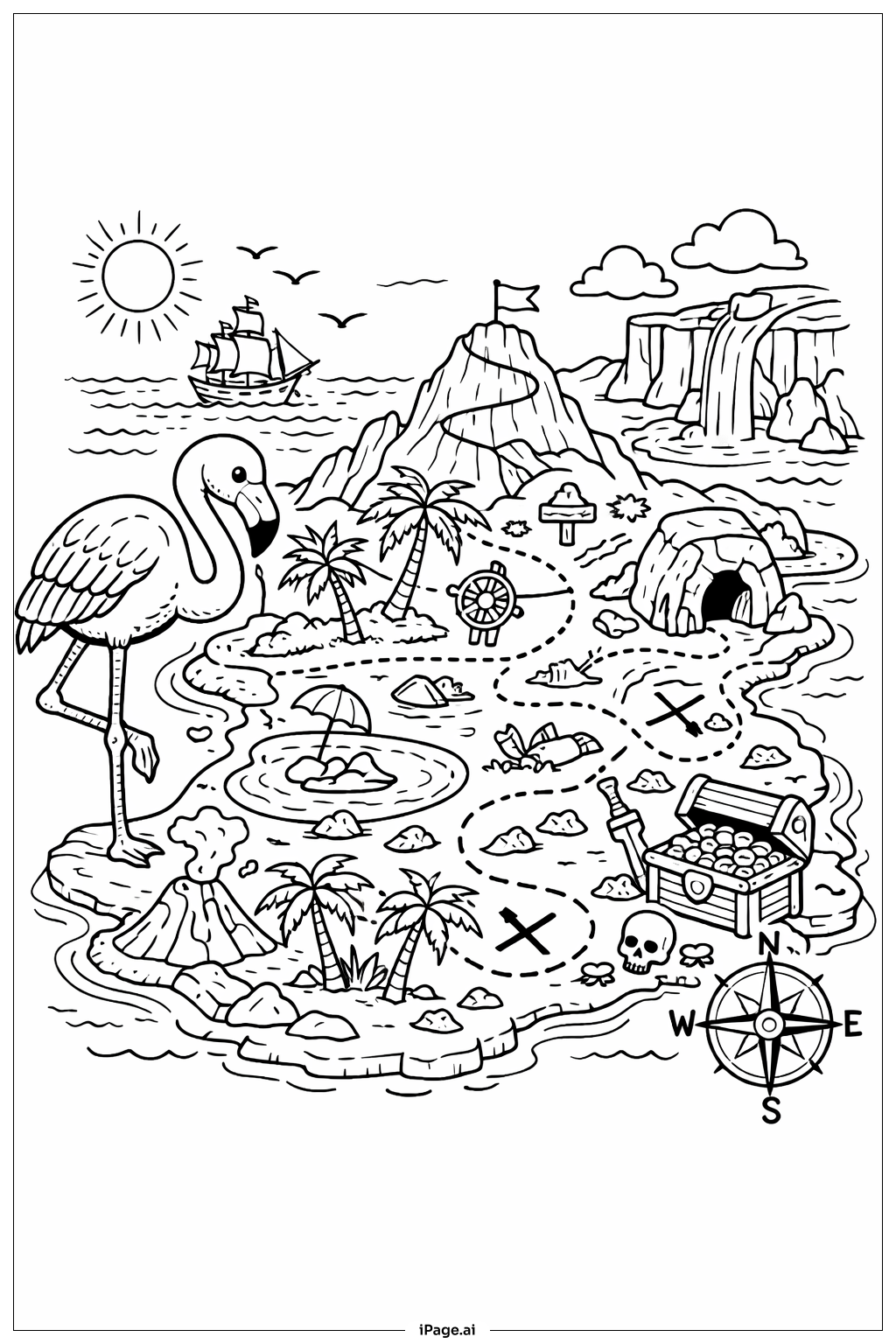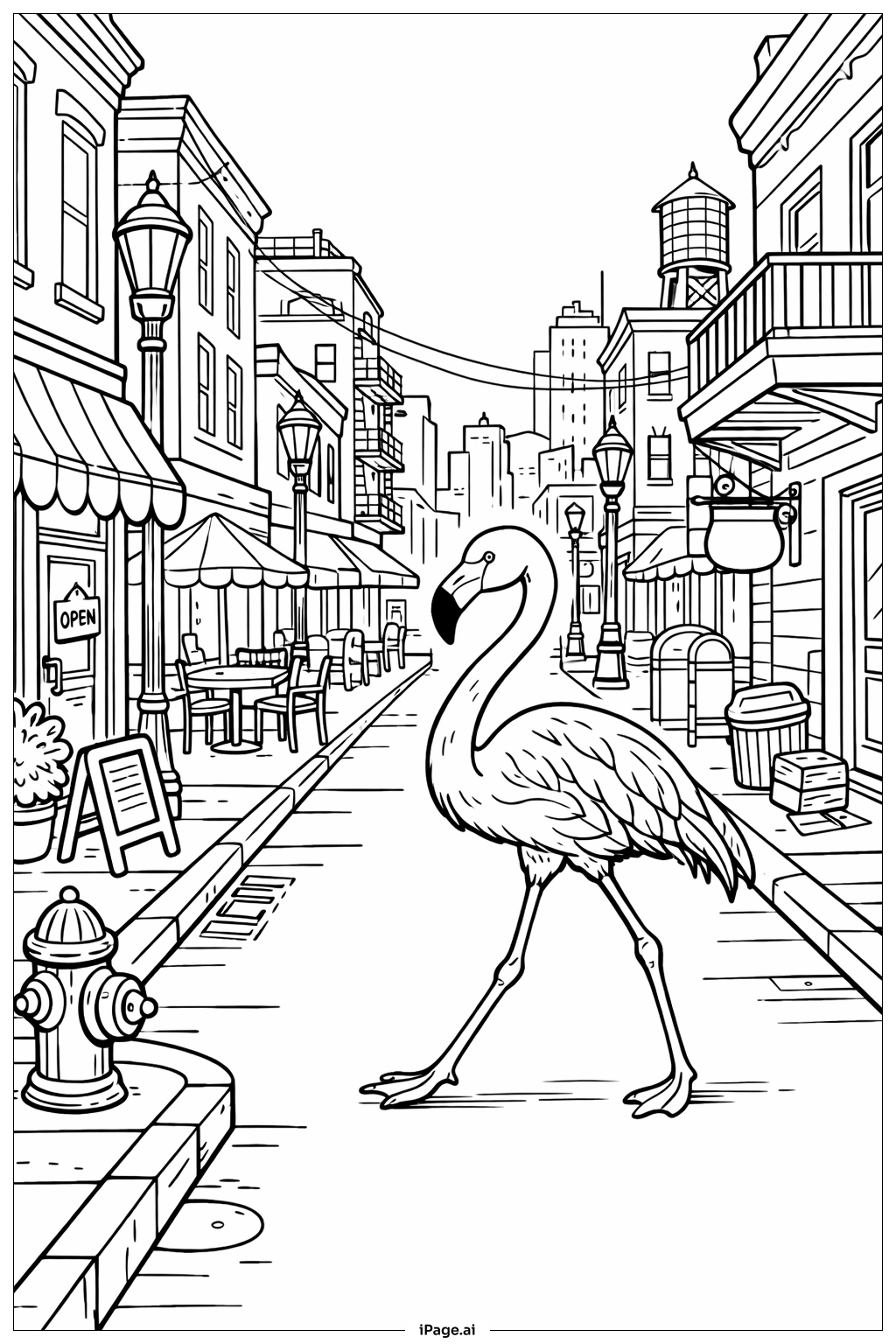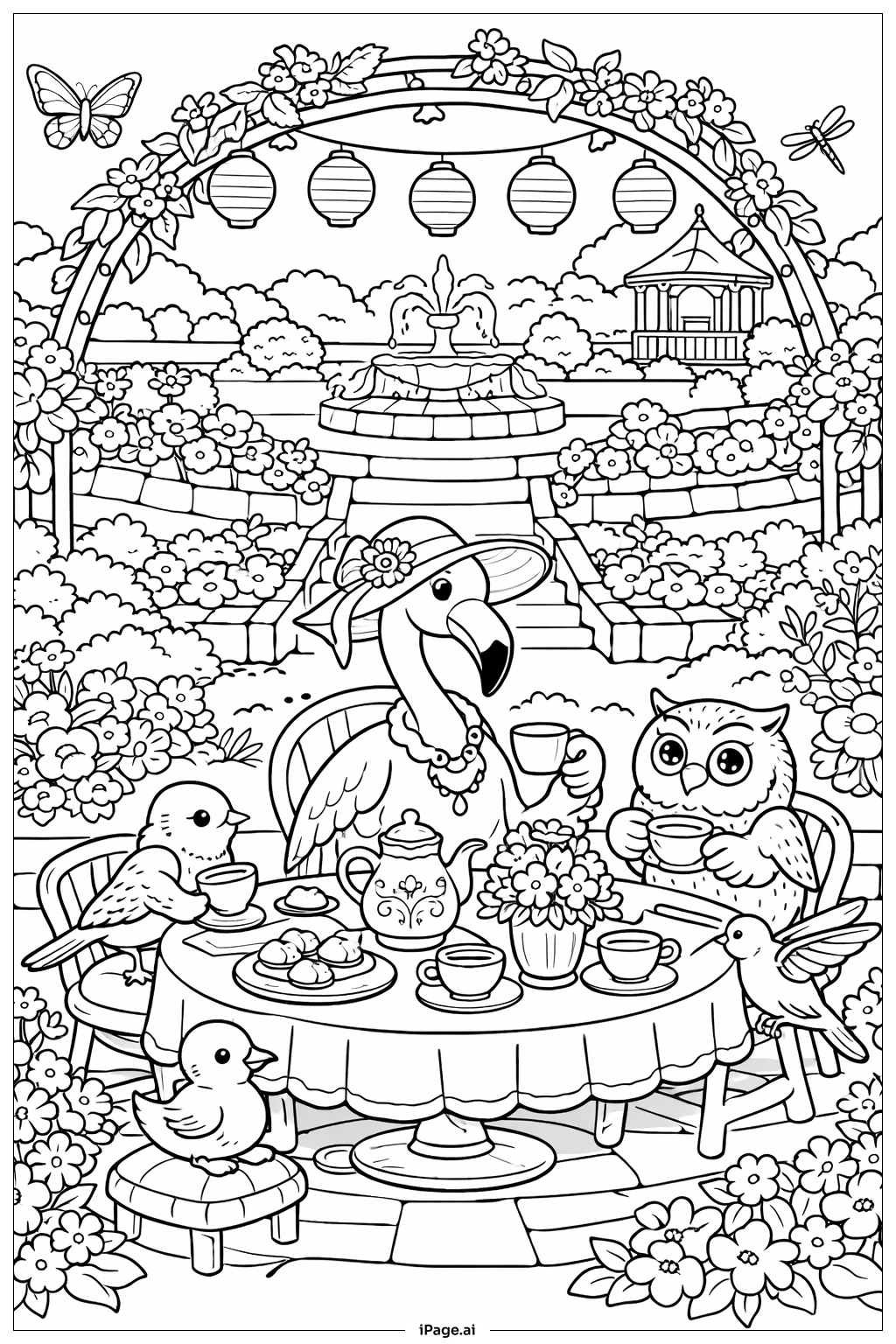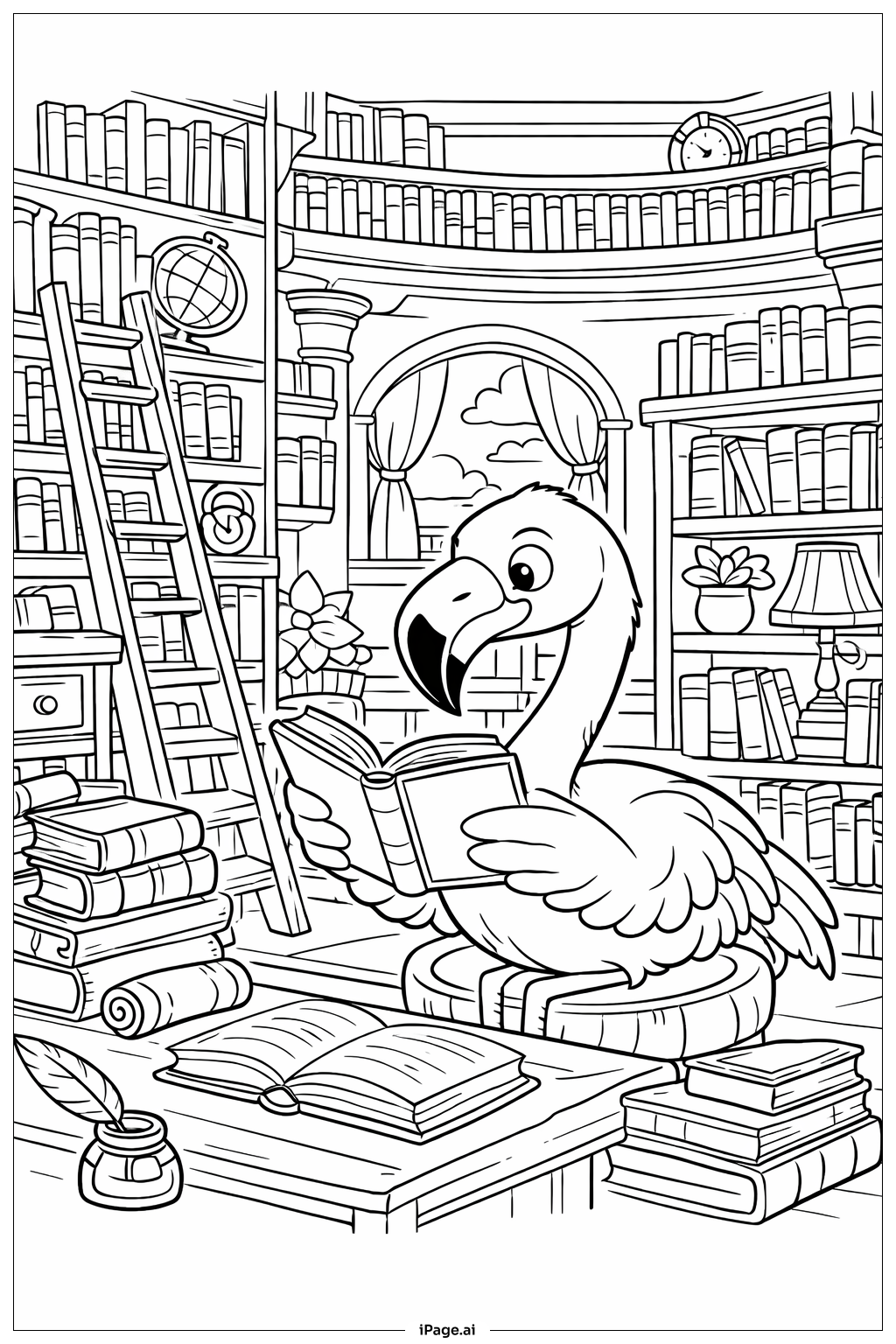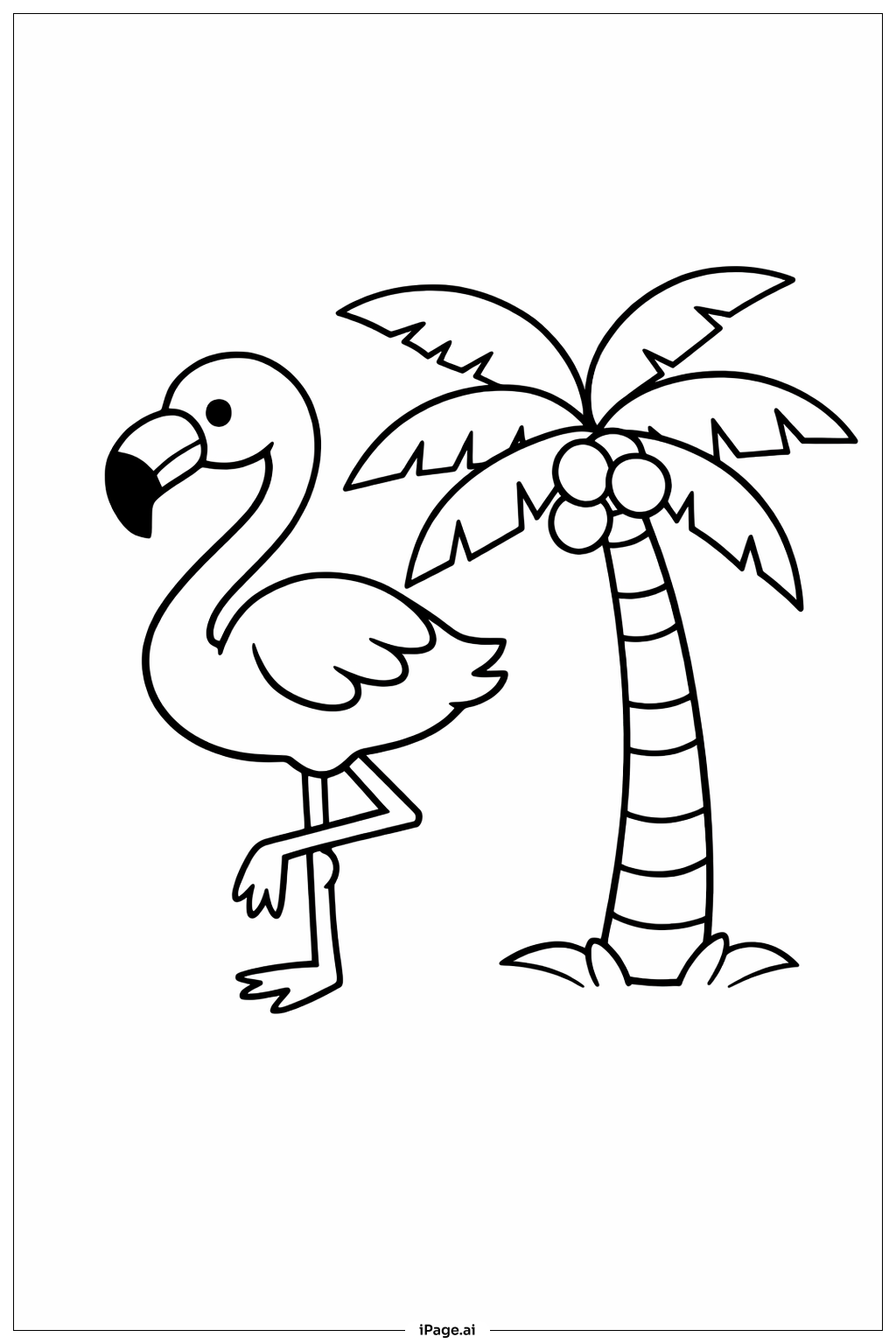
Coloring tips: How to color Flamingo with Palm Tree coloring page well?
Start with the flamingo's body using soft pink or coral shades. Use a deeper pink or magenta on the wing edges and feather tips to add depth. The beak can be colored black at the tip with a pale pink or orange in the middle. Leave the eye area white or use a small dot of black. For the palm tree trunk, use light brown or tan, adding darker brown streaks to show texture. Color the palm fronds in bright or olive green, with yellow-green highlights on the edges. The ground can be sandy yellow or warm beige. Feel free to add a blue sky or ocean background to make the tropical scene come alive. Use crayons, colored pencils, or markers — whatever feels fun to you!
Coloring challenges: Which parts are difficult to color and need attention for Flamingo with Palm Tree coloring page?
• Flamingo Feather Layers: The flamingo's body has overlapping feathers with many small sections. Staying within each outlined feather without smudging into the next one takes patience and a sharp-tipped coloring tool. Young colorists may find it helpful to work from the outer edges inward.
• Curved Neck and Thin Legs: The flamingo's long, curved neck and slender legs are narrow areas to color. It can be tricky to fill these thin lines evenly without going outside the edges. Using a fine-tipped marker or a well-sharpened colored pencil works best here.
• Palm Frond Details: The palm tree fronds have many long, narrow leaf shapes spreading outward. Each frond has its own outline, and coloring them individually while keeping a natural green gradient can be challenging. Switching between two or three shades of green adds realism but requires careful attention.
• Smooth Color Blending: Achieving a soft, smooth look on the flamingo's body — especially when blending light pink into deeper coral tones — can be difficult for beginners. Pressing lightly and layering colors gradually gives a much better result than pressing hard right away.
• Small Background Elements: If the scene includes small tropical details like leaves or ground texture, these tiny areas are hard to fill neatly. A fine-point tool is strongly recommended to avoid accidentally coloring over the main outlines of the flamingo or palm tree.
Benefits of coloring books: Advantages of drawing Flamingo with Palm Tree coloring page
Coloring this Flamingo with Palm Tree page offers a wonderful mix of fun and learning. Here are some great reasons to pick up your colors and get started.
It builds fine motor skills. Carefully filling in the flamingo's feathers and the palm fronds trains hand control and pencil grip, which helps with writing and everyday tasks.
It encourages creativity. Choosing your own colors for the sky, water, or ground lets you design your very own tropical world. There are no wrong choices — every version is unique.
It teaches focus and patience. Working through the detailed feather layers and narrow legs helps children and adults practice sitting still and concentrating on one task at a time.
It is relaxing. Coloring is a calming activity that reduces stress and gives your mind a gentle rest from screens and busy schedules.
It sparks curiosity about nature. The flamingo is a real and fascinating bird. Coloring it may inspire kids to learn more about where flamingos live, what they eat, and why they stand on one leg.
It is great for all ages. Whether you are 4 or 14, this page is enjoyable and rewarding to complete, making it a perfect creative activity for the whole family.