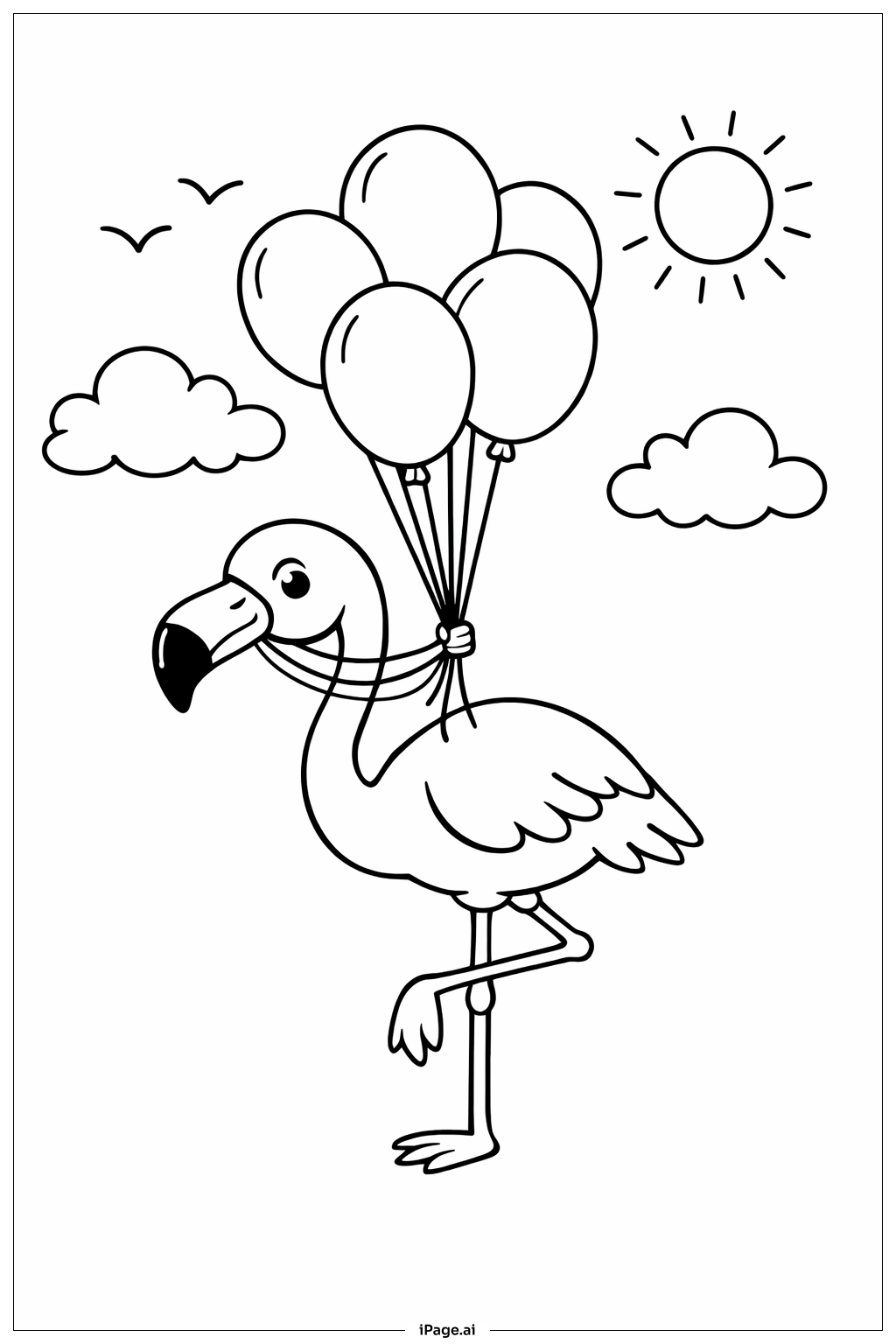
Coloring tips: How to color Flamingo with Balloons coloring page well?
For the flamingo, use various shades of pink ranging from soft coral to vibrant hot pink, with deeper tones on the wing tips and lighter hues on the chest. The beak should be pink with a distinctive black tip. Color the legs in a peachy-pink or orange-pink shade. For the balloons, choose a rainbow of bright, cheerful colors like red, yellow, blue, green, purple, and orange to create a festive atmosphere. Use lighter shades in the center of each balloon and darker tones around the edges to create dimension. The balloon ribbons can be colored in matching or contrasting colors. Keep the ground area in natural earth tones like light brown or beige, and consider adding a soft blue sky background to complete the scene.
Coloring challenges: Which parts are difficult to color and need attention for Flamingo with Balloons coloring page?
• Feather Texture and Detail: The flamingo's body contains intricate feather patterns that require careful attention to create realistic texture. Children may find it challenging to maintain consistent strokes and direction while coloring the overlapping feathers on the wings and body, especially when trying to show the natural layering effect.
• Color Gradation and Shading: Achieving the proper pink gradient on the flamingo's body demands skill in blending colors smoothly. Moving from lighter pink on the chest to deeper shades on the back and wings requires patience and technique. Young colorists might struggle with creating smooth transitions without harsh lines or patchy areas.
• Balloon Dimension and Highlights: Creating the three-dimensional, shiny appearance of balloons presents a unique challenge. To make the balloons look round and realistic, children need to leave highlight spots white or use very light colors, while darkening the edges. This concept of light reflection can be difficult for younger artists to grasp and execute properly.
• Thin Ribbon Details: The delicate balloon ribbons require steady hand control and precision. These narrow, curving lines are easy to color outside of or make too dark, which can overpower the overall image. Maintaining the flowing, twisted appearance of ribbons while keeping colors neat demands fine motor skills and concentration.
• Long Neck and Leg Proportions: The flamingo's distinctively long, curved neck and slender legs present challenges in maintaining even color coverage across these extended areas. Keeping the coloring smooth and consistent along these lengthy sections without creating streaks or uneven patches requires patience and careful technique.
Benefits of coloring books: Advantages of drawing Flamingo with Balloons coloring page
Coloring this flamingo with balloons offers wonderful developmental benefits for children. It enhances fine motor skills and hand-eye coordination through the detailed feather work and precise ribbon coloring. The image encourages creativity as children choose their own color combinations for the balloons and experiment with different shades of pink for the flamingo. Working on the smooth gradients and shading helps develop patience and focus, as these techniques require time and careful attention. The combination of natural elements and festive objects introduces children to both wildlife appreciation and celebration themes. This coloring page also builds confidence as young artists see their ability to bring this charming scene to life. The varying difficulty levels within one image allow children to challenge themselves while still enjoying simpler areas like the balloons, making it suitable for a wide age range.