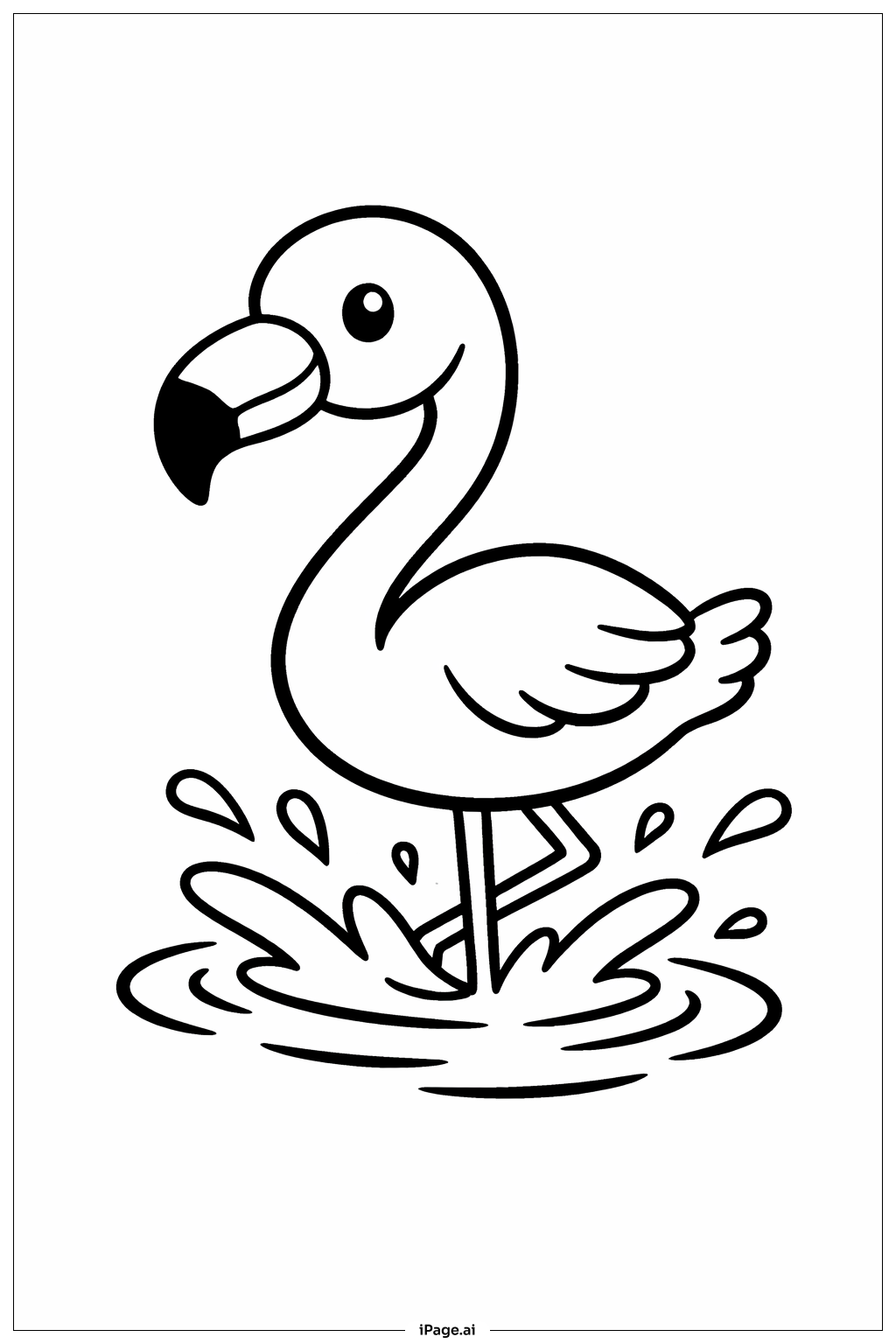
Coloring tips: How to color Flamingo Splashing coloring page well?
For the flamingo, use various shades of pink ranging from pale peachy-pink for the body to deeper coral or salmon pink for wing tips and tail feathers. The beak should be colored with bright orange or yellow at the tip and black toward the end. Add a touch of orange or coral to the legs. For the water splashes, try light blues, aqua, or turquoise with white highlights to show sparkling droplets. You can add depth by using darker blue shades at the base of the water and lighter tones for the splashes. Consider using colored pencils to create smooth gradients on the feathers, blending from lighter pink at the chest to richer pink on the wings. Add shadows beneath the flamingo with gray or purple tones to create dimension.
Coloring challenges: Which parts are difficult to color and need attention for Flamingo Splashing coloring page?
• Feather Detail Work: The flamingo features intricate feather patterns across its wings and body that require careful attention. Each feather has individual lines and textures that need consistent coloring to avoid a patchy appearance. Young children may find it challenging to stay within these small, detailed sections, while older colorists can use this opportunity to practice layering colors and creating realistic feather textures with varying shades of pink.
• Water Splash Effects: The dynamic water splashes surrounding the flamingo present a unique challenge in creating the illusion of transparent, moving water. Colorists need to decide how to represent water droplets in mid-air, whether to leave some white for highlights, and how to show the difference between the main water body and the splashing droplets. Creating depth and movement in water requires understanding light reflection and transparency.
• Color Gradation and Shading: Achieving a realistic flamingo appearance requires smooth color transitions from lighter pink on the chest and neck to darker pink on the wings and back. This gradient effect can be difficult to master, especially when using markers or crayons. Adding shadows under the body, along the neck curve, and beneath the raised leg demands an understanding of light sources and three-dimensional form.
• Maintaining Visual Balance: With so much activity in the scene between the flamingo and the water splashes, colorists must balance their color choices to ensure the bird remains the focal point while the water enhances rather than overwhelms the composition. This requires thoughtful color selection and intensity control throughout the image.
Benefits of coloring books: Advantages of drawing Flamingo Splashing coloring page
Coloring this flamingo splashing scene offers wonderful developmental benefits for children and relaxation for adults. The detailed feather work enhances fine motor skills and hand-eye coordination as children carefully navigate small spaces. The water splashes encourage creative thinking as colorists decide how to represent transparent, moving water. This page teaches about animal anatomy and natural behaviors, helping children learn how flamingos interact with their environment. The variety of elements—from detailed feathers to flowing water—keeps colorists engaged and prevents boredom. Working with pink gradients and water effects introduces color theory concepts like shading, highlighting, and creating depth. The joyful, playful scene promotes positive emotions and can spark conversations about wildlife and nature conservation. For adults, the intricate details provide a mindful, meditative coloring experience that reduces stress.