Coloring tips: How to color Flamingo Sleep Pose coloring page well?
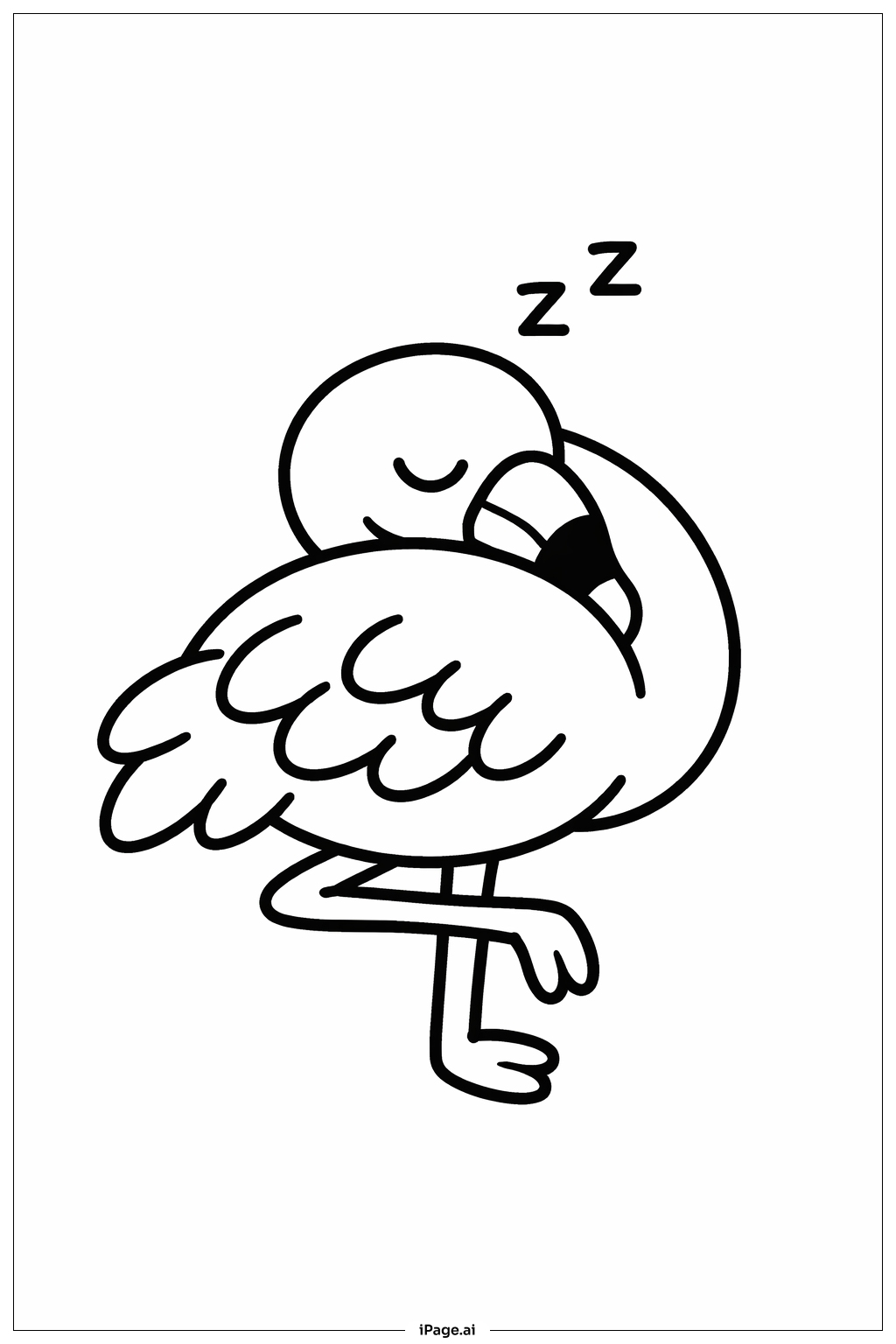
Start with the flamingo's body using various shades of pink, from pale blush to vibrant coral. The feathers can feature gradient effects, transitioning from deeper pinks at the edges to lighter tones near the body. Use black or dark gray for the distinctive beak tip, while the rest can be orange or peachy pink. The single standing leg should be colored in shades of orange, pink, or coral. For added dimension, apply darker pink or magenta along the undersides of feathers and body curves to create shadows. The wing feathers offer a perfect opportunity to experiment with layering different pink tones. Consider adding subtle touches of white or cream to highlight areas where light would naturally hit, especially on the head and back.
Coloring challenges: Which parts are difficult to color and need attention for Flamingo Sleep Pose coloring page?
• Feather Layering and Texture: The overlapping feathers require careful attention to maintain distinct layers while creating a cohesive look. Each feather section needs slightly different shading to show depth and dimension. Young colorists may find it challenging to keep each feather separate while blending colors smoothly, especially where the wing feathers cascade over the body.
• Single Leg Balance and Proportion: Coloring the one visible leg requires precision to maintain its slender appearance while showing proper shading for a cylindrical form. The leg's positioning and connection to the body must be colored carefully to preserve the sense of balance and weight distribution that makes the pose believable.
• Curved Neck Anatomy: The flamingo's backward-bending neck presents a unique challenge as it requires understanding of how the neck curves and where shadows naturally fall. The neck's tubular form needs gradient shading to appear three-dimensional, and colorists must follow the curve smoothly without creating harsh lines or flat sections.
• Head and Beak Integration: The tucked head position means the beak partially disappears into the body feathers, requiring careful color choices to maintain visibility while looking natural. The beak's distinctive curve and dual-color pattern must be rendered clearly despite its partially hidden position.
• Overall Color Harmony: Maintaining visual interest while working primarily with pink tones challenges colorists to use subtle variations and shading techniques. Creating depth without access to contrasting colors requires understanding of value and tone relationships within a limited color family.
Benefits of coloring books: Advantages of drawing Flamingo Sleep Pose coloring page
Coloring this peaceful flamingo helps children develop fine motor skills through careful control needed for the detailed feathers and curved lines. The sleeping pose encourages a calm, focused mindset, making this an excellent activity for relaxation and stress relief. Young artists learn about color gradients and shading techniques while working with various pink tones, building their understanding of color theory. The unique anatomy of the flamingo teaches children about animal adaptations and balance. Completing the intricate feather patterns builds patience and attention to detail. The standing-on-one-leg pose sparks curiosity about animal behavior and biology. This coloring page promotes mindfulness and concentration, helping children practice staying within lines while making creative color choices. It also develops hand-eye coordination and spatial awareness as they navigate the curved neck and flowing feathers.