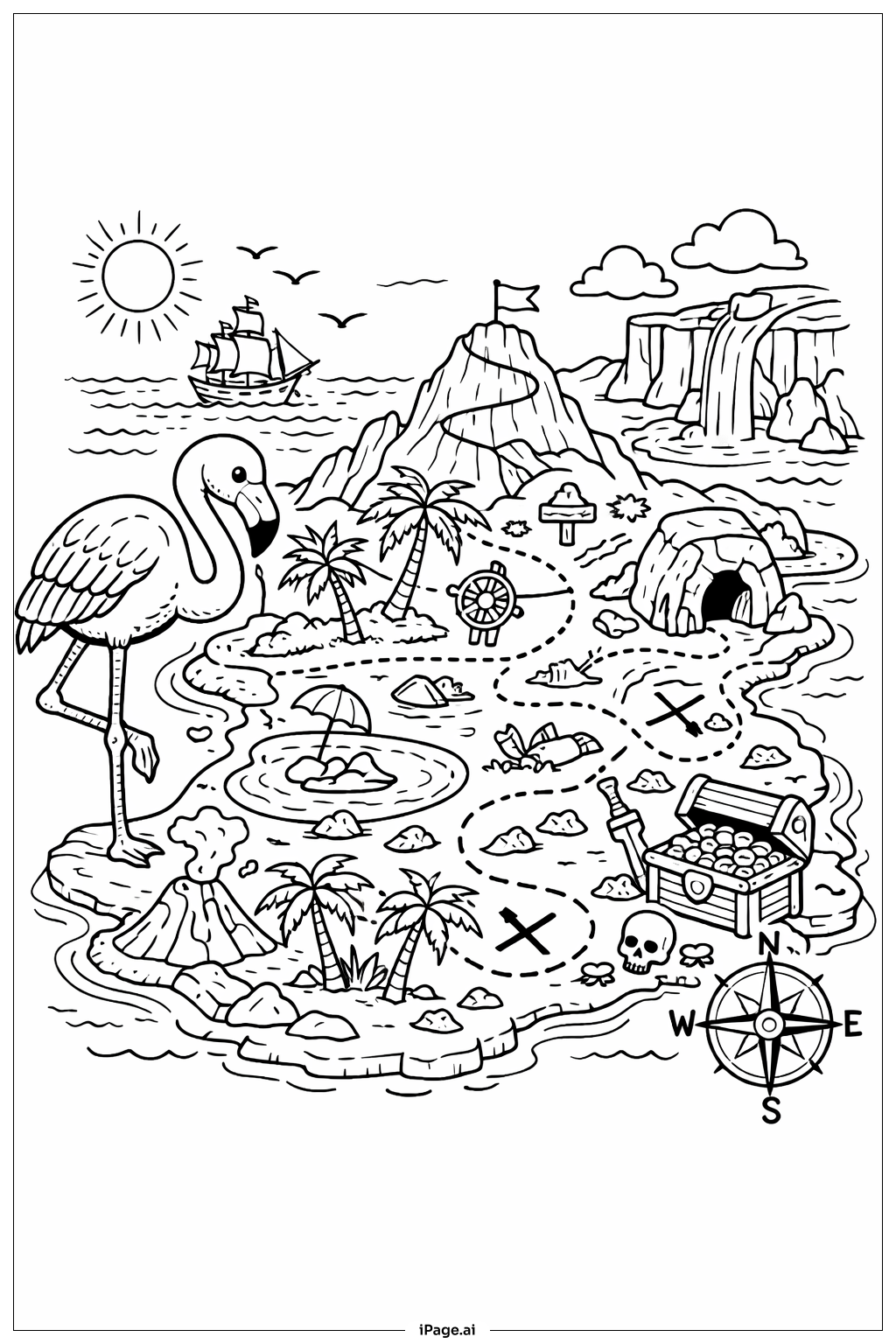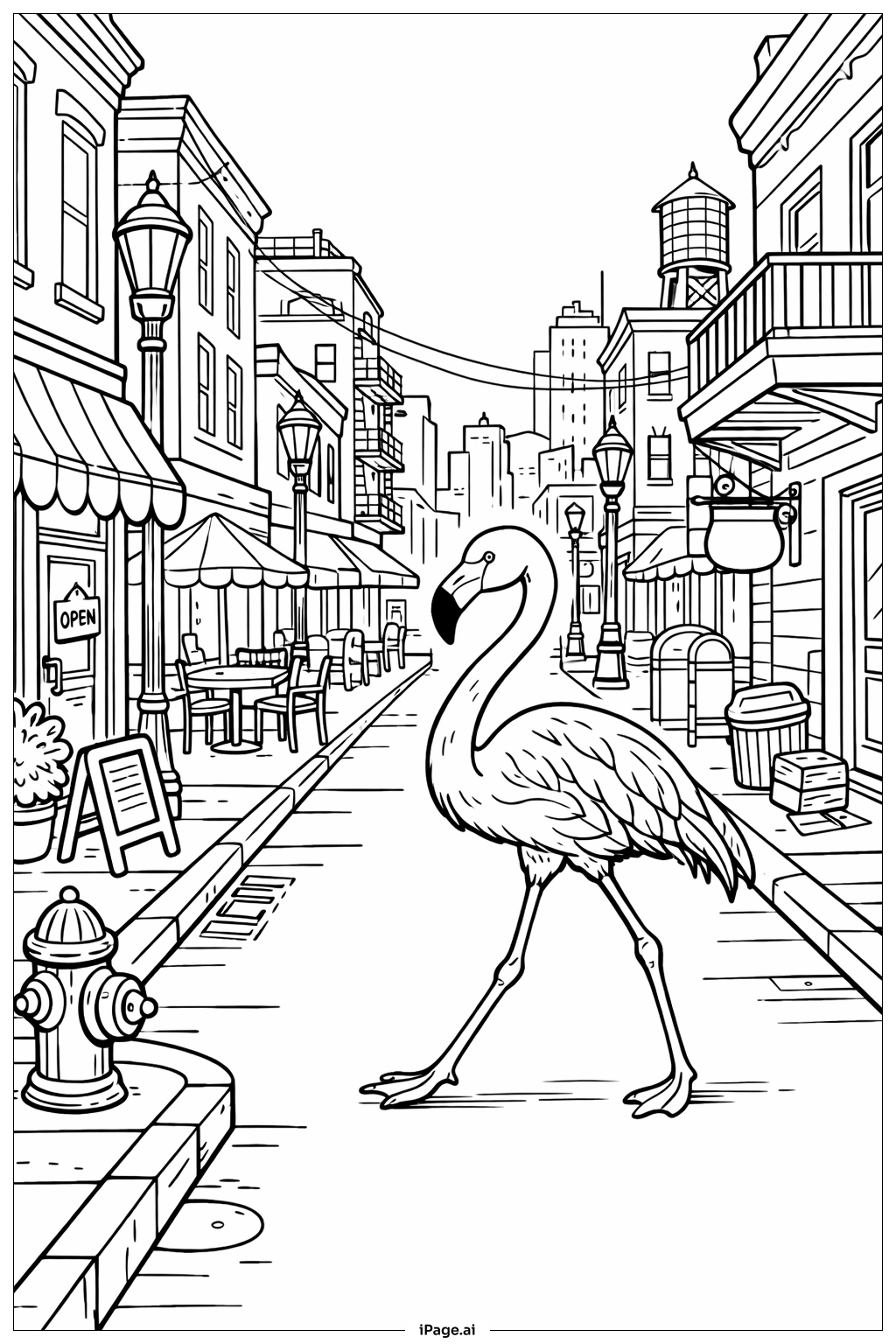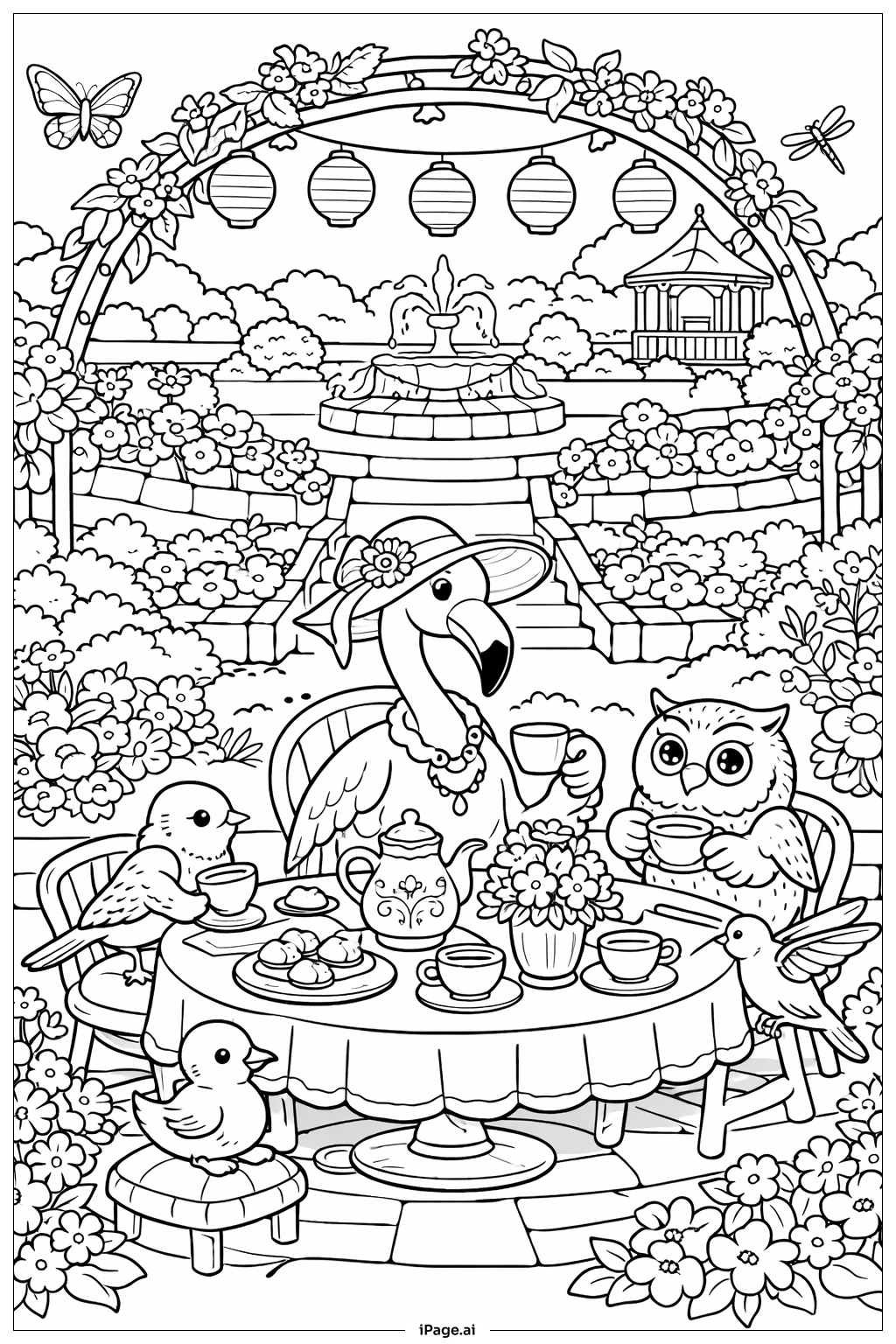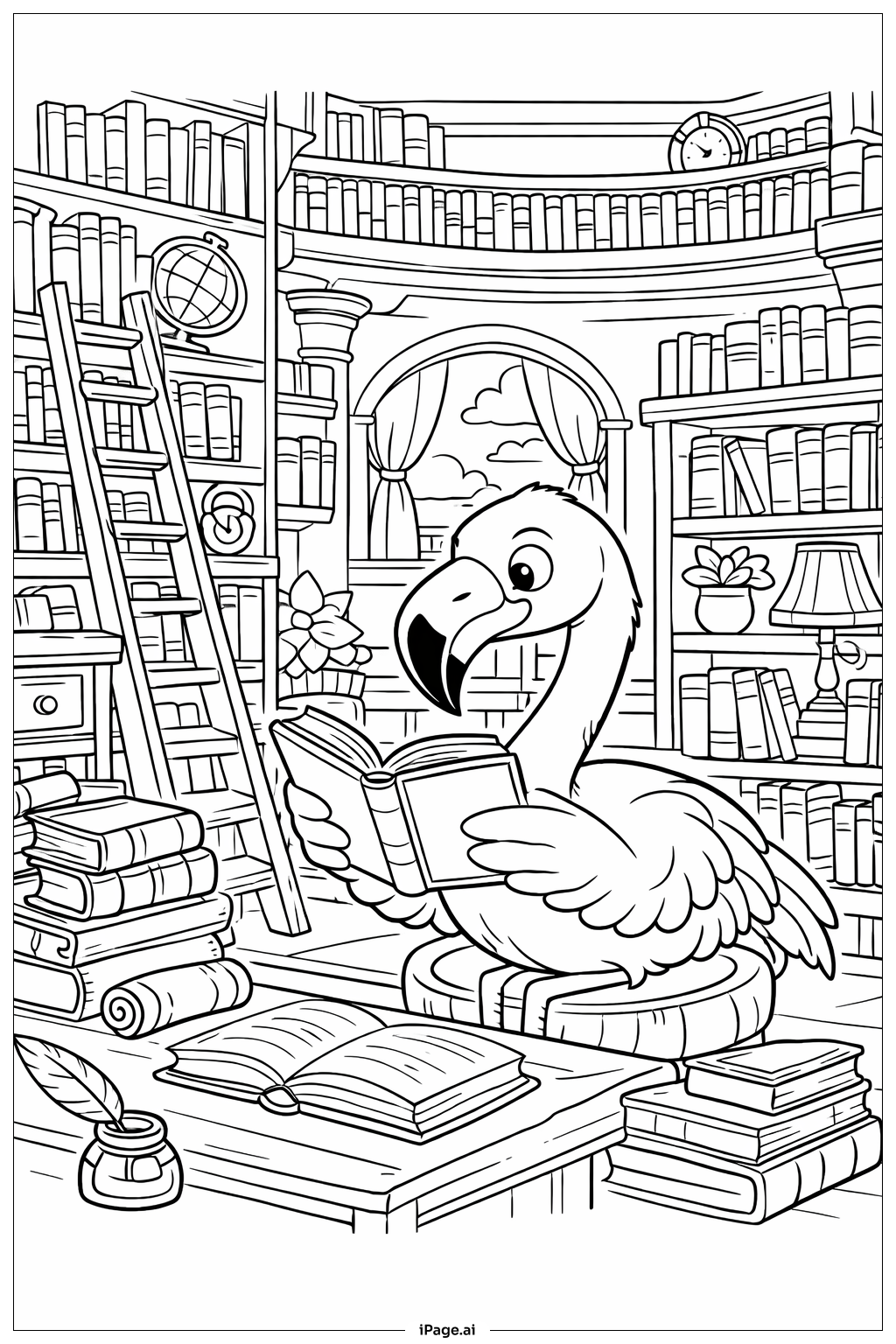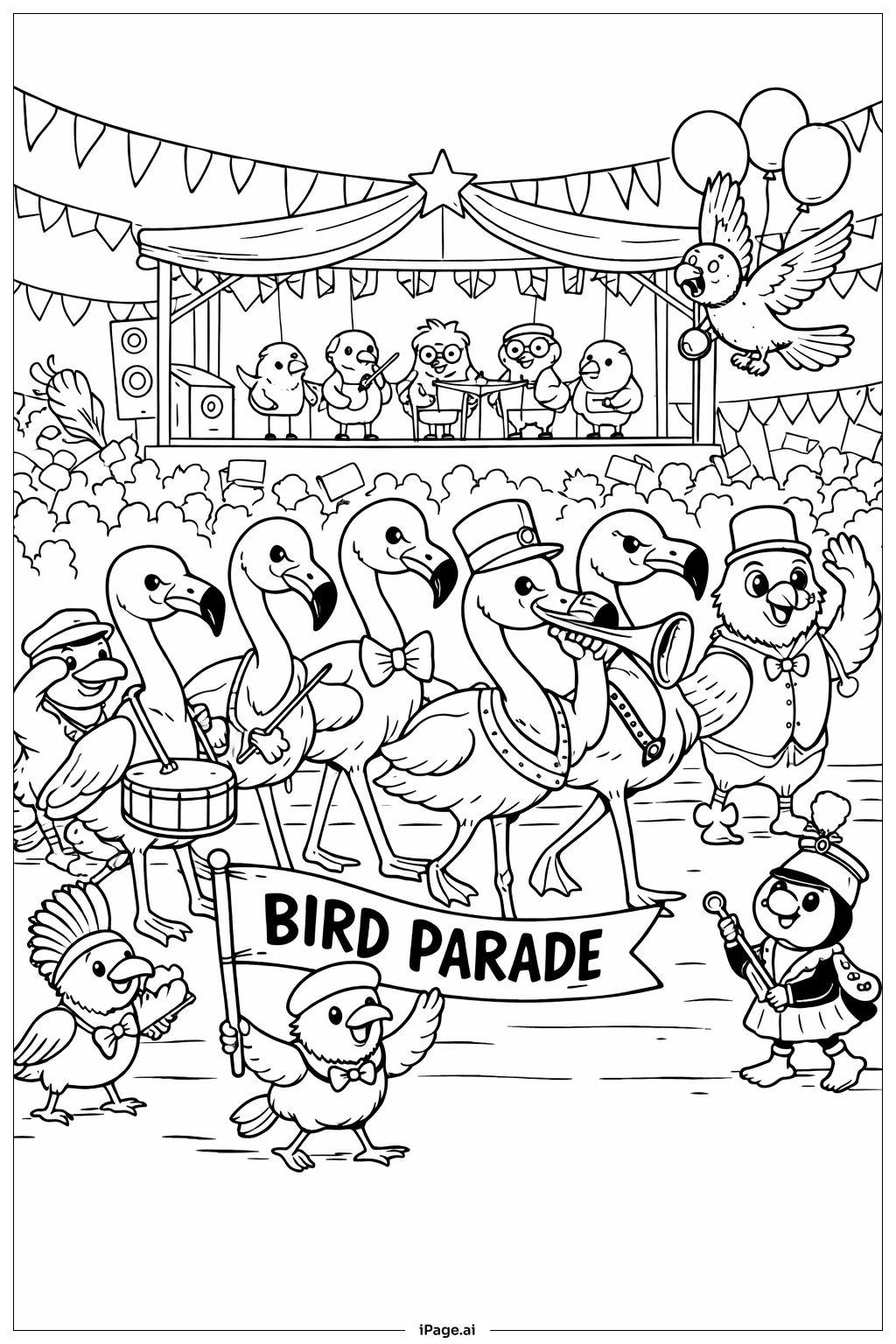
Coloring tips: How to color Flamingo Parade with Other Birds coloring page well?
Start with the flamingos using shades of pink, coral, and salmon for their bodies. You can blend lighter pinks on their chest areas and deeper coral tones on their wings and back. Their legs and beaks can be colored in orange-pink with black tips on the beaks. For the other birds in the parade, consider using a variety of colors to create contrast: try blues and grays for herons or egrets, vibrant yellows and oranges for tropical birds, or earthy browns and tans for sandpipers. Use white or cream for any egrets to make them stand out. Add darker shades like black or deep brown for eyes and beak details. Consider using colored pencils to create soft feather textures by layering colors gently. The ground can be sandy beige or light brown, while any background elements could be soft blues or greens to suggest sky or water.
Coloring challenges: Which parts are difficult to color and need attention for Flamingo Parade with Other Birds coloring page?
• Multiple Bird Species: This image contains several different types of birds, each requiring distinct color schemes and patterns. Children need to plan which colors work best for each species while maintaining visual harmony across the entire scene. This requires decision-making skills and an understanding of how different colors interact when placed side by side.
• Feather Details and Textures: The individual feathers and plumage patterns present a challenge for creating realistic texture. Coloring each feather section carefully without going outside the lines requires patience and fine motor control. Younger children may find it difficult to add shading and layering techniques that make feathers look soft and dimensional rather than flat.
• Long Curved Necks and Legs: The flamingos' signature long, curved necks and thin legs contain narrow spaces that are challenging to color neatly. Staying within these slender lines requires steady hands and concentration. The curves also make it harder to maintain consistent color intensity throughout the length of the neck.
• Overlapping Elements: Where birds overlap or stand close together, the boundaries between different birds can be tricky to distinguish. Children must carefully identify which line belongs to which bird to avoid coloring one bird with another's colors. This spatial awareness challenge helps develop visual discrimination skills but can be frustrating for beginners.
Benefits of coloring books: Advantages of drawing Flamingo Parade with Other Birds coloring page
Coloring this flamingo parade offers wonderful benefits for children. It helps develop fine motor skills and hand-eye coordination as they carefully color the birds' long necks and thin legs. The variety of bird species encourages learning about nature and wildlife diversity, sparking curiosity about different animals. Making color choices for each bird boosts creativity and decision-making abilities. The detailed feathers provide excellent practice for patience and focus, as children work on small areas with concentration. This activity also teaches color theory as kids learn which colors complement each other when placing different birds side by side. The sense of accomplishment from completing such a detailed scene builds confidence and self-esteem. Additionally, the calming, repetitive motion of coloring promotes relaxation and stress relief, making it a perfect mindful activity after school or during quiet time.