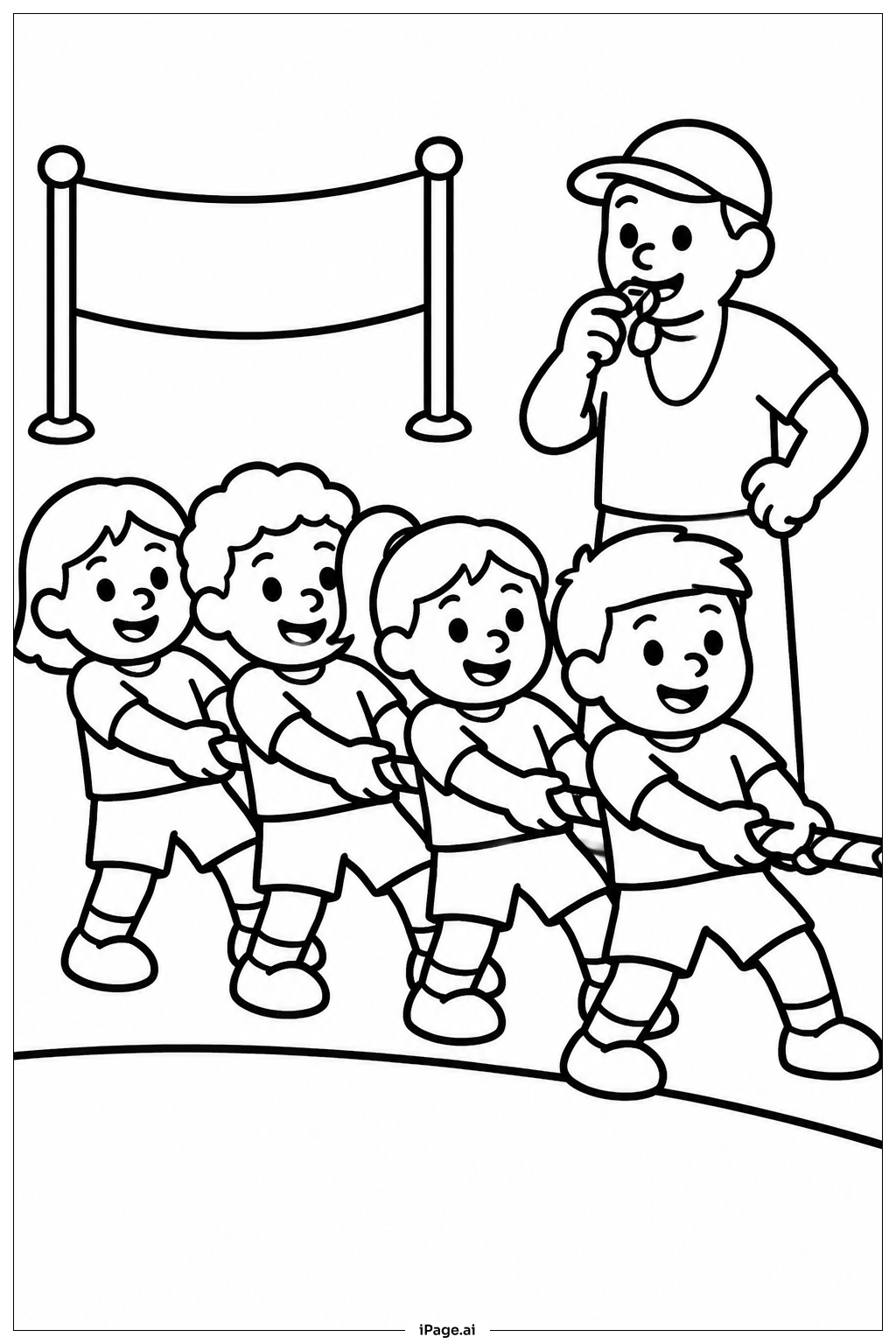
Coloring tips: How to color Field Day Tug Of War coloring page well?
Start with the skin tones of the children using warm peach, tan, or brown shades to bring the kids to life. For their clothes, use bold team colors — try red and blue, or yellow and green — to show the two competing sides clearly. Color the rope in sandy beige or light brown with darker shading along the twist lines to add texture. Use bright green for the grass beneath their feet, and fill the sky with a cheerful light blue. Add white or soft yellow for clouds and sunbeams. Give the trees rich green leaves and brown trunks. Use darker shading on the children's arms and legs to show muscle effort and movement. Keep facial expressions lively — rosy cheeks and bright eyes make the scene feel full of energy. Use contrasting colors between the two teams so the viewer can easily tell them apart. Feel free to add your own crowd in the background cheering them on!
Coloring challenges: Which parts are difficult to color and need attention for Field Day Tug Of War coloring page?
• Team Color Consistency: Each team should have a matching color scheme throughout. Keeping the same colors on every child's outfit on one side — while using a completely different color set for the other team — takes careful planning and attention. Mixing them up accidentally can make the scene confusing to look at.
• Rope Texture and Tension: The thick braided rope is one of the most detailed elements in this image. Coloring the twisted strands with light and shadow takes patience. The curve in the middle also needs shading to show the tension being pulled from both ends, which requires blending skills.
• Overlapping Figures: The children stand close together and some figures overlap. Coloring each child individually without bleeding into the person next to them can be tricky, especially in the arm and shoulder areas where hands grip the rope tightly.
• Facial Expressions: The small faces of each child show effort, excitement, and determination. Coloring tiny features like eyes, cheeks, and mouths neatly requires a fine-tipped tool and steady hands. Getting the expressions to look lively without smudging nearby areas is a real challenge.
• Background Depth: The background includes sky, trees, sunbeams, and grass. Balancing these background colors so they complement the foreground action — without making the scene look flat or too busy — requires thoughtful color choices and controlled application to maintain a sense of depth and distance.
Benefits of coloring books: Advantages of drawing Field Day Tug Of War coloring page
Coloring this Field Day Tug Of War scene offers a wonderful mix of fun and learning for kids of all ages. It helps children develop fine motor skills as they carefully color small details like faces, hands, and the twisted rope. Staying within the lines builds hand-eye coordination and focus, which supports skills used in reading and writing.
Choosing team colors encourages creative thinking and decision-making. Kids learn about color contrast and visual balance as they plan which colors go on each team. This kind of artistic planning builds early design thinking.
The exciting subject matter — a tug of war competition — keeps children engaged and motivated. They are more likely to stay focused and finish the page when the topic is something they know and enjoy. This builds patience and a sense of accomplishment.
Coloring outdoor scenes like this one also sparks conversations about teamwork, sportsmanship, and friendship. Parents and teachers can use the image as a starting point to talk about Field Day memories, cooperation, and healthy competition.
For older kids and adults, the detailed rope texture and layered figures offer a satisfying challenge. Blending colors and adding shading can feel meditative and stress-relieving. Overall, this page is a joyful, educational, and calming activity for the whole family.