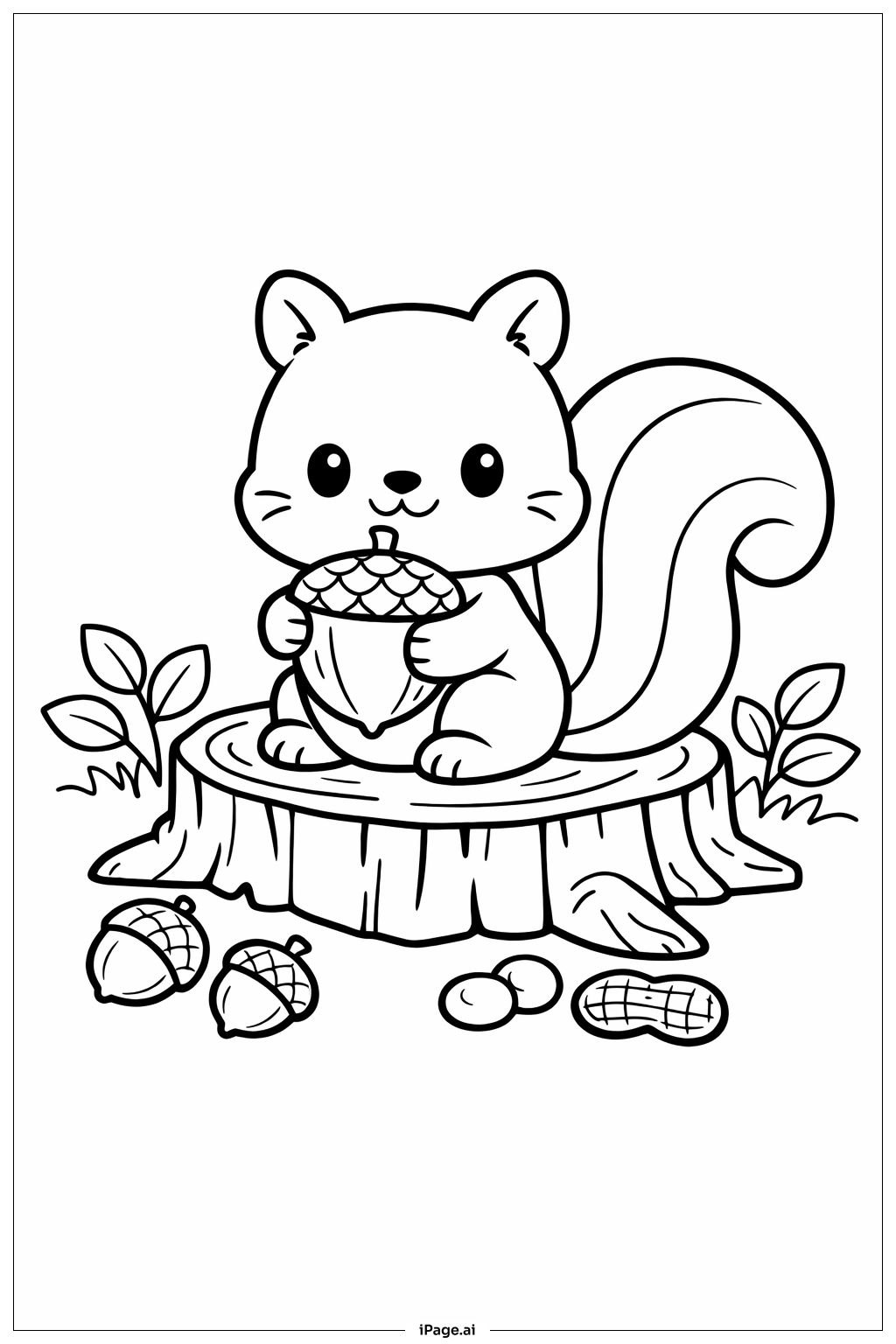
Coloring tips: How to color Squirrel Gathering Fall Nuts coloring page well?
Start with the squirrel's body. Use warm shades of brown, tan, or reddish-brown for the fur. Make the belly a lighter cream or white to add contrast. The bushy tail can be a mix of golden brown and light beige, with soft strokes to suggest fluffiness. For the acorns, color the caps in dark brown and the bodies in golden yellow or tan. Use deep oranges, reds, and yellows for the fallen leaves to capture that classic Fall feeling. Try mixing two or three shades on each leaf to make them look more natural. The grass can be light green or a muted olive tone since it is late in the season. The tree trunk works well in gray-brown with darker lines to show the bark texture. For a fun touch, kids can add a bright blue or purple sky peeking through the top of the scene. Do not be afraid to use bold, warm colors throughout — Fall is all about rich, cozy tones.
Coloring challenges: Which parts are difficult to color and need attention for Squirrel Gathering Fall Nuts coloring page?
• Squirrel Fur Texture: The squirrel's body is covered in short, layered fur that can be tricky to color realistically. Using a single flat color will make the fur look stiff. Try using two or three shades of brown and apply short, light strokes in the direction the fur flows. Leave the belly area lighter to show depth and dimension.
• Bushy Tail Shading: The large, fluffy tail has many overlapping layers. Getting it to look soft and full requires gradual blending from a darker root to a lighter tip. Without shading, the tail can look flat. Younger colorists may find it helpful to simply alternate light and dark strokes throughout the tail.
• Leaf Variety and Overlap: Several leaves of different shapes are scattered across the scene. Each leaf overlaps others, making it important to choose colors that are distinct enough to separate them visually. Using the same shade on touching leaves will make them blend together and lose their individual shapes.
• Acorn Details: The acorns have two distinct parts — the smooth, rounded body and the textured, bumpy cap. Coloring these two sections in clearly different shades is important. The cap benefits from a slightly darker or grayer brown, while the body looks great in warm golden tones. Small and rounded, acorns can be fiddly to color neatly for younger children.
• Background Depth: The tree trunk and roots in the background need to feel further away than the squirrel in the foreground. Using lighter, less saturated colors for the background helps push it back visually, making the squirrel pop forward as the main subject of the scene.
Benefits of coloring books: Advantages of drawing Squirrel Gathering Fall Nuts coloring page
Coloring this Fall squirrel scene offers a wide range of benefits for children of all ages. The image connects kids to the natural world by showing how animals prepare for the changing seasons. As they color, children learn about autumn, wildlife behavior, and the beauty of nature in a hands-on, engaging way.
Filling in the many details — fur, leaves, acorns, and bark — helps build fine motor skills and strengthens hand-eye coordination. Choosing the right colors for each element encourages creative thinking and decision-making. Kids practice recognizing warm autumn tones and experiment with shading and contrast.
The scene is rich but not overwhelming, making it a great fit for both younger children who enjoy bold, simple color fills and older kids who want to explore blending and texture. Completing the image gives children a real sense of accomplishment and pride in their work.
Spending focused time coloring also supports mindfulness and concentration. It gives kids a calm, screen-free activity that lets their imagination run freely. Whether coloring solo or with friends and family, this cozy Fall scene turns a simple artistic exercise into a meaningful, joyful experience.