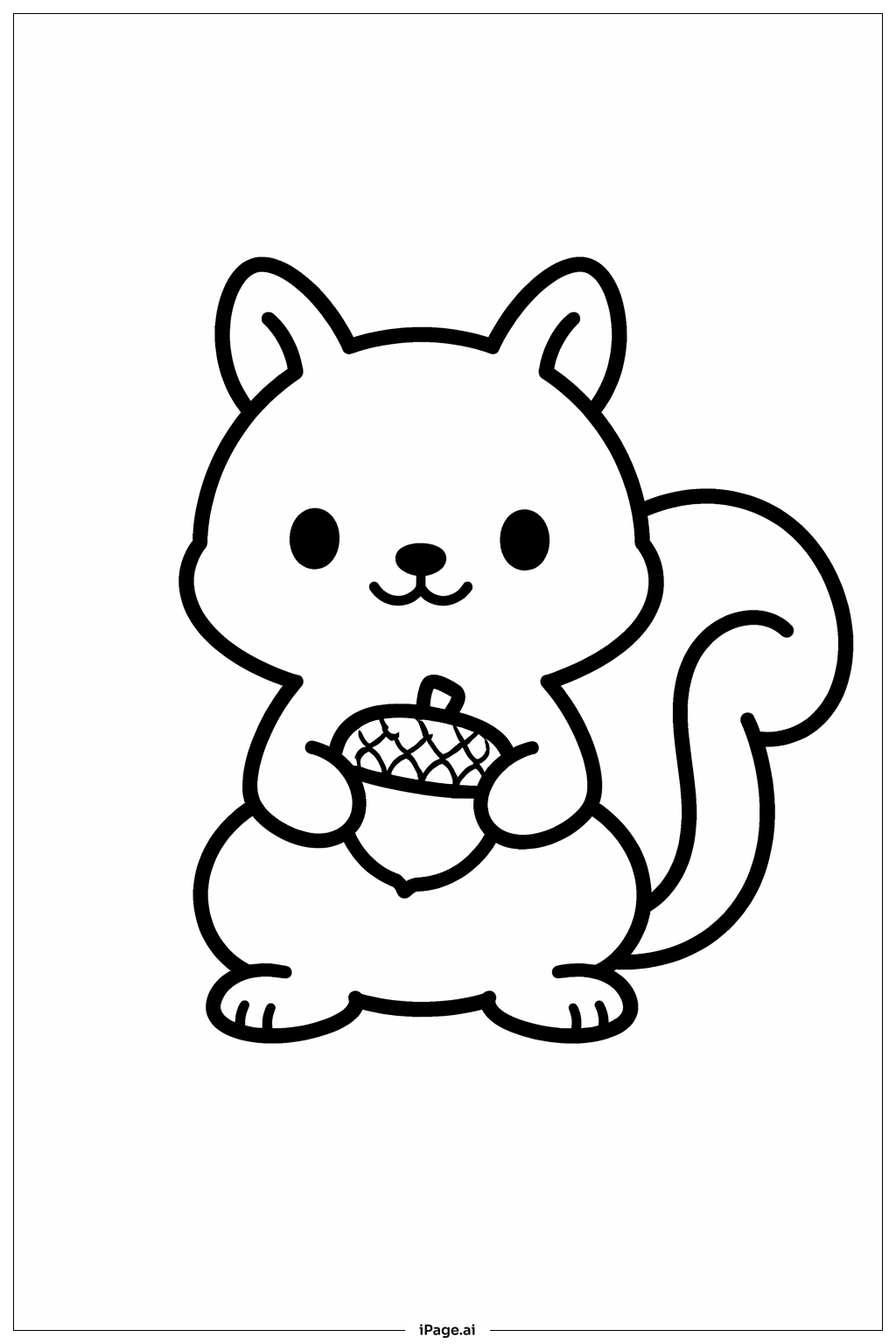
Coloring tips: How to color Fall Squirrel coloring page well?
Try to use warm fall colors like browns, oranges, and yellows for the squirrel and the acorn. You can color the squirrel’s body in shades of brown or gray. Use a darker color for the acorn cap and a lighter color for its nut part. Don't forget to color the eyes and nose in black or very dark brown to make the squirrel look lively. For the cute tail, you can blend different shades to show its fluffiness. Add some background colors like green grass or orange leaves if you want to make the picture more vibrant.
Coloring challenges: Which parts are difficult to color and need attention for Fall Squirrel coloring page?
1. Coloring the small details on the acorn cap can be tricky because the pattern is tiny and requires careful coloring.
2. Blending different shades on the squirrel’s tail to show its fluffiness might be challenging for younger kids.
3. Keeping the colors inside the lines can be hard because of the curved parts like the tail and paws.
4. Choosing the right shades to give the squirrel a natural look needs some attention and practice.
5. Coloring the eyes and nose precisely requires steady hands to make sure they look clear and cute.
Benefits of coloring books: Advantages of drawing Fall Squirrel coloring page
Coloring this squirrel page helps children improve their hand-eye coordination by coloring inside the lines and small details. It encourages creativity by letting kids pick different fall colors. The act of coloring the squirrel and its acorn also teaches kids about nature and the changing seasons. This activity can improve concentration and patience as they work on the little patterns and blend colors on the tail. Overall, it’s a fun and educational way to enjoy art and learn about animals.