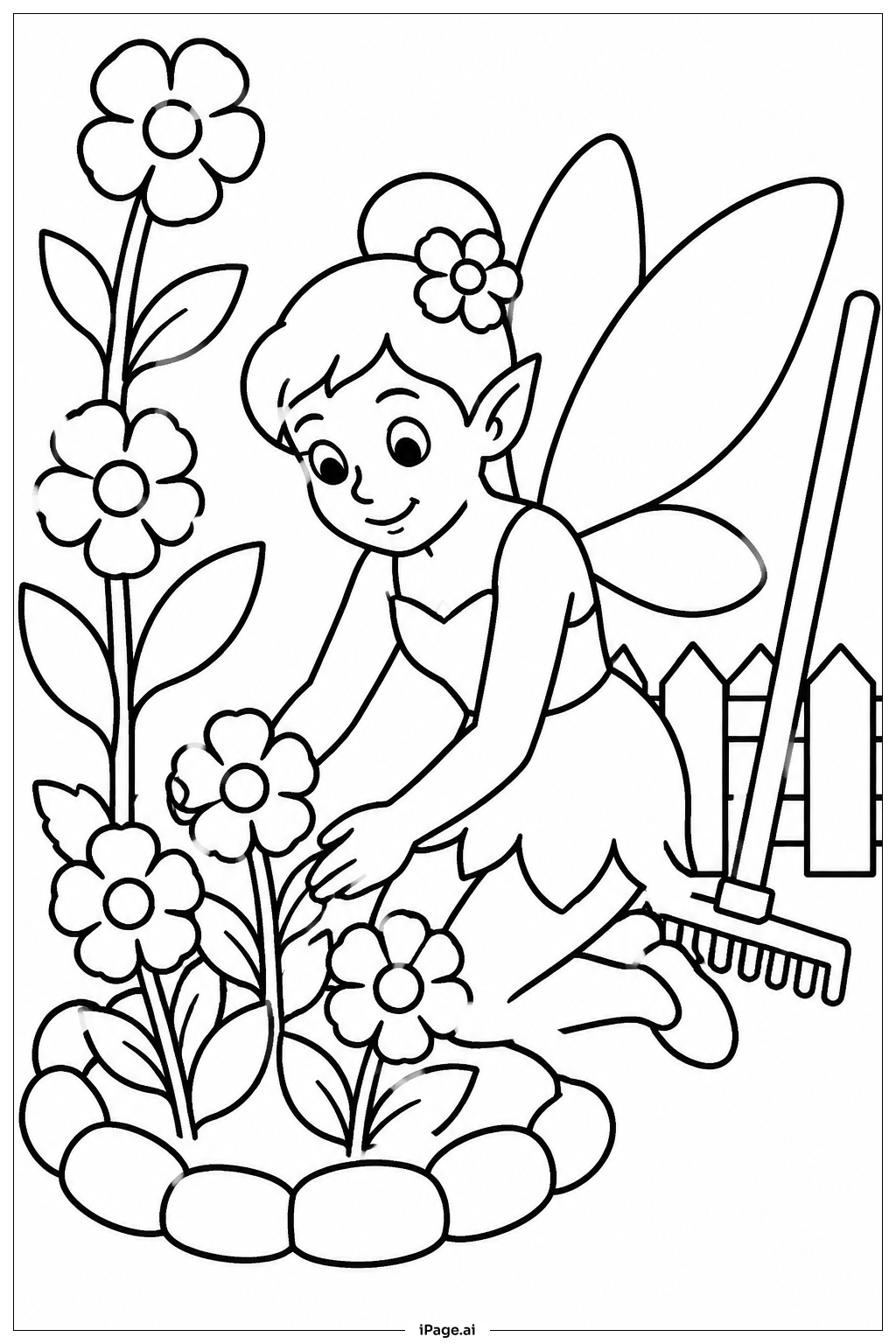
Coloring tips: How to color Fairy At Flower Bed coloring page well?
For this Fairy At Flower Bed, try using soft pastel colors for the Fairy’s dress and wings to give a magical and delicate feel. You can use shades of pink, lavender, or light blue. For the flowers, mix bright colors like red, yellow, and orange to make the garden lively and cheerful. Use various green tones for leaves and grass to create depth and variety. Coloring the Fairy’s hair with golden or light brown hues will add warmth. Feel free to add gentle shading around the flowers and the Fairy to bring the picture to life while keeping it light and airy.
Coloring challenges: Which parts are difficult to color and need attention for Fairy At Flower Bed coloring page?
• Detailed Wings: The Fairy’s wings have fine lines and delicate shapes that require careful coloring to stay within the space and enhance their transparency or glow.
• Small Flower Petals: The flower bed contains many small petals that need patience and precision to color without mixing colors across petals.
• Hair Strands: Coloring the Fairy’s hair needs attention to flow and shading to create texture and avoid a flat look.
• Light & Shadow: Conveying soft light around the Fairy and flowers can be challenging as it requires blending colors smoothly to keep the gentle atmosphere.
• Overlapping Elements: Some flower petals and leaves overlap with the Fairy’s dress and hands, so color separation is important for clarity.
Benefits of coloring books: Advantages of drawing Fairy At Flower Bed coloring page
Coloring this Fairy At Flower Bed helps improve fine motor skills through the detailed wings and small flower areas. It encourages creativity by allowing children to experiment with soft and bright color combinations. The gentle scene promotes focus and calmness, making it suitable for relaxation. Working on shading and blending in this image can also develop patience and attention to detail. Additionally, coloring this magical garden setting can inspire imagination and storytelling, enriching the child's expressive abilities.