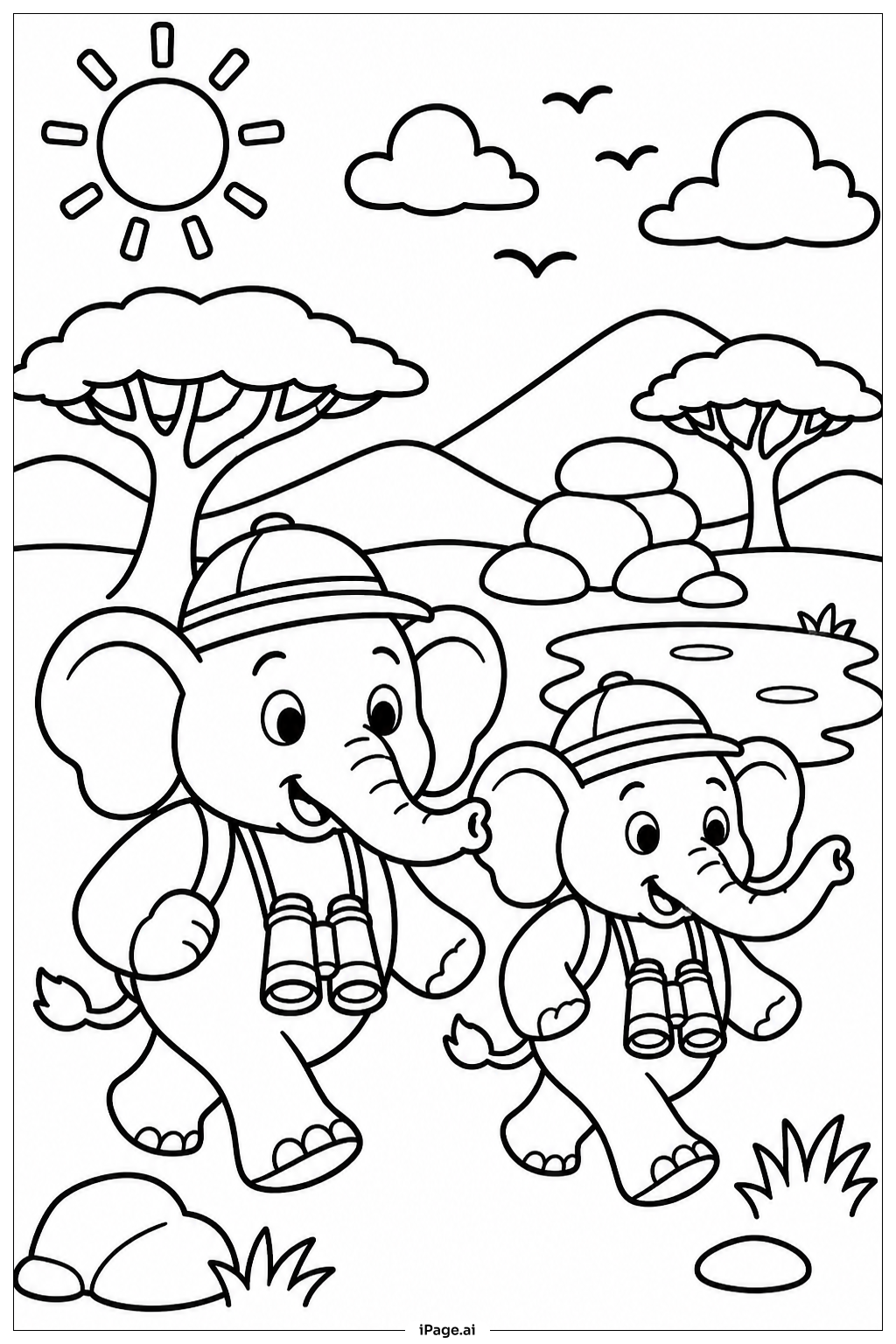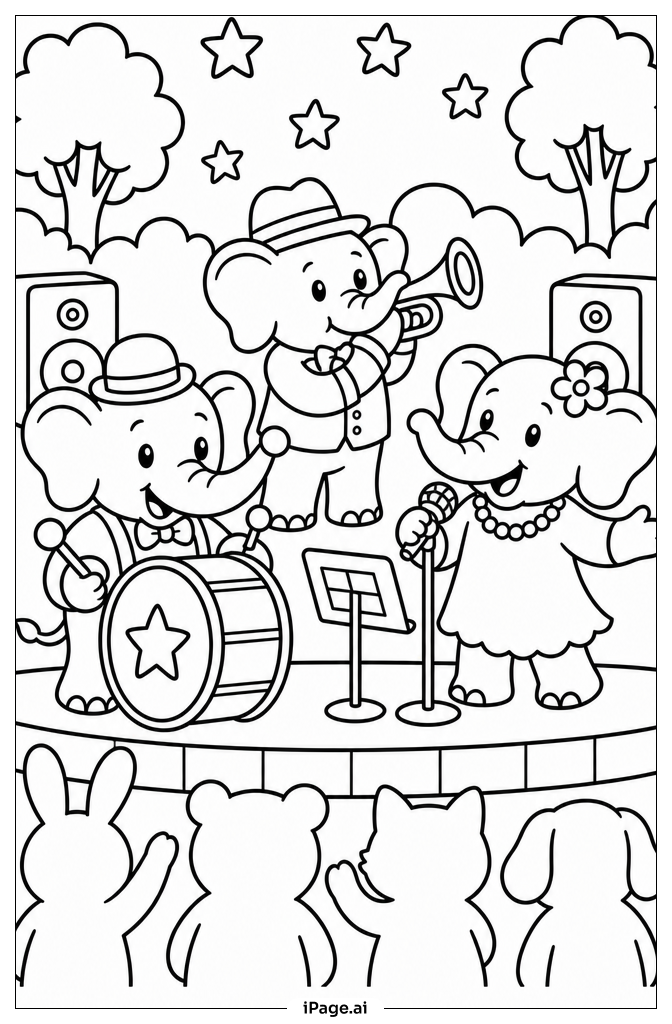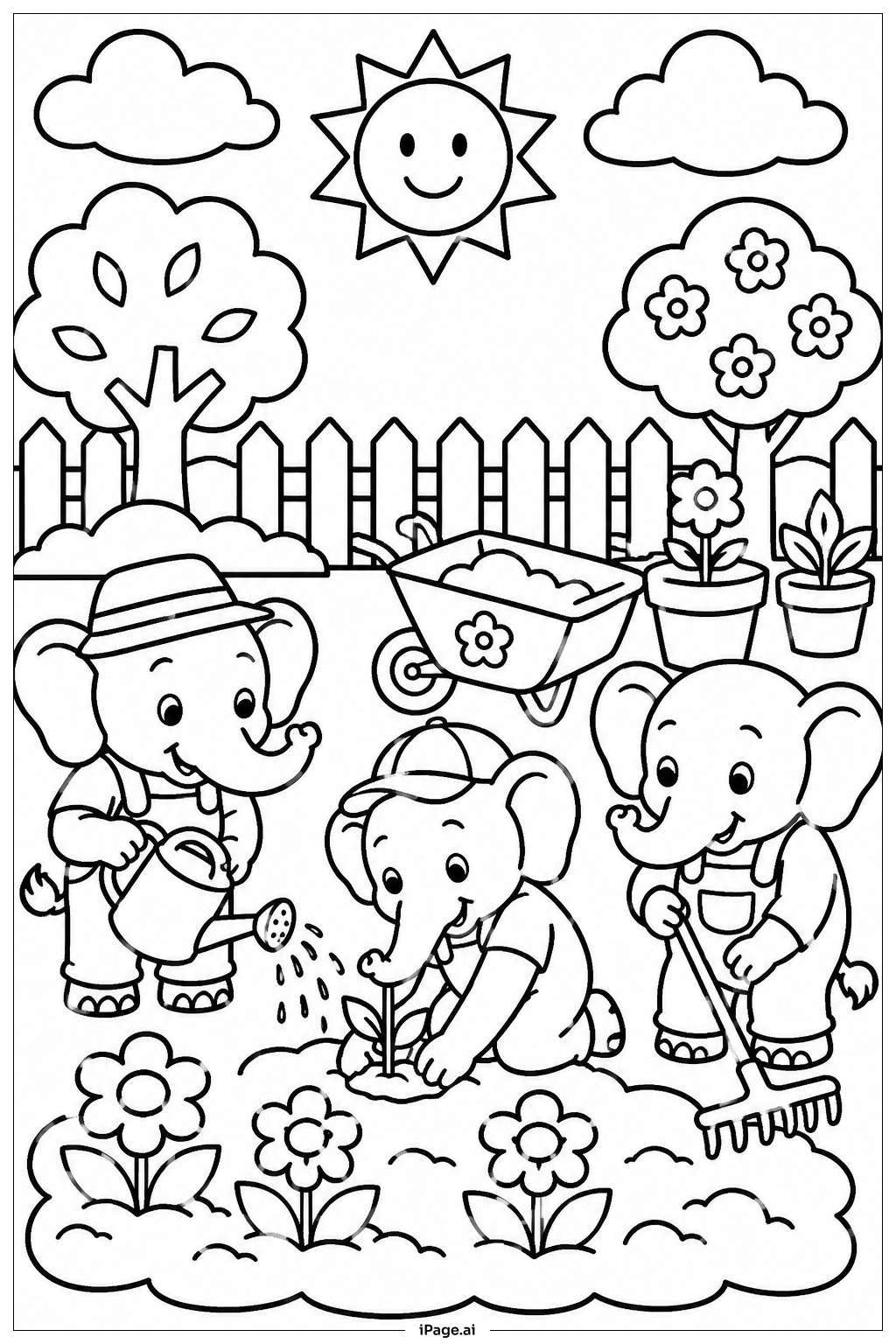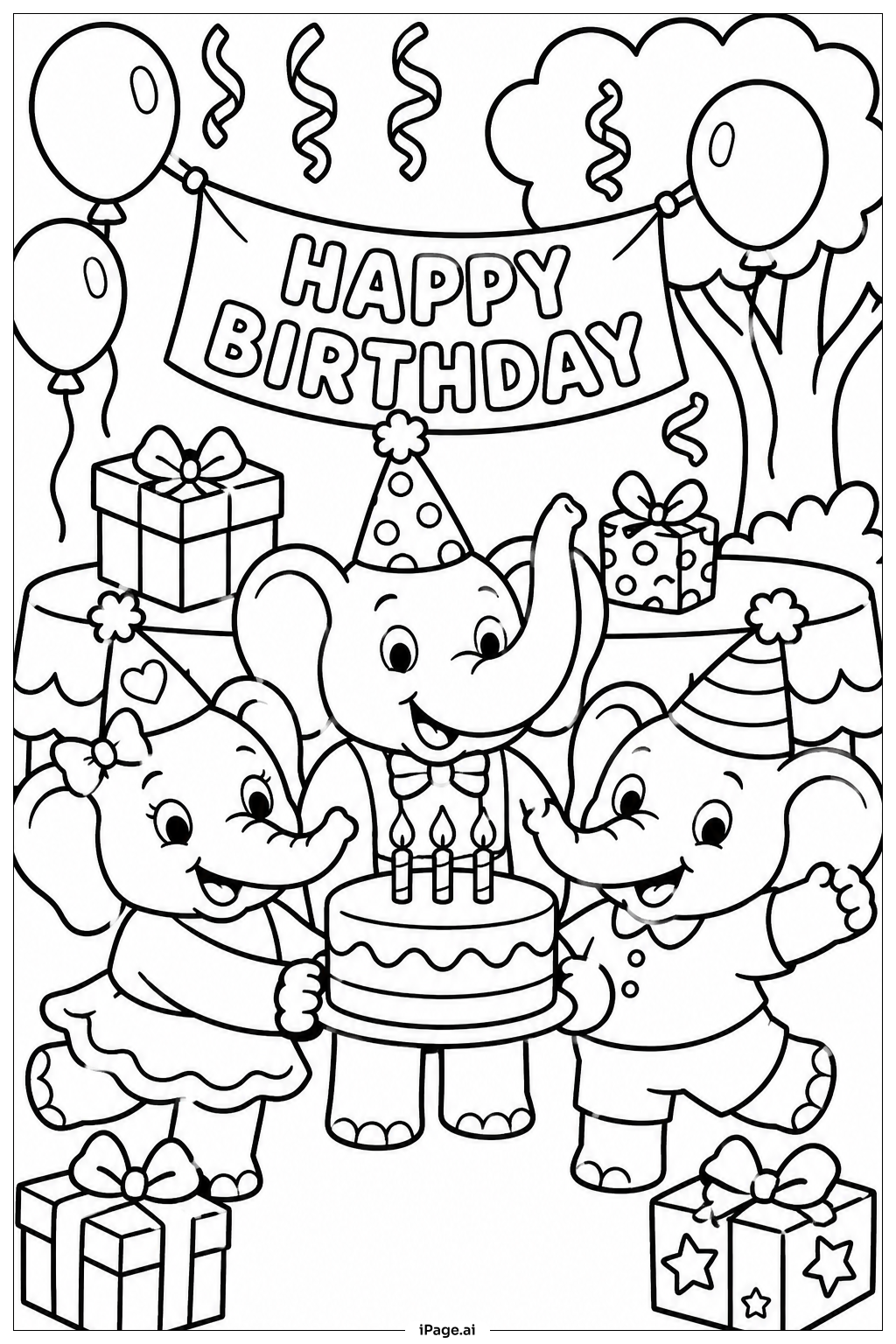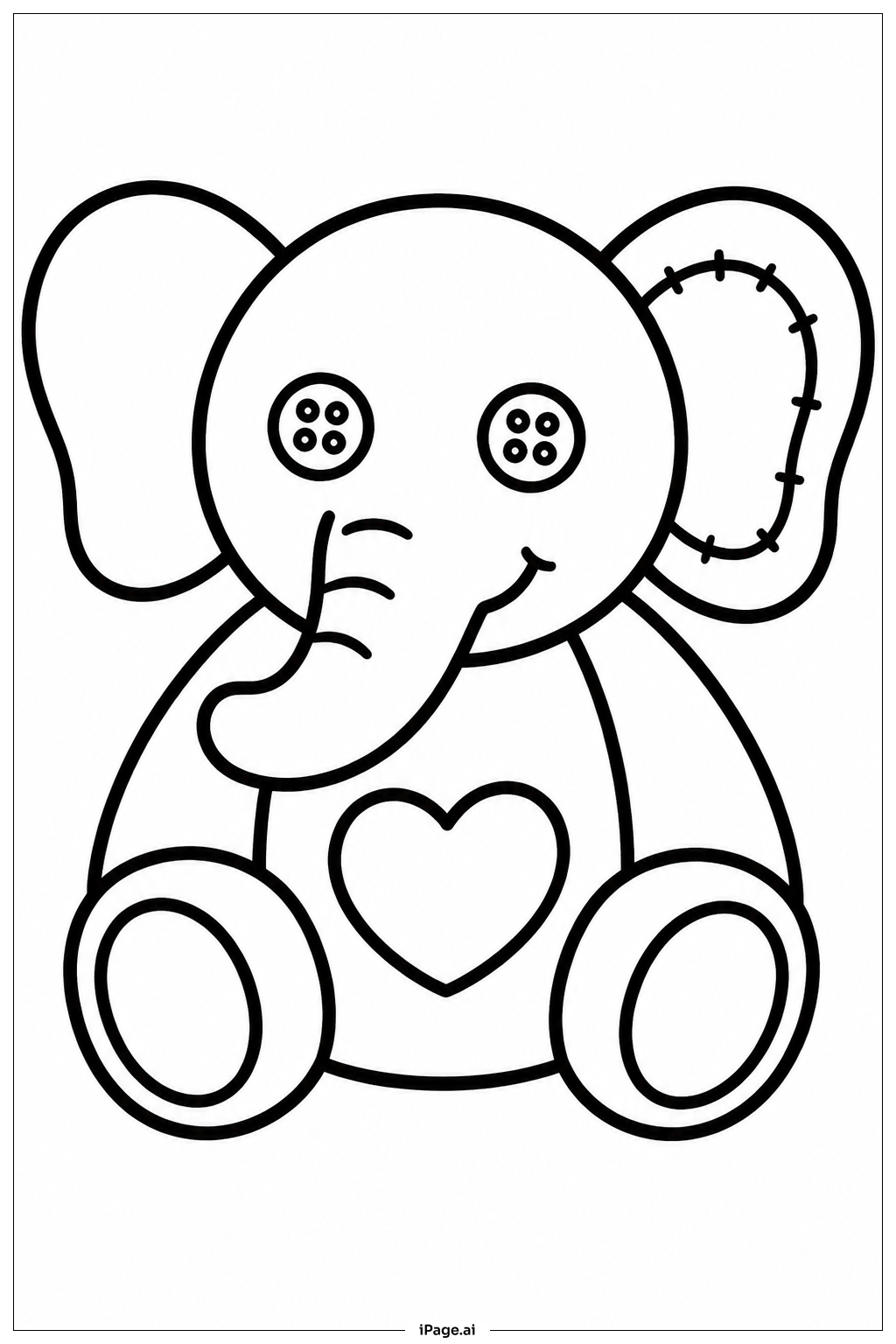
Coloring tips: How to color Toy Elephant coloring page well?
Start with the elephant's body using a soft gray tone. You can also use light blue, lavender, or pale pink if you want a fun, toy-like look. Color the large ears a slightly lighter or darker shade than the body to make them stand out. Use a warm peach or rosy pink for the inner ear area. The trunk looks great in a medium gray with subtle shading along its curves. Give the eyes a dark brown or black outline and add a small white dot to make them look shiny and alive. For the belly or chest area, try a lighter tone to suggest a soft stuffed texture. You can use warm yellows or soft greens for any background details. Feel free to mix bright, playful colors since this is a toy, so anything goes. Use colored pencils or markers for smooth, even coverage on the large flat areas.
Coloring challenges: Which parts are difficult to color and need attention for Toy Elephant coloring page?
• Large Body Surface: The elephant's wide, rounded body covers a big area on the page. Keeping the color smooth and even without streaks or patches can be tricky, especially with colored pencils. Take your time and use light, overlapping strokes to build up the color gradually.
• Ear Shading and Depth: The large floppy ears need subtle shading to look three-dimensional. Blending a lighter tone at the center and a darker tone at the edges helps create a natural curve. Getting this transition smooth takes practice and patience.
• Trunk Curves and Wrinkles: The trunk has gentle curves and small wrinkle lines that require careful attention. Coloring inside these tiny details without going over the lines is a challenge for younger kids. Using a fine-tipped tool or a sharpened pencil helps here.
• Facial Features: The eyes and smile are small but very important for showing the toy elephant's friendly expression. Staying within the tiny outlined areas while still making them look expressive requires a steady hand. A thin marker or a well-sharpened pencil works best for these details.
• Color Consistency Across the Whole Image: Because the elephant's body, ears, trunk, and legs are all connected, keeping the color consistent across all parts can be difficult. Choosing your main color first and using it as a base coat across the entire figure before adding shading helps maintain a unified look throughout the image.
Benefits of coloring books: Advantages of drawing Toy Elephant coloring page
Coloring this toy elephant page brings a wide range of benefits for kids and beginners alike. Working on the large, smooth body surface helps children practice steady hand movements and build fine motor skills in a relaxed, pressure-free way. The rounded shapes and gentle curves of this image make it approachable for younger kids while still offering enough detail to engage older children.
Choosing colors for the elephant encourages creative thinking. Since this is a toy rather than a real animal, kids feel free to experiment with any color they like, which builds confidence and sparks imagination. Deciding which shade to use for the ears, trunk, or belly also supports color recognition and basic decision-making skills.
Focusing on staying within the lines and adding shading to the ears and trunk helps develop concentration and attention to detail. These are important skills that transfer to reading, writing, and other school activities.
Completing the full image gives children a sense of achievement and pride in their work. This boost in self-esteem encourages them to keep trying new coloring pages and take on more complex challenges over time. Overall, this cheerful toy elephant coloring page is a wonderful mix of fun, learning, and creative expression.