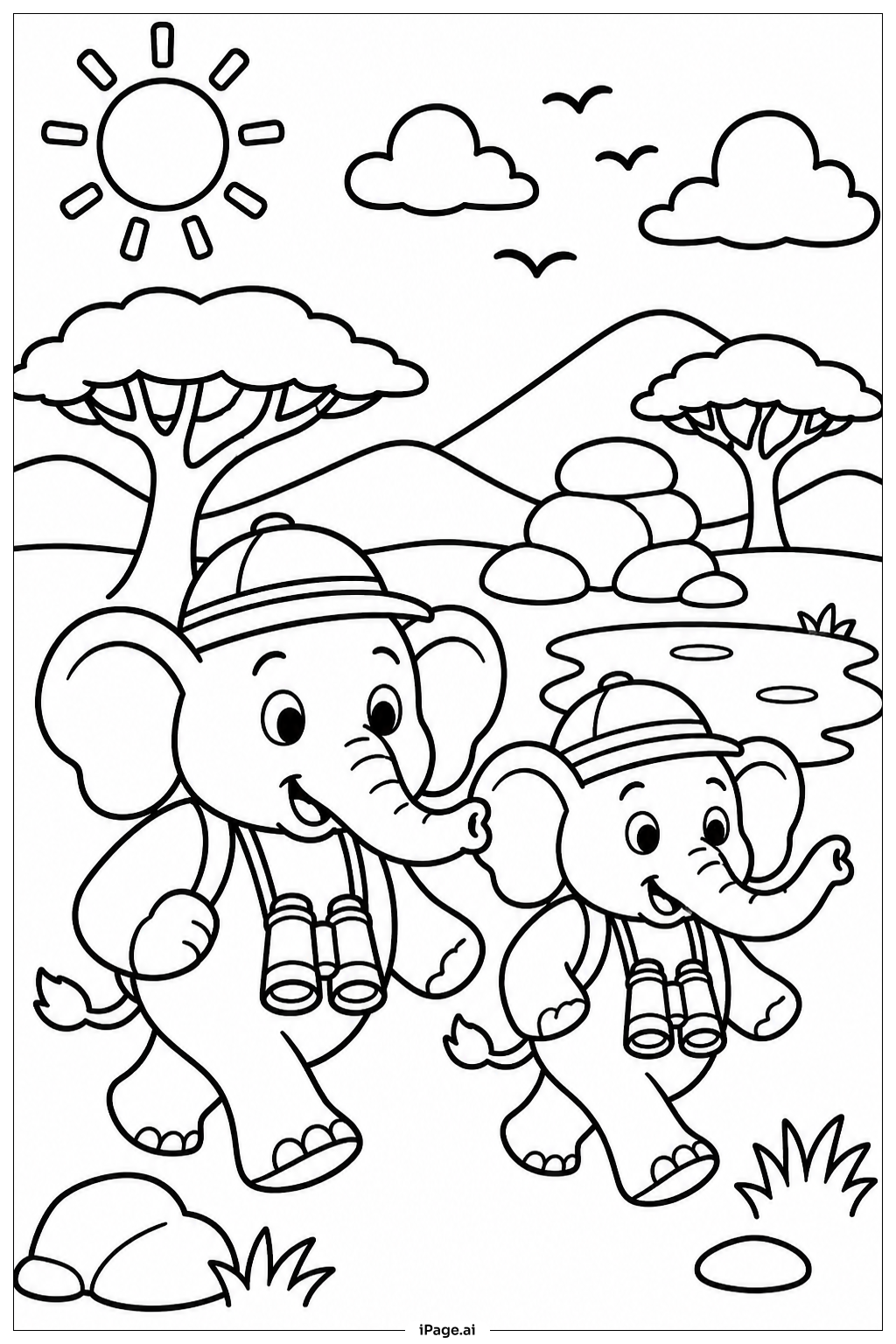
Coloring tips: How to color Elephant On Safari coloring page well?
Start with the elephant's body using shades of gray. Try light gray for the main skin and add darker gray in the wrinkle folds and shadow areas to give the elephant a three-dimensional look. You can also use warm beige or brown tones for a sun-baked feel. Color the large ears with a slightly pinker or darker shade on the inner side. For the background, use golden yellow and tan for the dry savanna grasses. Paint the acacia trees with brown trunks and soft green or olive-toned leaves. The sky can be a bright, warm blue with hints of white for clouds. Adding a soft orange or golden glow near the horizon will give the scene a beautiful African sunset atmosphere. Use light pressure first, then layer colors to build depth. Boys and Girls of all ages can enjoy experimenting with warm, earthy tones to bring this safari scene to life.
Coloring challenges: Which parts are difficult to color and need attention for Elephant On Safari coloring page?
• Elephant Skin Texture: The elephant's body is covered in many wrinkles, folds, and creases. Coloring these textures realistically takes patience. You need to carefully shade the deeper folds with darker tones while keeping raised areas lighter. Blending smoothly between light and dark gray is tricky, especially for younger children.
• Ear Details: The large ears have a complex shape with inner and outer surfaces. The inner ear often has a warmer, pinker tone while the outer side matches the body's gray. Keeping the color transition natural without harsh lines requires a steady hand and careful blending.
• Background Depth: The savanna background includes grasses, trees, and a sky at different distances. Creating a sense of depth means using lighter, cooler tones for far-away elements and richer, warmer tones for objects in the foreground. Balancing all these layers without making the scene look flat is a real challenge.
• Fine Line Details: The elephant features small details like toenails, eye creases, and tusk edges. These narrow areas are difficult to color precisely without accidentally going outside the lines. Thin markers or sharp colored pencils work best here, but control is still required.
• Overall Color Harmony: Bringing together the elephant, the grasses, the trees, and the sky into a unified, natural-looking scene is the biggest challenge. Each element needs its own color story while still feeling like part of the same warm African safari world. Planning your full color palette before starting will help a lot.
Benefits of coloring books: Advantages of drawing Elephant On Safari coloring page
Coloring this Elephant On Safari page offers a wide range of wonderful benefits for children and Adults alike. For younger children, filling in the large shapes of the elephant's body helps develop fine motor skills and hand-eye coordination. Staying within the lines of the wrinkles and background details builds focus and concentration over time. Choosing colors for the savanna landscape encourages creative thinking and imagination. Children learn to observe nature and wildlife more closely, sparking curiosity about African animals and ecosystems. For older Boys and Girls, the detailed textures of the elephant's skin and the layered background provide a satisfying artistic challenge. Blending grays and earthy tones teaches color theory and shading techniques in a fun, pressure-free way. For Adults, this page offers a calming, meditative activity that helps reduce stress and anxiety. Focusing on the details of a peaceful safari scene allows the mind to relax and unwind. Overall, this coloring page connects creativity with a love of nature, making it a joyful and enriching experience for all ages.