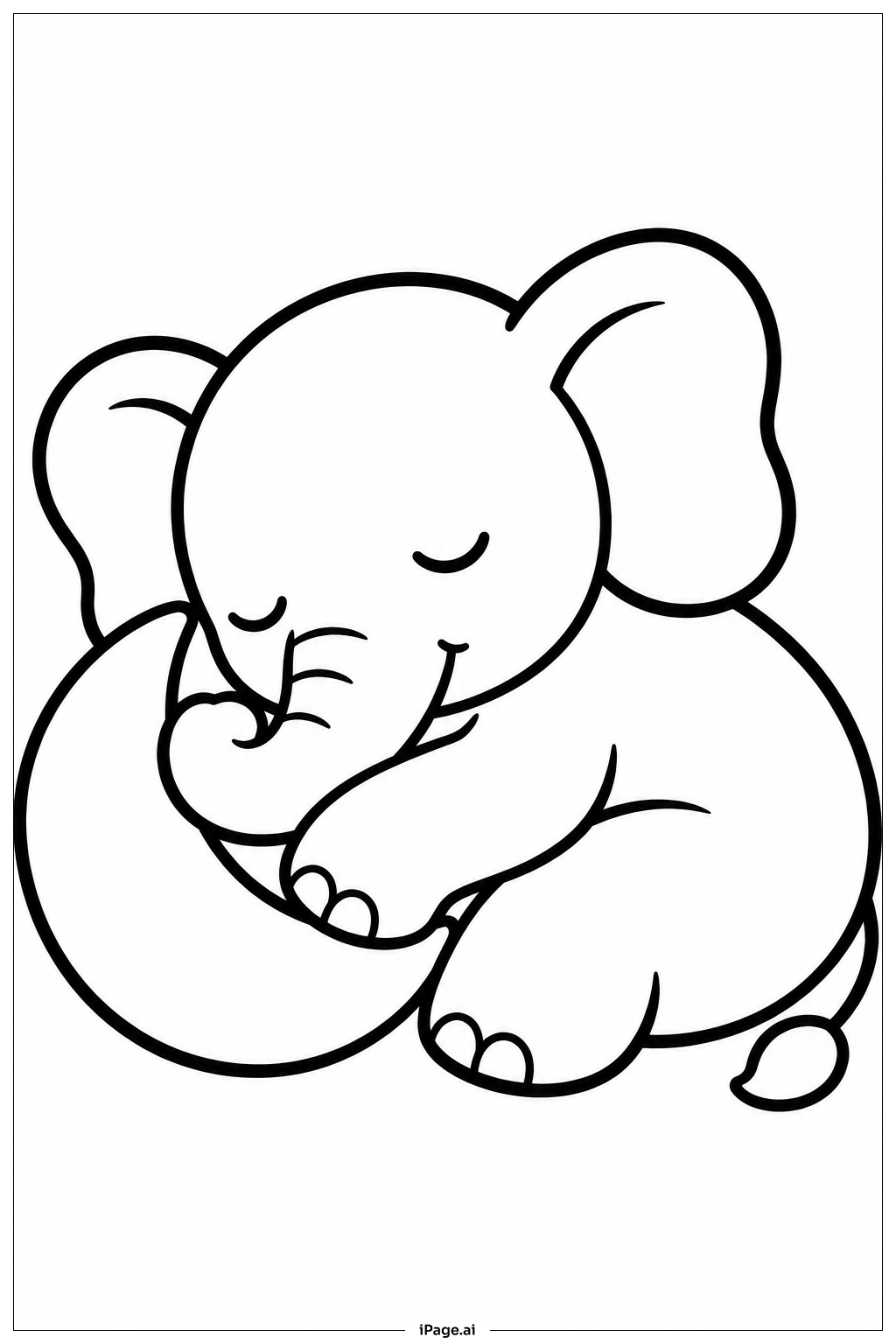
Coloring tips: How to color Sleeping Elephant coloring page well?
Start with the elephant's body using soft gray tones. Light gray works well for the main body, while slightly darker gray can shade the wrinkles and folds of the skin. Use a warm, pale pink for the inner ears to add a gentle touch of color. The area around the eyes and the tip of the trunk can also have a hint of pink or peach. For the background, try soft blues or purples to create a calm, nighttime feel — like the elephant is sleeping under a quiet sky. You can add stars or a moon in the background to make the scene feel even more magical. Keep the colors soft and gentle to match the peaceful mood of the image. Blending light and slightly darker shades of the same color will help the elephant look round and three-dimensional. This image is great for both beginners and kids who enjoy simple, relaxing coloring.
Coloring challenges: Which parts are difficult to color and need attention for Sleeping Elephant coloring page?
Coloring this sleeping elephant image comes with a few fun challenges to keep in mind:
• **Shading the wrinkled skin:** Elephants have lots of wrinkles and skin folds. Coloring these areas takes patience. You need to use slightly darker shades inside the folds and lighter shades on the raised parts to make the skin look realistic and textured. Blending two or three shades of gray smoothly is the key.
• **Keeping proportions balanced:** The elephant's body is large and takes up most of the page. Making sure the color stays even across such a big area can be tricky, especially for younger colorists. Using broad strokes and working section by section helps avoid uneven patches.
• **Coloring the ears:** The ears are large and flat, but they also have inner details and veins. Choosing the right color for the inner ear — usually a soft pink — while keeping it distinct from the outer ear gray requires careful attention to boundaries and color transitions.
• **Capturing the sleepy expression:** The elephant's closed eyes and relaxed face carry the whole mood of the image. Coloring the eyelashes and the subtle smile carefully, without going outside the lines, can be a delicate task, especially for younger children.
• **Creating a cohesive background:** If you choose to color the background, matching it to the peaceful sleeping mood without overpowering the elephant requires thoughtful color choices. Soft gradients of blue or purple can be challenging to blend smoothly but make the final result look stunning.
Benefits of coloring books: Advantages of drawing Sleeping Elephant coloring page
Coloring this sleeping elephant page offers many wonderful benefits for kids and beginners alike.
First, it helps build **focus and patience**. Staying inside the lines and carefully shading the elephant's large body teaches children to slow down and concentrate on one task at a time.
Second, it encourages **creativity**. Choosing colors for the elephant, its ears, and the background lets kids express their imagination freely. There is no single right answer — every coloring is unique.
Third, it supports **fine motor skill development**. Handling crayons, colored pencils, or markers to fill in detailed areas like wrinkles and eyelashes strengthens hand muscles and improves coordination, which is important for writing and other daily tasks.
Fourth, coloring a peaceful, sleeping animal naturally promotes a **calm and relaxed mood**. It can be a great quiet-time activity before bed or during a rest period at school.
Finally, completing the page gives children a real sense of **accomplishment and pride**. Seeing a finished, colorful elephant they created themselves builds confidence and encourages them to keep creating. It is a simple, joyful activity with lasting positive effects.