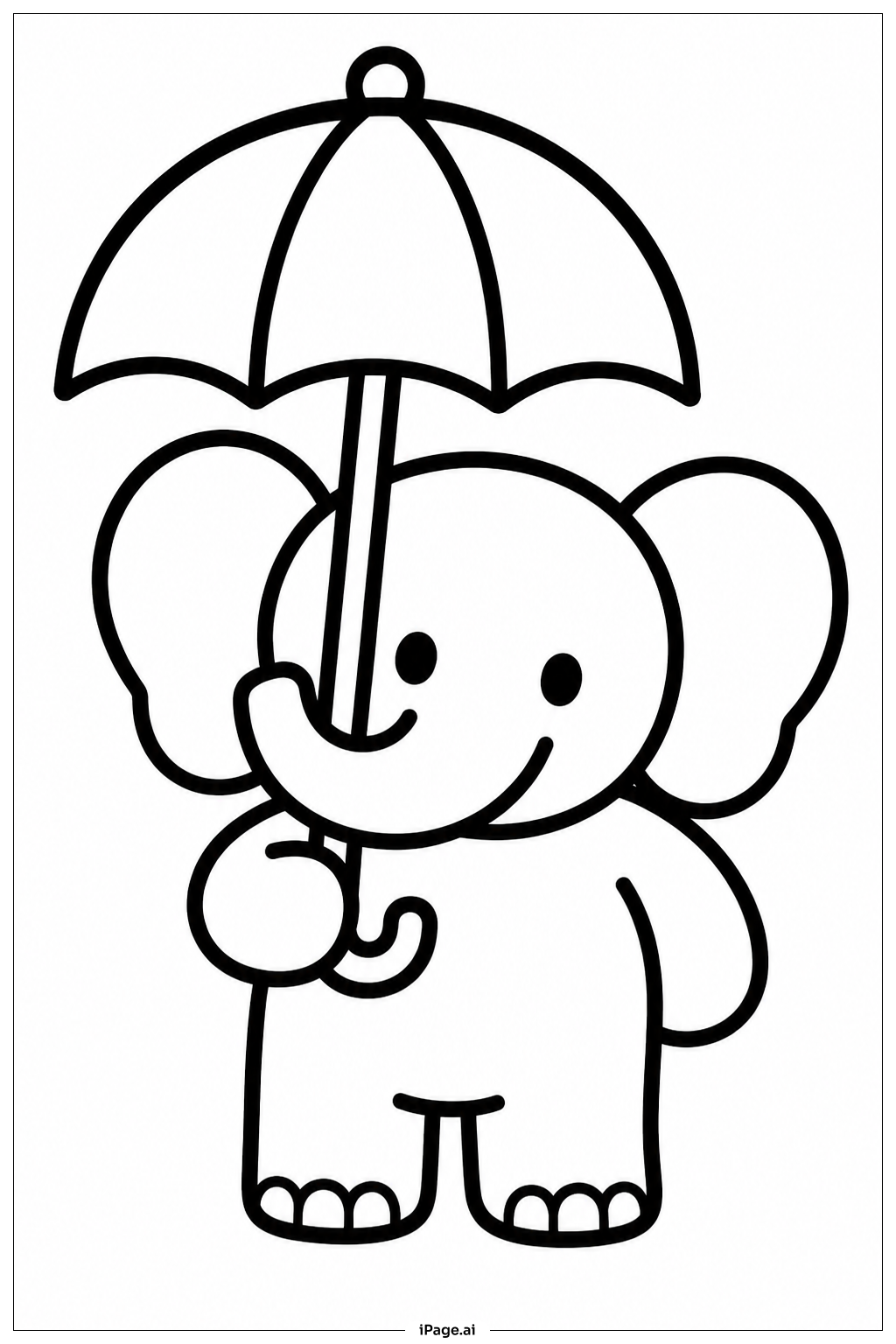
Coloring tips: How to color Elephant With Umbrella coloring page well?
Start with the elephant's body using a soft gray or light blue — light blue gives it a fun, magical feel! You can add a slightly darker shade on the ears, legs, and belly to create depth and dimension.
For the umbrella, this is your chance to get creative! Use bright, cheerful colors like red, yellow, orange, or purple for each panel. Try alternating two or three colors to make it look striped and festive.
Color the umbrella handle in brown or gold to make it stand out. Add small details like dots or stars on the umbrella panels for extra flair.
Use a light green or sky blue for the background to suggest a rainy day outdoors. You can even add raindrops around the elephant to tell a little story.
Don't forget the elephant's eye — a small black dot with a tiny white highlight makes it look bright and alive. Keep the overall palette cheerful and bold so the finished page feels full of energy and fun!
Coloring challenges: Which parts are difficult to color and need attention for Elephant With Umbrella coloring page?
Coloring this image is a delightful challenge, but a few areas require extra care and patience:
• **The umbrella panels:** The umbrella is divided into multiple curved sections that meet at a central point. Staying neatly within each panel without crossing the dividing lines can be tricky, especially near the center where the sections are narrow. Use a fine-tipped marker or a sharpened colored pencil for these tight spots.
• **Shading the elephant's body:** An elephant's skin has natural folds and curves. Capturing that three-dimensional look means applying lighter color in the center of large areas and gradually darkening toward the edges. Blending smoothly without streaks takes practice, particularly on the large flat surfaces of the body and ears.
• **Small decorative details:** The ornamental details along the umbrella's edge are small and closely spaced. Coloring these tiny elements neatly without smudging the surrounding areas requires a steady hand and a well-pointed tool.
• **The trunk and curled tip:** The trunk is a narrow, curved shape. Keeping color inside its outline while following the natural curve is a fine motor challenge, especially for younger colorists. Working slowly from the base toward the tip helps maintain control.
• **Layering colors for depth:** To make the image look rich rather than flat, colorists need to layer or blend multiple shades. Knowing when to press harder or lighter, and how to transition between tones, is a skill that takes time to develop but makes the final result truly impressive.
Benefits of coloring books: Advantages of drawing Elephant With Umbrella coloring page
Coloring this elephant with umbrella page offers a wonderful range of benefits for kids and beginners alike.
**Builds fine motor skills:** Carefully coloring within the lines of the umbrella panels and the elephant's curved body strengthens hand muscles and improves pencil control — skills that directly support handwriting and everyday tasks.
**Sparks creativity:** Choosing colors for the umbrella panels encourages imaginative thinking. There's no single right answer, so kids feel free to experiment and express their own style.
**Teaches color theory:** Alternating colors across the umbrella panels is a natural, playful introduction to concepts like contrast, pattern, and color harmony.
**Promotes focus and patience:** Completing a detailed image like this one requires sustained attention. Sitting with a task from start to finish builds concentration in a calm, enjoyable way.
**Encourages storytelling:** The scene — a cheerful elephant sheltering under an umbrella — naturally sparks imagination. Kids often invent little stories about where the elephant is going or what the weather is like, blending art with early narrative thinking.
**Reduces stress:** The repetitive, gentle motion of coloring is calming and meditative, making it a great quiet-time activity for winding down after a busy day.