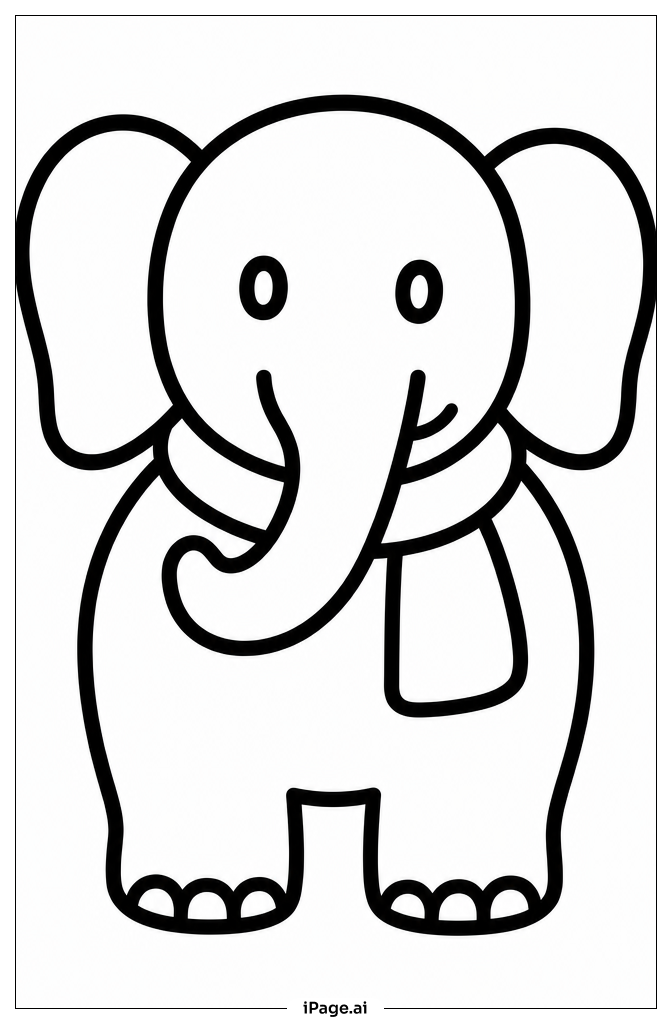
Coloring tips: How to color Elephant With Scarf coloring page well?
Start with the elephant's body using light gray or soft blue tones. You can add a slightly darker shade on the edges to give the body a rounded, three-dimensional look. For the ears, use a pinkish or peachy tone on the inner part to make them look realistic and warm.
The scarf is the star of the image! Use bold, bright colors like red, orange, yellow, or purple to make it pop. You can even add stripes or patterns to the scarf to make it extra fun and unique.
Use a light brown or tan color for the ground beneath the elephant. Add a simple sky background in pale blue or soft yellow to complete the scene.
Don't forget small details like the elephant's toenails and eyes — use dark brown or black for a clean, finished look. Blending two shades of the same color adds depth and makes the picture look more lively.
Coloring challenges: Which parts are difficult to color and need attention for Elephant With Scarf coloring page?
Coloring this elephant with a scarf is a fun challenge, but there are a few tricky parts to watch out for:
• **Shading the elephant's body:** The elephant has large, smooth areas of skin that can look flat if colored with just one shade. The challenge is blending light and dark tones to create a natural, rounded appearance. Try using a base gray and then adding a darker shade along the edges and under the ears and belly.
• **Coloring the scarf folds:** The scarf has soft wrinkles and folds that require careful attention. Each fold should be slightly lighter or darker than the area next to it. This helps the scarf look three-dimensional and realistic rather than flat. Younger colorists may find this detail tricky to manage.
• **Staying within the lines:** The elephant's outline includes curved shapes like the trunk, ears, and legs. These rounded edges can be difficult to color neatly, especially for younger children. Taking your time and using a sharp pencil or fine-tipped marker helps a lot.
• **Balancing colors between the elephant and the scarf:** Since the elephant's body takes up most of the page, it's important to choose scarf colors that stand out clearly. If the elephant is gray, a bright red or yellow scarf works well. Picking colors that clash or are too similar can make the image look muddy.
• **Adding texture to the skin:** Elephant skin has a rough, wrinkled texture. Recreating this with colored pencils or crayons takes patience and a light hand to layer lines without making the skin look too dark or messy.
Benefits of coloring books: Advantages of drawing Elephant With Scarf coloring page
Coloring this elephant with a scarf offers many wonderful benefits for kids and adults alike.
For children, it helps develop fine motor skills as they carefully color within the curved lines of the elephant's body, trunk, and scarf. Choosing colors for the scarf encourages creative thinking and self-expression — there are no wrong choices!
This image also teaches kids about animals in a fun, engaging way. As they color, they can learn about elephants — their size, their features, and their gentle nature. The scarf adds a playful, imaginative twist that sparks storytelling and pretend play.
For older children and adults, the shading and blending challenges provide a satisfying artistic workout. Focusing on details like the scarf folds and skin texture helps improve concentration and patience.
Coloring is also a great stress reliever. The calm, repetitive motion of filling in shapes helps quiet the mind and promotes relaxation. It's a screen-free activity that brings a sense of accomplishment when the page is complete.
Overall, this cozy elephant scene is a joyful, rewarding coloring experience for everyone.