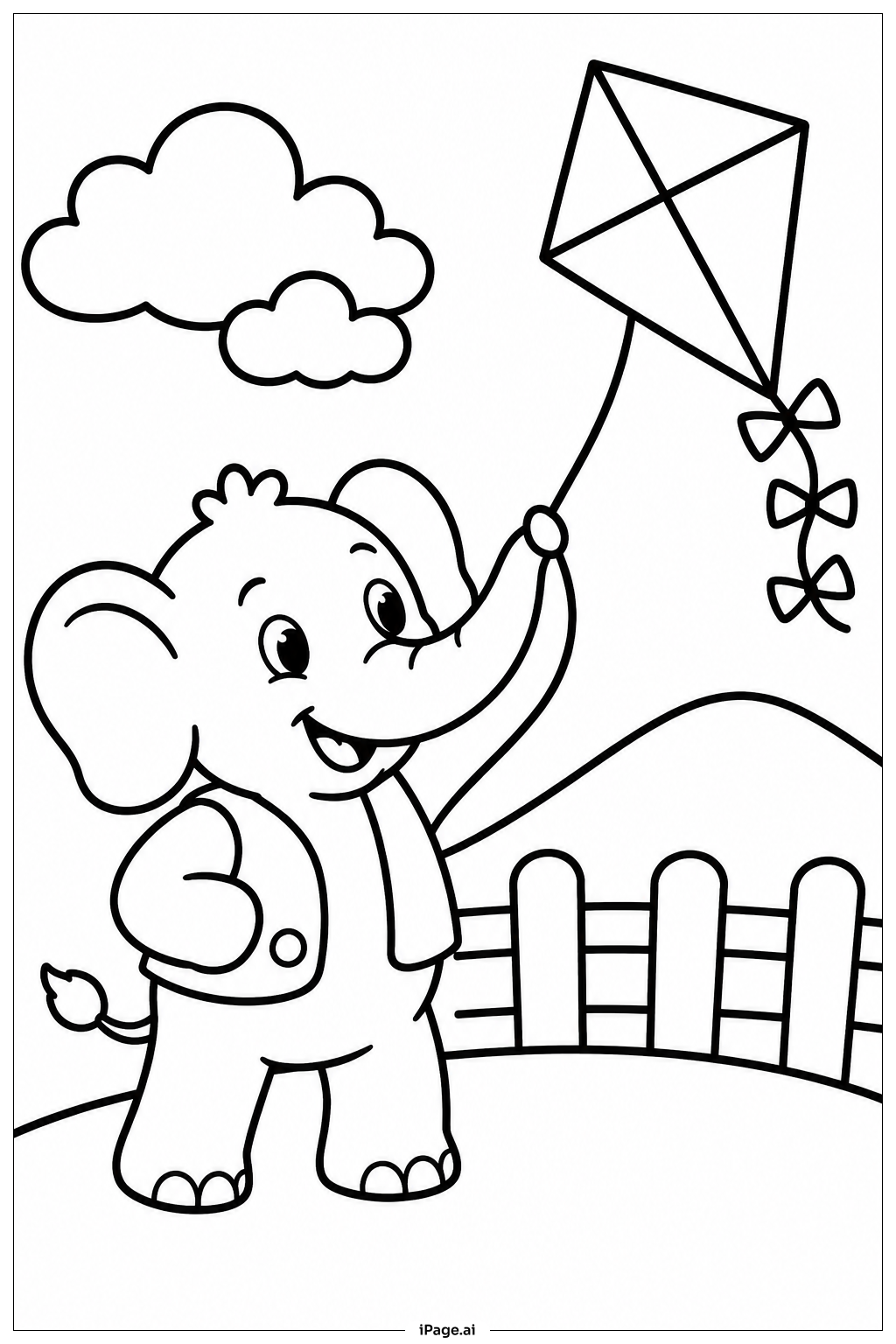
Coloring tips: How to color Elephant With Kite coloring page well?
Start with the elephant's body using a light gray. You can add a slightly darker gray on the ears and legs to create a sense of depth and shadow. For the kite, go bold and bright — try red, yellow, orange, or blue to make it pop against the sky. The kite's tail can be colored in alternating colors like purple and green to look festive and fun. Use a soft sky blue for the background sky, and add fluffy white or light lavender clouds. Color the grass at the bottom in fresh green shades. The kite string can be a thin brown or dark gray line. Don't be afraid to mix warm and cool colors — the contrast will make the whole image feel lively and exciting. Use colored pencils for fine details and markers or crayons for larger areas.
Coloring challenges: Which parts are difficult to color and need attention for Elephant With Kite coloring page?
• **The elephant's body shading:** The elephant has a large, rounded body that can be tricky to shade evenly. Achieving a smooth, three-dimensional look requires blending light and dark gray tones carefully. Young colorists may find it challenging to avoid streaky or uneven patches across the wide surface area of the elephant's skin.
• **The kite's geometric details:** The kite features a diamond shape with sections that may need to be colored in different colors to look visually appealing. Staying neatly within each small section without going over the lines requires a steady hand and good control of coloring tools, which can be difficult for younger children.
• **The flowing kite tail:** The tail of the kite is made up of small, ribbon-like segments. Coloring each segment in alternating colors while keeping the lines clean is a detailed task. The curved shape of the tail adds extra difficulty, as the coloring direction needs to follow the curve naturally.
• **The sky background:** Filling in the sky evenly without leaving white gaps or pressing too hard can be challenging, especially for beginners. Blending clouds softly into the blue sky requires a light touch and patience to avoid harsh edges between the white clouds and the blue background.
• **Small facial features:** The elephant's eyes, smile, and other facial details are small and closely spaced. Coloring these tiny areas accurately without smudging nearby sections takes precision and the use of fine-tipped coloring tools.
Benefits of coloring books: Advantages of drawing Elephant With Kite coloring page
Coloring this elephant and kite image offers a wonderful range of benefits for children. First, it helps develop fine motor skills as kids carefully color within the lines of the elephant's body, the kite's sections, and the small tail ribbons. This kind of focused hand movement strengthens the muscles needed for writing and drawing.
Second, the image encourages creativity and color exploration. Children get to choose their own color combinations for the kite and sky, building confidence in their artistic choices and imagination.
Third, focusing on a fun, engaging scene like this helps children practice concentration and patience — skills that are valuable both in school and in everyday life.
Fourth, the playful theme of an elephant flying a kite sparks joy and storytelling. Kids may imagine where the elephant is going or what adventure comes next, boosting their language and creative thinking skills.
Finally, completing the page gives children a real sense of accomplishment. Seeing their finished, colorful artwork builds self-esteem and motivates them to keep creating. It's a simple, screen-free activity that brings calm, focus, and fun all at once.