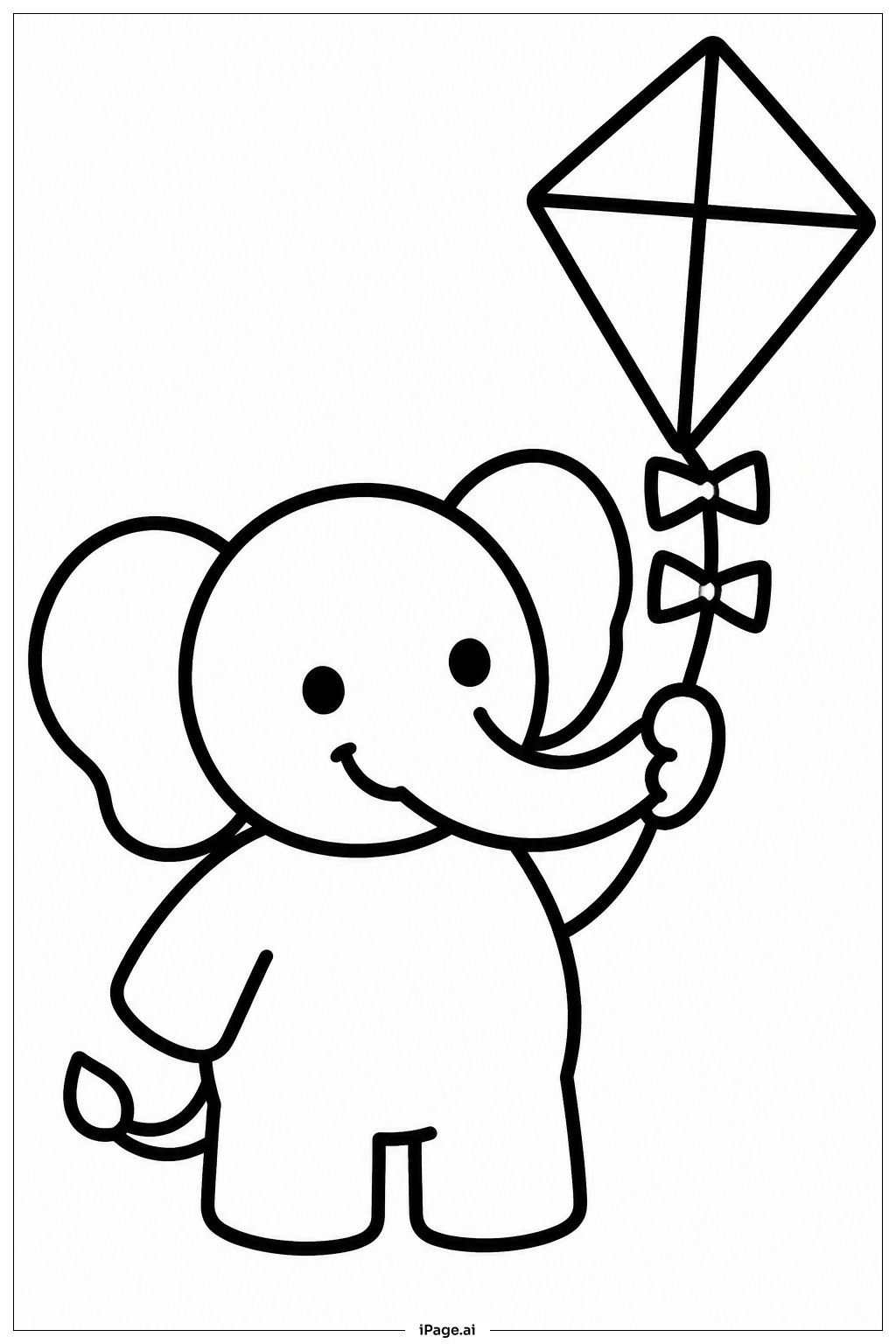
Coloring tips: How to color Elephant With Kite coloring page well?
Start with the elephant's body using a medium gray. You can add a slightly darker gray on the ears and legs to create a sense of depth and shadow. Use a warm pink for the inner ears to make them look soft and lifelike. For the kite, go bold and bright — try red, orange, or yellow for the main panels, and use contrasting colors like blue or green for the border sections. The kite tail can be colored in alternating colors to make it look fun and festive. Color the sky a soft light blue and add white or pale yellow to the clouds. Use green for the grass and add pops of color — pink, purple, or yellow — for the small flowers on the ground. Keep the string of the kite a simple brown or dark gray. Feel free to mix and match your favorite colors to make this scene feel lively and full of energy!
Coloring challenges: Which parts are difficult to color and need attention for Elephant With Kite coloring page?
Coloring this image is a fun challenge, but a few areas need extra care and attention:
• **The elephant's body shading:** The elephant has large, smooth surfaces that can look flat if colored with just one shade. Try using two or three tones of gray — lighter on the top and belly, darker on the sides and legs — to give the body a rounded, three-dimensional look. Blending these tones smoothly takes patience and a steady hand.
• **The kite's geometric panels:** The kite is divided into multiple sections with distinct borders and patterns. Staying neatly within each small section requires careful control of your coloring tool. Using fine-tipped markers or sharpened colored pencils will help you fill each panel cleanly without going over the lines.
• **The kite tail's curving ribbon:** The tail twists and loops through the air, creating a series of small curved segments. Each segment should be colored individually, and alternating colors will make the tail look dynamic. The tight curves can be tricky to fill without smudging neighboring sections.
• **Small ground details — grass and flowers:** The tiny flowers and grass tufts at the bottom of the image are small and closely spaced. Using a fine-tipped tool is essential here to avoid accidentally blending the colors together. Each flower can be given its own unique color for a more vibrant result.
• **The background sky and clouds:** Achieving a smooth, even sky color without streaks can be difficult, especially with colored pencils. Light, overlapping strokes in the same direction work best. Leave the cloud areas white or use the lightest possible pressure to keep them soft and airy.
Benefits of coloring books: Advantages of drawing Elephant With Kite coloring page
Coloring this elephant and kite scene offers a wonderful range of benefits for children and young artists:
**Builds creativity:** Choosing colors for the kite, sky, and flowers encourages kids to make their own artistic decisions and express their imagination freely.
**Improves fine motor skills:** Carefully coloring within the lines of the kite panels, the elephant's outline, and the tiny flowers helps strengthen hand muscles and develop pencil control — skills that are important for writing and drawing.
**Teaches color theory:** Experimenting with contrasting colors on the kite or blending shades on the elephant's body introduces children to basic concepts like light and shadow, warm and cool colors, and color combinations.
**Encourages focus and patience:** Completing a detailed scene like this one requires sustained attention, helping children practice concentration and the satisfaction of finishing a task step by step.
**Promotes emotional well-being:** The playful, joyful theme of an elephant flying a kite creates a positive and calming experience. Coloring is a great way for kids to relax, reduce stress, and enjoy a screen-free creative activity.
This page is a perfect blend of fun and learning for Boys and Girls of all skill levels!