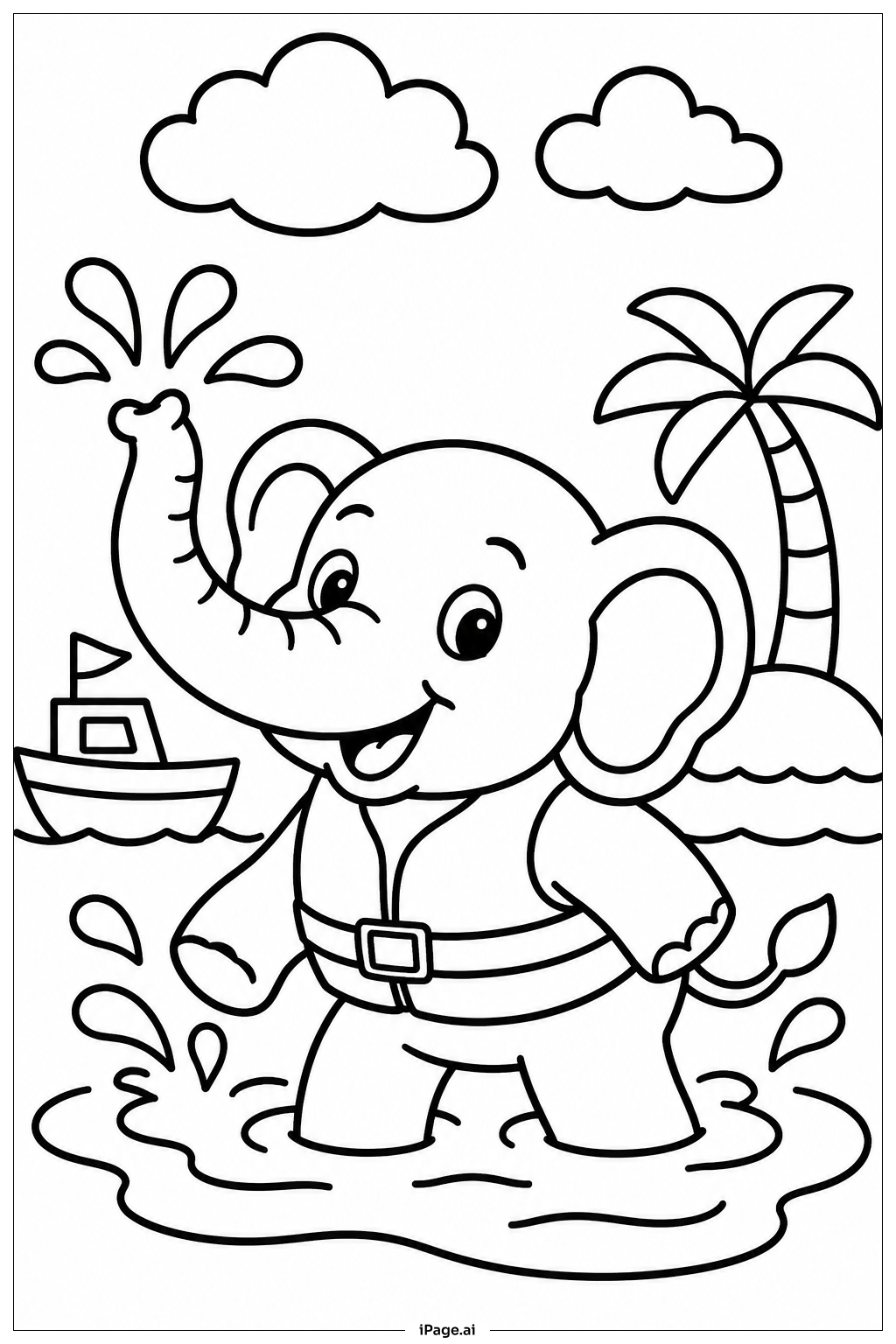
Coloring tips: How to color Elephant Splashing Water coloring page well?
Start with the elephant's body using shades of gray — light gray for the main body and darker gray for the wrinkles and shadow areas. Add a warm pinkish tone inside the ears to make them look soft and realistic. For the water, use light blue and white to show the splashing droplets and flowing streams. Try adding a slightly deeper blue for the water the elephant is standing in. Use white or very light blue to highlight the water spray at the top of the arc. The background can be colored with soft sky blue and pale green for a calm, natural feel. Don't forget to add some light brown or tan for any rocks or ground near the water's edge. Use gentle, flowing strokes for the water to give it a sense of movement.
Coloring challenges: Which parts are difficult to color and need attention for Elephant Splashing Water coloring page?
• **Elephant Skin Texture:** The elephant's body is covered in wrinkles and folds, which can be tricky to color. You need to use at least two or three shades of gray to show depth and dimension. Darker tones go into the creases, while lighter tones sit on the raised areas. Blending these smoothly takes patience and a steady hand.
• **Water and Splashing Effects:** Coloring water realistically is one of the hardest parts of this image. The splashing arc from the trunk has many small droplets and flowing lines going in different directions. Keeping the water looking light and transparent while still showing movement requires careful use of blue and white, and knowing when to leave areas uncolored.
• **Large Surface Areas:** The elephant's body is a big shape to fill in evenly. Keeping the color consistent without streaks or uneven patches can be challenging, especially for younger colorists using crayons or markers.
• **Fine Details Around the Ears and Trunk:** The edges of the large ears and the curved trunk have subtle details that require a fine-tipped tool to color neatly. Staying within the lines in these areas while switching between colors adds an extra layer of difficulty.
• **Background Balance:** Making the background look natural without overpowering the elephant takes careful color choices. The sky, water surface, and any surrounding plants need to complement the main subject without making the scene feel too busy or cluttered.
Benefits of coloring books: Advantages of drawing Elephant Splashing Water coloring page
Coloring this Elephant Splashing Water page offers a wonderful range of benefits for kids and beginners alike. Working on the elephant's detailed skin helps build fine motor skills and hand control, as children practice staying within lines and blending different shades. Choosing colors for the water encourages creative thinking and imagination — there's no single right answer, which builds confidence.
The large, open areas of the elephant's body are great for younger children who are still developing their coloring skills, giving them space to practice without feeling overwhelmed. At the same time, the finer details like the trunk, ears, and water droplets offer a gentle challenge that keeps older kids engaged and focused.
Coloring scenes from nature, like an elephant playing in water, also sparks curiosity about animals and the natural world. It can be a great starting point for conversations about elephants, their habitats, and why they splash water — both to cool down and to have fun.
Overall, this page supports concentration, patience, and a sense of accomplishment when the finished artwork comes together. It's a relaxing and rewarding activity for Boys, Girls, and Adults of all skill levels.