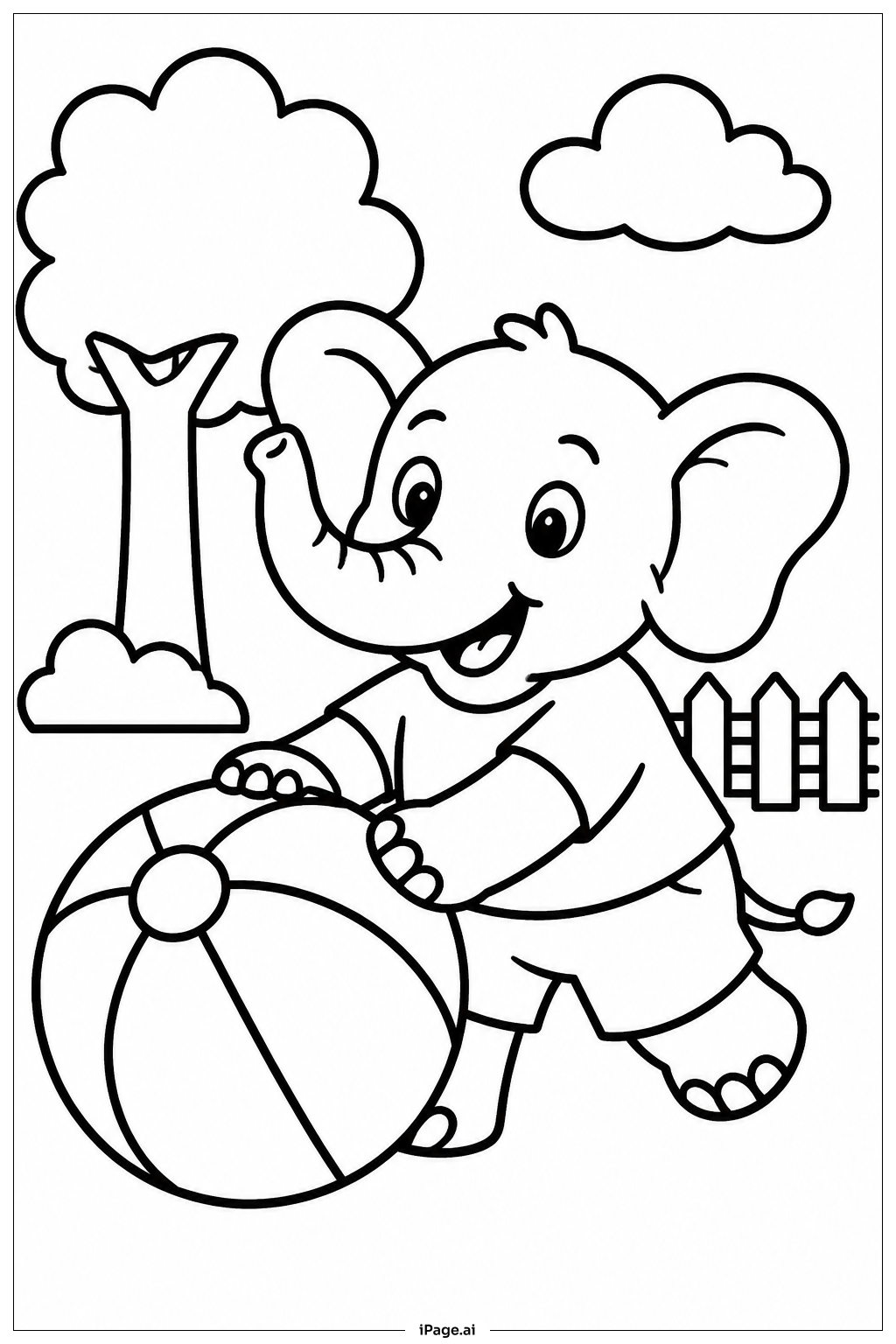
Coloring tips: How to color Elephant Playing Ball coloring page well?
Start with the elephant's body using a medium gray. You can add a slightly lighter gray on the belly and inner ears to give a soft, rounded look. For a fun twist, try a warm tan or even a light purple — elephants in coloring pages can be any color you like! Color the large ears with a pinkish tone on the inside to make them look realistic. Use a bright, bold color for the ball, such as red, blue, or yellow. Add stripes or dots to the ball's sections for extra fun. The ground can be colored green for grass, and you can add a blue sky in the background to bring the whole scene to life. Don't be afraid to mix colors and experiment!
Coloring challenges: Which parts are difficult to color and need attention for Elephant Playing Ball coloring page?
Coloring this image comes with a few fun challenges to keep in mind:
• **The elephant's wrinkled skin texture:** Elephants have naturally rough, folded skin. Capturing this with colored pencils or crayons can be tricky. Try using short, overlapping strokes in slightly different shades of gray to suggest texture without overcomplicating the look.
• **Shading the large, rounded body:** The elephant's big body is a wide, open area. Flat color can look dull, so adding light and shadow — lighter on top, darker underneath — will make it look three-dimensional. Blending two close shades of gray works well here.
• **The ears' dual-tone coloring:** The outer ear and inner ear are different colors. Staying neatly within the outline where the two tones meet requires a steady hand and a sharp pencil or fine-tipped marker, especially for younger colorists.
• **The ball's curved sections:** The ball is divided into sections that curve around its surface. Coloring each section a different color while keeping the lines clean and consistent can be challenging. Using a fine-tipped tool to outline each section first before filling it in helps a lot.
• **Small facial details:** The elephant's eyes, smile, and tusk are small and close together. These tiny details need careful attention. Using a thin marker or a well-sharpened colored pencil will help you stay precise without accidentally coloring outside the lines.
Benefits of coloring books: Advantages of drawing Elephant Playing Ball coloring page
Coloring this fun elephant scene offers a wonderful range of benefits for kids and beginners alike. First, it helps build fine motor skills. Carefully staying within the lines and handling coloring tools strengthens the small muscles in the hands and fingers, which supports writing and other daily tasks. Second, it encourages creativity. Choosing colors for the elephant, ball, and background lets kids express themselves freely and build confidence in their own artistic choices. Third, it supports focus and concentration. Working through each section of the image trains the brain to stay on task, which is a valuable skill both in and out of the classroom. Fourth, the playful subject matter — a happy elephant having fun — creates a positive emotional experience. Coloring joyful scenes can lift mood and reduce stress, even for young children. Finally, completing the page gives a real sense of accomplishment. Finishing a piece of art, no matter how simple, builds self-esteem and motivates kids to keep creating. It's a simple activity with big rewards!