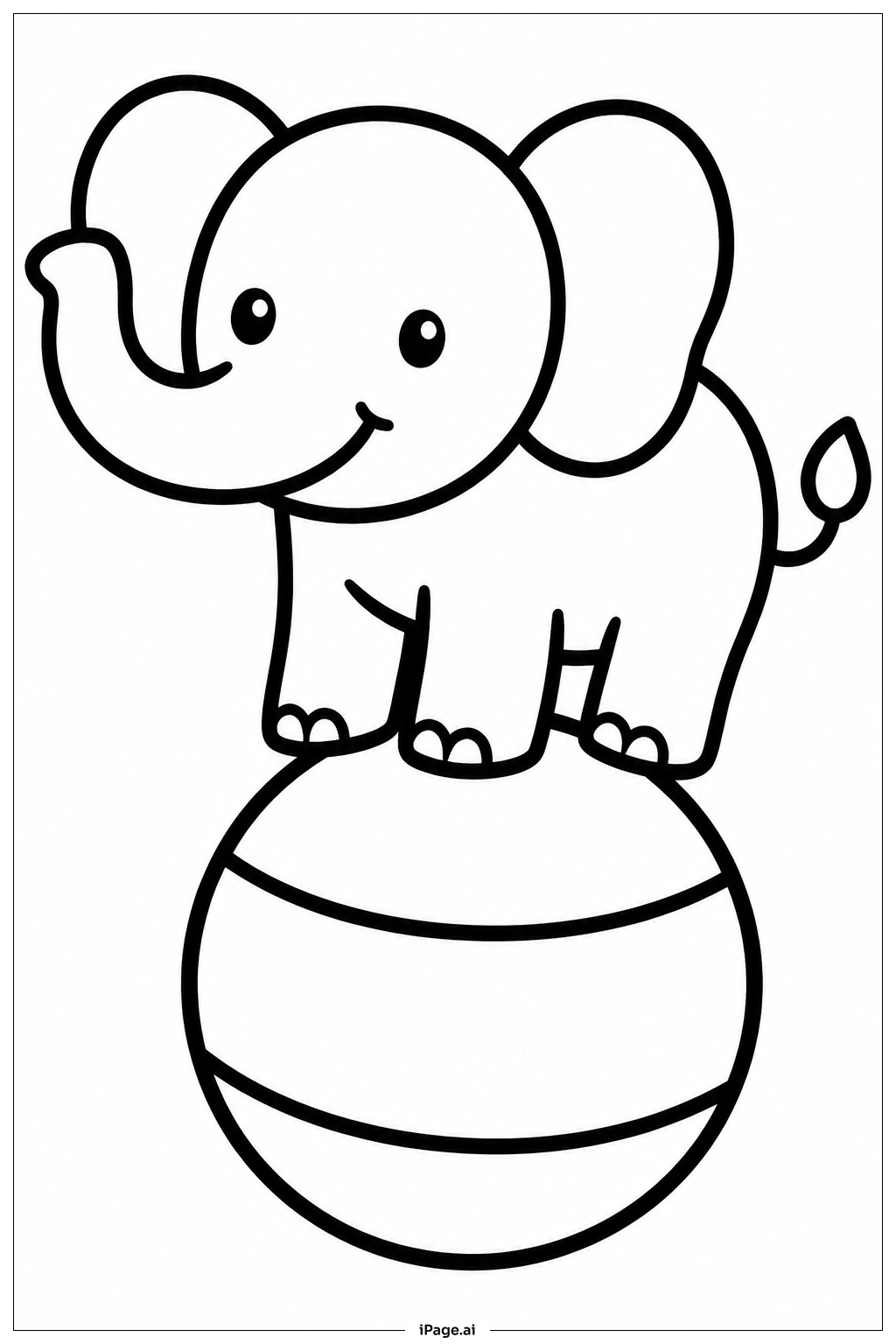
Coloring tips: How to color Elephant On Ball coloring page well?
Start with the elephant's body. Use a light gray as the base color for the skin. Add slightly darker gray along the edges of the ears, legs, and belly to create a sense of depth and roundness. The wrinkle lines on the skin can be shaded with a soft blue-gray. For the elephant's eyes, use black with a tiny white dot to make them sparkle. Color the trunk in the same gray tone, but add a pink blush near the tip for a cute touch. For the big ball, try bright and bold colors like red, yellow, or blue for each section to make it look festive and circus-themed. You can mix two or three colors to give the ball a striped or patchwork look. The background can be left white or filled with soft pastel tones like light yellow or sky blue to keep the focus on the elephant. Have fun and don't be afraid to experiment with colors!
Coloring challenges: Which parts are difficult to color and need attention for Elephant On Ball coloring page?
• Elephant Skin Texture: The elephant's body has many fine wrinkle lines and skin folds. Staying inside these small areas without going over the lines can be tricky, especially for younger children. Using a sharp colored pencil or a fine-tipped marker will help keep the shading neat and precise.
• Smooth Gradients on the Body: To make the elephant look round and three-dimensional, you need to gradually blend from a lighter gray in the center to a darker gray at the edges. Achieving a smooth gradient without streaks or harsh lines takes patience and practice, especially when using crayons or colored pencils.
• Ball Section Coloring: The large ball is divided into several curved sections. Each section needs to be colored neatly and evenly. The curved boundaries between sections make it easy to accidentally color outside the lines. Working slowly and using the tip of your coloring tool along the edges first before filling in the middle will help.
• Small Details on the Face: The elephant's eyes, eyelashes, and the tip of the trunk are very small and close together. Coloring these tiny areas without smudging nearby sections requires a steady hand and a fine-pointed tool. It is best to color these details last, after all the larger areas are done.
• Keeping Colors Balanced: Because both the elephant and the ball have multiple colors and patterns, it can be challenging to choose colors that look good together. Planning your color choices before you start, and making sure the ball colors contrast well with the elephant's gray tones, will give the finished picture a bright and lively look.
Benefits of coloring books: Advantages of drawing Elephant On Ball coloring page
Coloring this fun elephant balancing on a ball brings many great benefits for children and adults alike. First, it helps develop fine motor skills. Carefully filling in the elephant's wrinkles, the ball's sections, and the small facial details trains the hands and fingers to move with precision and control. This is especially helpful for young children who are still building coordination. Second, it encourages creativity and color exploration. Choosing how to color the ball and the elephant's shading gives colorists the freedom to express their own style and imagination. There is no wrong answer, which builds confidence. Third, it supports focus and concentration. Following the lines and staying within boundaries requires patience and attention, helping children practice sitting still and working carefully on a task. Fourth, it is a wonderful stress-relieving activity. The playful, joyful image of the elephant on the ball creates a positive mood, and the calming act of coloring helps reduce anxiety for both kids and adults. Finally, completing the page gives a strong sense of achievement and pride, which boosts self-esteem and motivates continued creative exploration.