Coloring tips: How to color Elephant In Raincoat coloring page well?
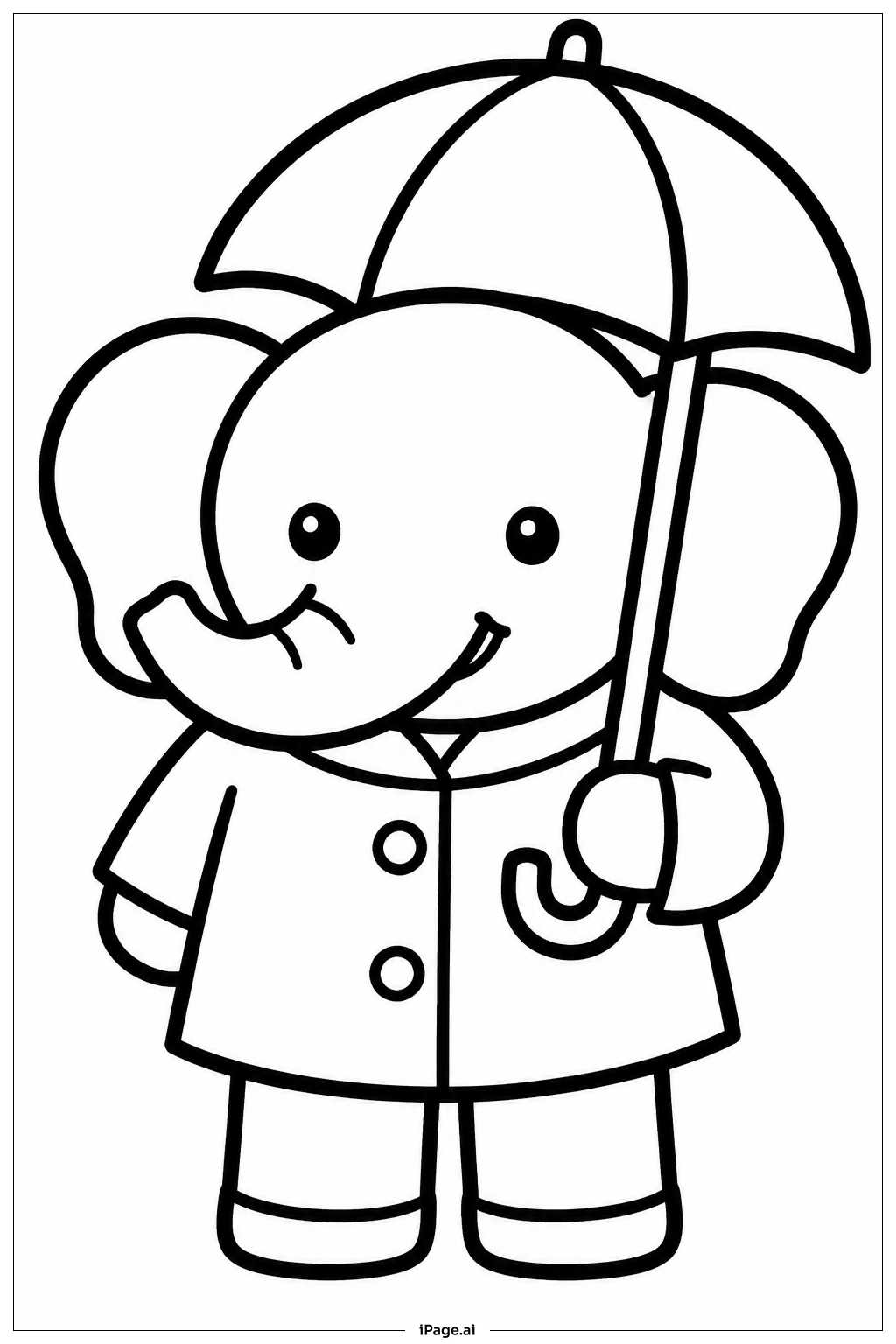
Start with the elephant's skin. Gray is the classic choice, but feel free to try light purple or soft blue for a fun twist. For the raincoat, bright colors work best — yellow is a popular pick since it stands out in rainy weather, just like a real raincoat! You could also try red, orange, or sky blue. Use a darker shade of the same color for the buttons and collar to add depth. Color the puddles and raindrops in light blue or aqua. Leave some areas slightly lighter to create a shiny, wet look. For the background, a soft gray or pale blue sky gives a great rainy-day feel. Use colored pencils for fine details like the coat's folds and the elephant's wrinkles, and markers or crayons for larger areas. Don't be afraid to mix colors and make this elephant your own!
Coloring challenges: Which parts are difficult to color and need attention for Elephant In Raincoat coloring page?
Coloring this image is a fun challenge with a few tricky spots to watch out for:
• **The Raincoat Folds and Wrinkles:** The coat has natural folds and creases that require shading to look realistic. Younger colorists may find it hard to add darker tones inside the folds while keeping the main coat color bright and even. Try using a slightly darker version of your chosen coat color along the fold lines.
• **The Elephant's Skin Texture:** Elephants have rough, wrinkled skin, and capturing that texture takes patience. The areas around the ears, trunk, and legs may have overlapping lines that are small and close together, making it easy to accidentally color outside them. Use a sharp pencil or fine-tipped marker for these sections.
• **Blending Two Different Materials:** The coat and the elephant's exposed skin are two very different textures — smooth fabric versus thick, rough hide. Keeping these areas visually distinct by using different coloring tools or techniques (like crosshatching for skin) can be tricky but rewarding.
• **Small Details Like Buttons and Collar:** The buttons and collar trim on the raincoat are small elements that require a steady hand and a fine-tipped tool. Rushing through these details can make the coat look unfinished, so take your time with them.
• **Raindrops and Puddles:** If the scene includes water elements, coloring them to look transparent or reflective is a fun but advanced challenge. Leaving small white highlights uncolored can help create a realistic water effect.
Benefits of coloring books: Advantages of drawing Elephant In Raincoat coloring page
Coloring this elephant in a raincoat offers a wonderful range of benefits for kids and beginners alike.
**Creativity and Imagination:** Choosing colors for the raincoat, skin, and background encourages free creative thinking. There are no wrong answers — this is a great space to experiment and express personal style.
**Fine Motor Skills:** Carefully coloring within the lines of the coat's buttons, collar, and the elephant's wrinkled skin helps children develop hand control and pencil grip, which are important skills for writing and drawing.
**Focus and Patience:** Completing a detailed image like this one requires concentration. Sitting down to finish the picture helps build the habit of staying focused on a task from start to finish.
**Emotional Comfort:** The cute, friendly character of the elephant in a raincoat creates a warm, happy feeling. Coloring can be a calming activity that helps reduce stress and anxiety, even for young children.
**Color Theory Awareness:** Deciding which colors look good together — like a yellow coat against gray skin — introduces basic color pairing concepts in a natural, playful way.
Overall, this coloring page is a joyful and educational activity that supports both artistic growth and everyday developmental skills.