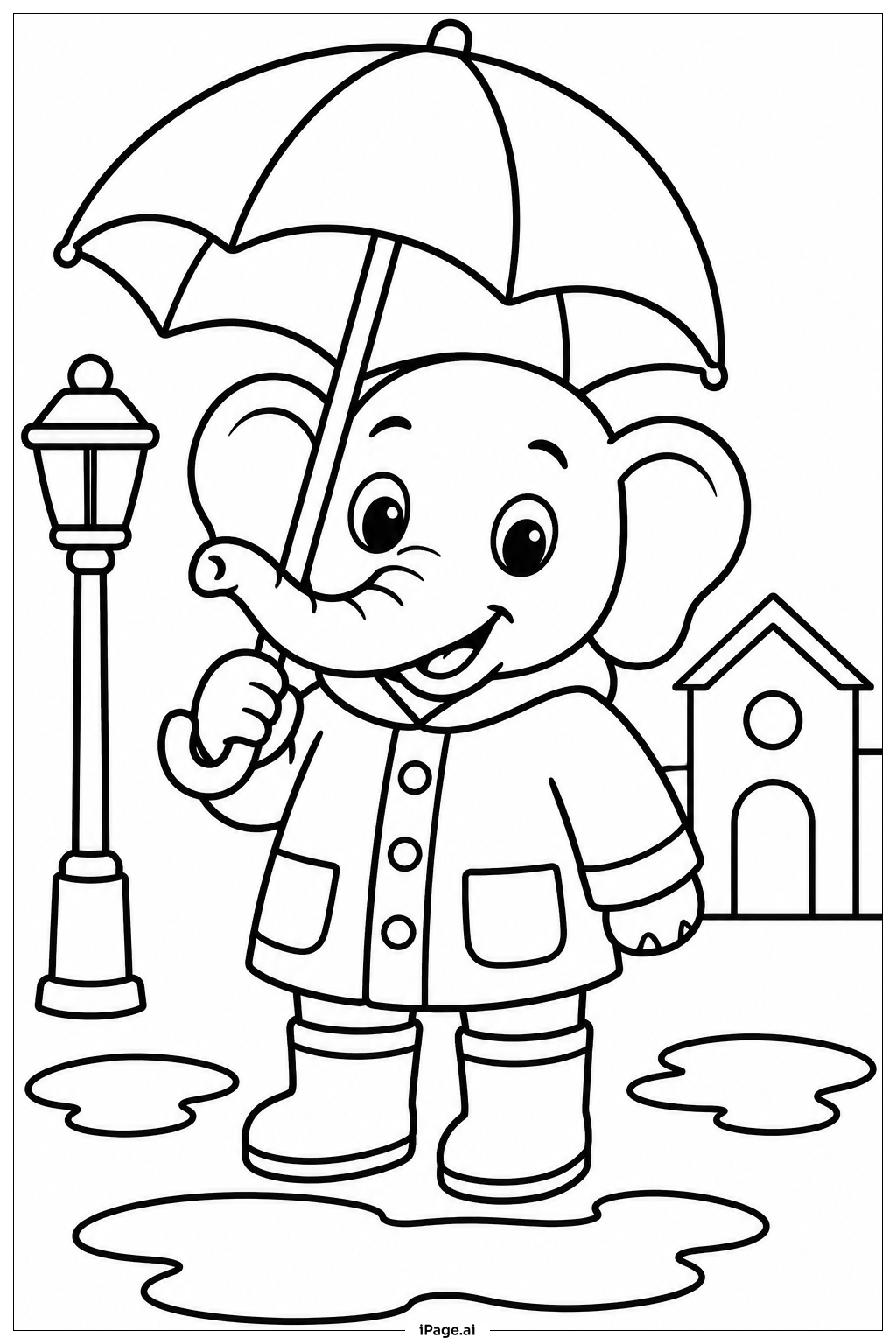
Coloring tips: How to color Elephant In Rain coloring page well?
Start with the elephant's body using a medium gray. You can add a slightly darker gray on the underside and inner ears to create a sense of shadow and depth. Use a soft pink or light purple for the inside of the ears to make them look warm and alive. For the rain, try light blue or pale silver streaks. The puddles on the ground can be colored in shades of blue and teal. Use dark gray or stormy blue for the clouds in the background. The leaves can be bright green or yellow-green to contrast with the cool rain colors. If you want to make the scene feel magical, try adding a light purple or lavender wash to the sky. Keep the elephant's eyes dark brown or black with a tiny white highlight to make them sparkle. Don't be afraid to mix colors — blending light and dark shades will make your elephant look three-dimensional and full of life!
Coloring challenges: Which parts are difficult to color and need attention for Elephant In Rain coloring page?
Coloring this image comes with a few fun challenges to keep in mind:
• **Staying inside the rain lines:** The diagonal raindrops are thin and closely spaced, making it tricky to color each one neatly without going outside the lines. Use a fine-tipped colored pencil or a thin marker for the best results. Take your time and work slowly across each raindrop.
• **Shading the elephant's body:** An elephant's skin has natural folds and wrinkles. Capturing that texture with color requires layering — start with a base gray and then gently add darker tones in the creases and lighter tones on raised areas. This technique takes patience but makes the elephant look realistic and three-dimensional.
• **Balancing cool and warm tones:** The rain scene calls for cool blues and grays, but the elephant and leaves need warmer or contrasting tones to stand out. Finding the right color balance so that no single area looks too flat or too busy can be a real artistic challenge, especially for younger colorists.
• **Coloring the puddles with reflection:** Puddles on the ground often reflect the colors above them. Trying to show this effect — mixing sky blues with hints of gray and even the elephant's color — adds complexity but also makes the image feel more realistic and dynamic.
• **Handling small background details:** The leaves and cloud shapes in the background are relatively small and sit close to the elephant's outline. Coloring these without accidentally overlapping onto the main subject requires a steady hand and careful attention to boundaries.
Benefits of coloring books: Advantages of drawing Elephant In Rain coloring page
Coloring this Elephant In Rain page offers a wonderful range of benefits for kids and beginners alike.
First, it helps build **fine motor skills**. Carefully coloring the thin raindrops and the elephant's wrinkled skin trains hand control and pencil grip — skills that are useful in school and everyday life.
Second, it encourages **creativity and color exploration**. Choosing colors for rain, puddles, and a giant elephant pushes young artists to think about how colors work together and how to use them to tell a story.
Third, it supports **focus and patience**. A detailed scene like this one requires sitting still and concentrating, which helps children practice mindfulness in a fun, low-pressure way.
Fourth, it sparks **curiosity about nature**. Elephants are fascinating animals, and a rainy setting opens up conversations about weather, habitats, and how animals experience the world around them.
Finally, finishing this page gives a real sense of **accomplishment**. Seeing a completed, colorful elephant standing proudly in the rain is genuinely rewarding — and that boost of confidence encourages kids to keep creating and exploring their artistic side.