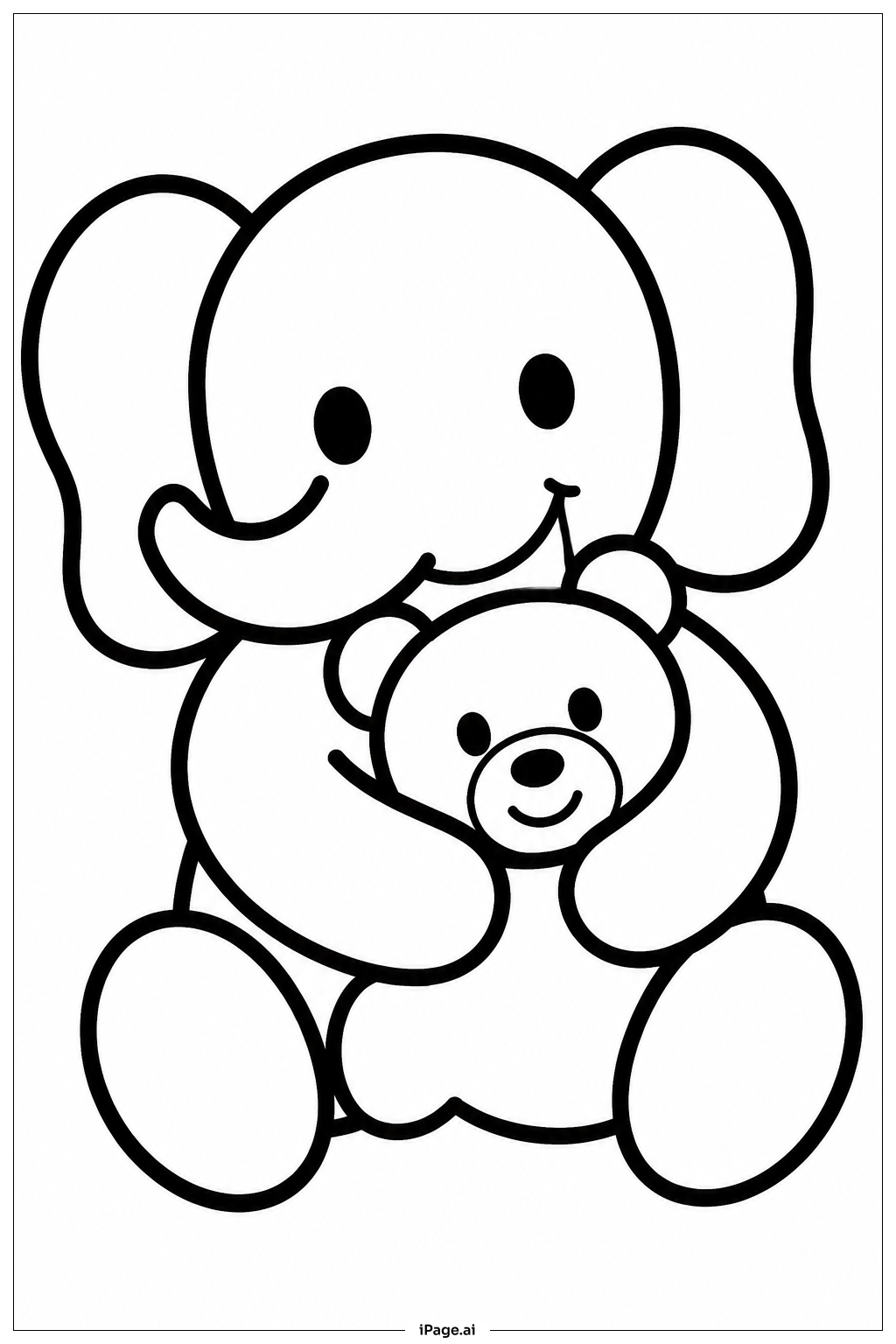
Coloring tips: How to color Elephant Hugging Teddy coloring page well?
Start with the elephant's body using soft gray tones. You can add light purple or blue shading to give it a gentle, dreamy look. Use a slightly darker gray for the wrinkles and skin folds to add depth. For the teddy bear, warm brown shades work beautifully — try light tan for the main body and a deeper brown for the ears, paws, and belly patch. The teddy's nose can be a soft pink or dark brown. Add rosy pink blush circles on the elephant's cheeks to make it look extra cute and friendly. Feel free to use pastel colors throughout to keep the mood soft and sweet. You can also add a simple background — a light blue sky or soft green meadow would make the characters pop. Don't forget small details like the teddy bear's button eyes and the elephant's toenails!
Coloring challenges: Which parts are difficult to color and need attention for Elephant Hugging Teddy coloring page?
Coloring this image comes with a few fun challenges to keep in mind:
• **Elephant's Skin Texture:** The elephant's body has wrinkles and skin folds that require careful shading. To make the texture look realistic, you need to apply darker tones in the creases and lighter tones on the raised areas. Blending smoothly between these areas can be tricky, especially for younger colorists.
• **Small Details on the Teddy Bear:** The teddy bear has tiny features like button eyes, stitching lines, and a small nose. These details are very small and require a fine-tipped coloring tool to fill in neatly without going outside the lines. Staying precise in these tight spaces takes patience and a steady hand.
• **Overlapping Areas:** Where the elephant's arms wrap around the teddy bear, the two characters overlap. Choosing colors that contrast well enough so both figures remain clearly visible — without clashing — requires some color planning before you begin.
• **Consistent Shading Across the Elephant's Body:** The elephant is large and takes up much of the page. Keeping the shading consistent across such a big area, especially when using multiple gray tones, can be challenging. Uneven pressure or color application may result in a patchy look.
• **Balancing Warm and Cool Colors:** The elephant and teddy bear call for different color families — cool grays versus warm browns. Making sure these two palettes look harmonious together, rather than clashing, is a subtle but important challenge for more experienced colorists.
Benefits of coloring books: Advantages of drawing Elephant Hugging Teddy coloring page
Coloring this sweet image of an elephant hugging a teddy bear offers many wonderful benefits for kids and adults alike.
For children, it helps develop fine motor skills as they carefully color within the lines and handle small details. It also builds focus and patience, especially when working on the elephant's textured skin or the teddy bear's tiny features.
This image encourages creativity. Kids get to choose their own color combinations and experiment with shading, helping them express themselves artistically. Deciding how to color the elephant and teddy bear also builds confidence in making independent choices.
The warm, loving theme of the image — a big elephant gently hugging a small teddy bear — promotes emotional awareness. It helps children recognize and talk about feelings like love, comfort, and friendship. This makes it a great activity for social-emotional learning.
For older colorists and adults, this page offers a calming, meditative experience. Focusing on the details helps reduce stress and quiet a busy mind. It's a simple, joyful way to unwind and reconnect with creativity.
Overall, this coloring page is a delightful blend of fun, learning, and emotional warmth — perfect for colorists of all ages.