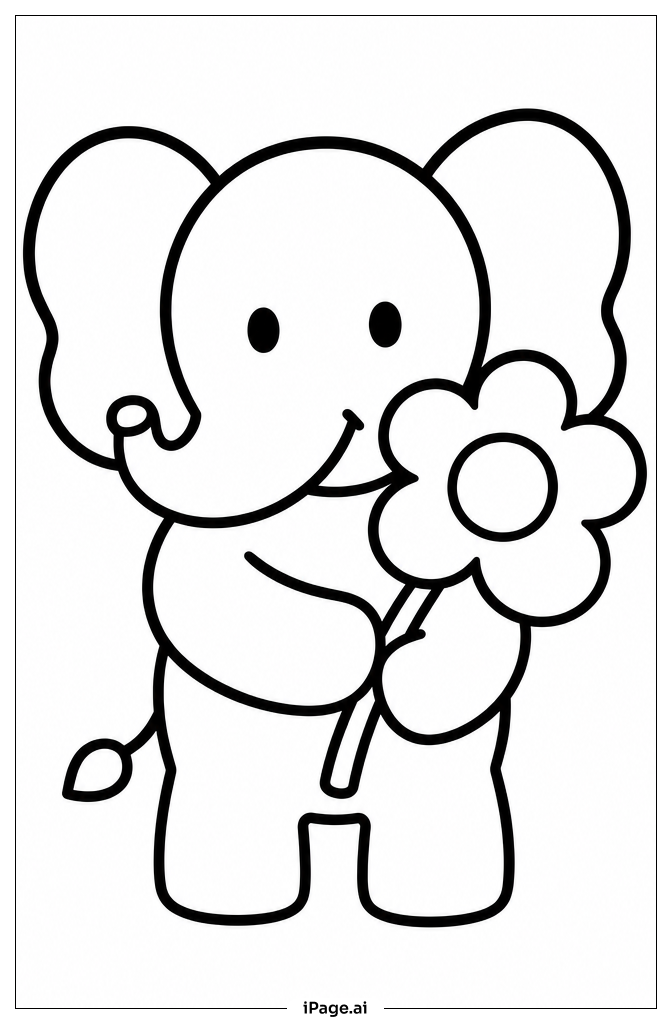
Coloring tips: How to color Elephant Holding Flower coloring page well?
Start with the elephant's body. Gray is the classic choice, but feel free to use light blue, lavender, or even pink for a fun, imaginative look. Use a slightly darker shade to add gentle shading along the edges of the ears, legs, and belly to give the elephant a soft, rounded feel. For the flower, bright and bold colors work best. Try a sunny yellow center with red, orange, or purple petals to make it pop. You can also use multiple colors on the petals for a rainbow effect. The eyes can be colored dark brown or black with a tiny white highlight dot to make them look shiny and alive. If there is a background, light green or sky blue keeps the scene feeling fresh and cheerful. Don't worry about staying perfectly inside the lines — just have fun and let your creativity shine!
Coloring challenges: Which parts are difficult to color and need attention for Elephant Holding Flower coloring page?
Coloring this image is a joyful experience, but there are a few areas that may require a little extra care and patience:
• **The elephant's body shading:** The elephant has large, smooth surface areas that can look flat if colored with a single solid tone. Blending a slightly darker shade along the edges and a lighter tone in the center helps create a natural, three-dimensional look. This technique can be tricky for younger colorists who are still developing their blending skills.
• **The flower's petals:** The flower features multiple individual petals that sit close together. Keeping each petal neatly colored without accidentally bleeding into the neighboring petal requires a steady hand and careful control of your coloring tool, especially when using markers or paint.
• **The trunk details:** The elephant's trunk is curved and may have wrinkle lines or texture details. Coloring along these fine lines without going over them takes precision, particularly for children using thicker crayons or markers.
• **The facial features:** The eyes, smile, and other small facial details are compact and close together. Using fine-tipped tools for these areas is recommended to avoid smudging or covering the delicate lines that give the elephant its expressive, friendly face.
• **Color coordination between elephant and flower:** Choosing colors that complement each other — so the elephant and flower look harmonious rather than clashing — is a fun creative challenge that encourages colorists to think about color theory and artistic balance.
Benefits of coloring books: Advantages of drawing Elephant Holding Flower coloring page
Coloring this elephant and flower image offers a wonderful range of benefits for children and young artists:
**Builds fine motor skills:** Carefully coloring within the lines of the petals, trunk, and facial features helps strengthen hand muscles and improve pencil control — skills that are essential for writing and drawing.
**Sparks creativity:** Choosing colors for the elephant and flower encourages imaginative thinking. There are no wrong answers, so kids feel free to experiment and express themselves.
**Teaches color awareness:** Deciding which colors look good together — like a gray elephant with a bright yellow flower — introduces basic color theory in a fun, hands-on way.
**Promotes focus and patience:** Completing a detailed image like this one requires concentration and persistence, helping children practice staying on task and seeing a project through to the end.
**Provides emotional comfort:** Coloring is a calming, screen-free activity. The friendly, gentle nature of the elephant character creates a positive, stress-free experience that can help children relax and feel at ease.
**Celebrates nature and kindness:** The image of an elephant gently holding a flower sends a sweet message about caring for living things, sparking conversations about animals and the natural world.